Operations | Monitoring | ITSM | DevOps | Cloud

This Month in Datadog - August 2025

In the August episode of This Month in Datadog, Jeremy shares how you can make more informed cloud cost decisions, gain insights into your LiteLLM-powered applications, and secure Kubernetes infrastructure with Datadog Workload Protection. Later in the episode, Danny puts the spotlight on Datadog Kubernetes Autoscaling, which helps you deliver cost savings without sacrificing performance.

Logs are Generally Available (Still logs, just finally useful)

When we started building Logs in Sentry we had one goal: make them useful for real debugging, not just another high-volume text storage. This meant making them "trace connected" from day one. This let us ensure they were tightly connected to the actions and performance happening in your application, right where developers already go to investigate errors, performance, and latency issues. Now, Logs is out of beta and generally available to everyone.

What is APM Tracing?

APM tracing records the complete execution path of a request as it travels through your system, including database queries, external API calls, cache lookups, message queue events, and inter-service requests. Each step is captured with precise start and end timestamps, duration, and context such as service name, operation name, and relevant attributes. This lets you pinpoint where latency or errors originate without piecing together metrics and logs manually.

The Fourth Pillar of Observability

Your application is only as reliable as the infrastructure it runs on. Most commonly, that means Kubernetes is doing the job by managing fleets of containers, scaling services on demand, and keeping workloads distributed across nodes. Traditional dashboards weren’t built to scale with this reality. They give you snapshots of raw metrics. They don’t scale to multi-cluster environments. They don’t map relationships between resources.

How to Reduce Serverless Costs with Smart Monitoring

Serverless architecture has changed how applications are built and run. It removes the need to manage servers, letting developers focus on writing code while automatically scaling with demand. But even with its pay-as-you-go model, serverless apps can get expensive if not monitored and optimized. In this blog, lets see how smart serverless monitoring helps developers and DevOps engineers lower serverless costs, boost performance, and keep operations running smoothly.

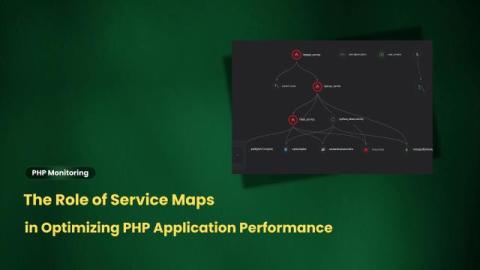
The Role of Service Maps in Optimizing PHP Application Performance

Modern PHP applications rarely exist in isolation. They run across distributed environments, connect to MySQL or PostgreSQL databases, interact with Redis or Memcached, rely on APIs, and communicate with microservices. This interconnected web brings power but also enormous complexity. When performance issues arise, finding the root cause can feel like searching for a needle in a haystack. Is it the database? A caching layer? A failing third-party API?

The New Physics of IT: Service-Centric Observability, AI-Driven Operations, and Intelligent Automation

Why the traditional model of monitoring and manual operations is collapsing–and what enterprises must do to survive The digital universe is expanding at a pace no enterprise can keep up with through traditional methods. Dependencies pull at each other in ways even experts can’t predict. What once could be managed with dashboards and siloed monitoring tools has become too vast, too interdependent, and too fast-moving, a new operating model is needed to master such complexity.

When metrics mislead: Inside the 2025 Retail Web Performance Benchmark

Over the past few years at Catchpoint, we’ve benchmarked the digital performance of banks, airlines, hotels, travel aggregators, GenAI platforms, athletic footwear brands, and even ad hoc events like the Super Bowl, Olympics, and Election Day. Each time, our approach focused on the technical metrics performance professionals live and breathe: DNS resolution times, Time to First Byte, page load speeds, and six other core measurements that we'd dissect, analyze, and use to rank companies.

Introducing Kentik Traffic Costs: Real-Time Network Cost Intelligence

Introducing Kentik Traffic Costs, an industry-first automated workflow delivering instant cost estimates for network traffic slices. Learn how this exciting new feature gives network, financial, and sales teams actionable insights to optimize spend, improve margins, and drive revenue.