Operations | Monitoring | ITSM | DevOps | Cloud

Making the invisible visible: Are your cloud firewalls and DDoS protection really working?

Every business builds strong defences to keep attackers out. Firewalls and DDoS protection serve that purpose, standing guard over company apps and websites, like knights at the castle gate keeping out trolls (not just the ones on X). But here’s the problem: those defences only work if users actually walk through the front gate. Sometimes, people find hidden paths or side doors around your walls, so the guards never see them enter.

CloudSpend for iOS 26 for sharper, smarter, and simpler cloud cost management

Experience seamless control, clarity, and cost optimization with the CloudSpend app on iOS 26. This update integrates Apple’s new Liquid Glass design and secure, on-device AI summaries to deliver instant insights into your cloud spending, empowering you to act decisively from anywhere.

Frontend JavaScript performance testing: A comprehensive guide

When a page pauses for even a quarter-second users feel it, and many will tab away before the spinner stops. Front-end performance testing lets us spot those delays on our own machines instead of reading about them in support tickets. The browser runs JavaScript, layout, painting, and every user interaction on a single main thread. If one task takes too long, everything else queues up behind it.

The Evolution of Digital Adoption: Insights from Gartner's 2025 Market Guide

The 2025 Market Guide for Digital Adoption Platforms (DAPs) marks an important point in the evolution of the category. Digital adoption has matured from a supporting role into a central part of enterprise strategy. Organizations are no longer asking if they need a DAP—they’re asking which one. In this latest research, Gartner establishes DAPs as essential to business transformation, efficiency, and employee experience. The takeaway is clear: digital adoption is no longer optional.

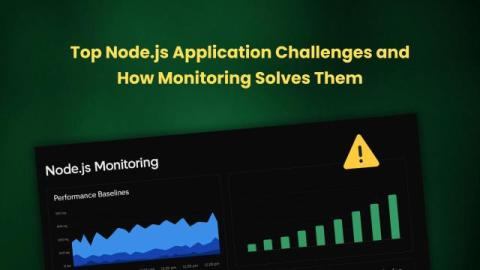
Top Node.js Application Challenges and How Monitoring Solves Them

Deploying a Node.js application may feel straightforward at first. Everything checks out in tests, staging runs smoothly, and early users run into no problems. But as real traffic ramps up, hidden problems start to appear in unexpected ways. Requests fail intermittently, latency spikes without warning, memory usage climbs silently, and logs are scattered across multiple processes making it nearly impossible to trace the root cause.

Distributed performance testing for Kubernetes environments: Grafana k6 Operator 1.0 is here

Performance testing is critical to build reliable applications, but testing at scale, especially inside modern Kubernetes environments, can be a challenge. For example, how do you coordinate tests across multiple nodes, test private services without compromising security, or even do both at once? And most importantly, how do you do all this without adding too much operational complexity to your stack?

Kubernetes Service Discovery Explained with Practical Examples

In Kubernetes, applications are constantly changing — new pods start, old ones shut down, workloads shift across nodes. The challenge is making sure that different parts of your system, and even external clients, can still find each other when the actual locations keep moving. That’s what service discovery handles. It provides a stable way for applications to connect and communicate, no matter where they’re running or how often the underlying infrastructure changes.

Unlock Real-Time AWS Observability With Streaming Ingestion in DX Operational Observability

In fast-paced cloud environments, traditional monitoring methods often fall short. This leaves teams with latency and data gaps. It’s time to gain near real-time visibility into your AWS telemetry, enabling faster incident response and deeper insights. With its new streaming ingestion capabilities, DX Operational Observability (DX O2) is revolutionizing cloud monitoring—enabling teams to leverage AWS CloudWatch Metric Streams and Amazon Kinesis Data Firehose.