Operations | Monitoring | ITSM | DevOps | Cloud

3 Marketing Activities to Keep Your MSP Healthy During COVID-19

If you sit back and look at what you’ve actually achieved over the last couple of weeks, you should feel very proud of yourself and your team. With virtually no warning, you’ve supported your clients well through the greatest business upheaval in modern times. You’ve probably set up countless VPNs. And no doubt you’ve been hunting around for new laptops, just like everyone else. While the COVID-19 situation is changing daily, the dust is starting to settle a little.

Alert Integrations: Right Person, Right Message, Right Time

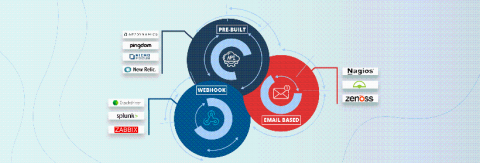
DEJ's The Roadmap to Becoming a Top Performing Organization in Managing IT Operations report found that 40% of IT teams use more than 10 monitoring tools to ensure the right levels of operational visibility and control. Given the diversity of tools used by enterprises, the only way to ensure collaborative unified incident management is to use a modern AIOps platform with native infrastructure discovery and monitoring instrumentation.

The 7-Step plan for successful AIOps implementations

The idea of applying artificial intelligence and machine learning to more rapidly and accurately resolve IT incidents and manage alerts has been gaining steam in the past year. While AIOps, as it’s frequently called, has spawned an entirely new market of startups, many enterprise IT leaders are playing a cautious hand so far – and for good reason. There are risks, though. If an AIOps tool goes wrong out of the gates, IT and executive trust diminishes.

How To Keep Traffic Spikes from Crashing Your Website

At first glance — and probably second and third as well — having too much traffic seems like a really nice problem to have; like when billionaires struggle to decide which yacht to buy (“I say Thurston, the one with the tennis courts is quite lovely, but the one with the outdoor cinema is so charming”). However, too much traffic really is a problem, because it causes websites to either dramatically s-l-o-w down (which is terrible) or crash (which is worse than terrible).

Configure custom SSL certificate expiration thresholds

When we first launched Oh Dear, we had a fixed certificate expiration timer: 14 days. As soon as the expiration date came within 14 days, we'd start sending a daily reminder to hurry up and renew those certificates. Our first exception was made when Let's Encrypt gained more in popularity. We started notifying Let's Encrypt certificates 7 days before expiration date.

OpsLogix VMware MP: Introducing vSAN support

VMware vSAN is a core component for the delivery of your Software Defined Data Center. The newly added monitoring capabilities will support your IT-Operations with even better App-To-Cloud Visibility of your business-critical applications running in the VMware platform. When the new version of our Management Pack is available, a complete release note will be added with all the new exciting features. But for now, we can reveal some of the key components we monitor.

What's new in VMware vSphere 7

It finally happened. Many of us thought that vSphere 7 would be announced during VMworld last fall, instead it became a series of “teasers” and strategy changes we had to read about ‘in between the lines’ for what was coming in vSphere 7. Now it’s been determined. Public release happens May 1, with a pre-release event on April 2. So what do we have to look forward to?

How to successfully correlate metrics, logs, and traces in Grafana

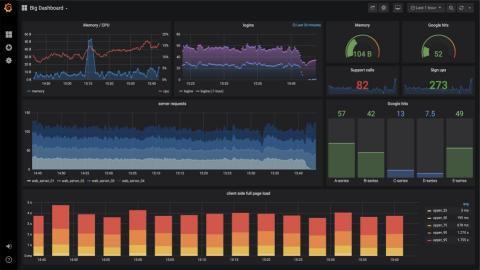
As everyone knows, the Grafana project began with a goal to make the dashboarding experience better for everyone, and to make it easy to create beautiful and useful dashboards like this one. But as Andrej Ocenas, a full stack developer at Grafana Labs, said in a recent FOSDEM 2020 presentation, the company has bigger ambitions for Grafana than just being a beautiful dashboarding application. What Grafana Labs is really aiming to do now is make Grafana into a full observability platform.

How Road Traffic Insights Derived from Sensor Data Improve Public Safety and Reduce Emergency Services Response Times

It’s easy to see the value of sensor data that enables acting in time. Just picture driving as the scene of a massive traffic accident unfolds and ambulances race to the rescue…what a difference a few seconds can make. What if past traffic patterns could help city operators predict and manage traffic flow at critical times?