Operations | Monitoring | ITSM | DevOps | Cloud

Prometheus vs. ELK

In today’s world, with many microservices fuelling hundreds of components, the failure of just one piece can cause a crash for the whole system. For example, a lack of memory in one component can cause a database failure. This database failure could be the reason for authentication problems for particular users, causing those users to not be able to login. And of course, finding the core problem manually can be complex and time-consuming.

Understanding the Layers of Log Infrastructure

If you’re reading this article, you’re most likely looking for a simple one-stop-shop way to understand logs. I’m sorry to be the one to tell you this, but logs are not simple enough to deal with easily. In fact, as you start approaching this topic on a practical level you’ll quickly realize how complex and annoying it truly is.

The Benefit of DevOps on the Customer Experience

If there’s no customer, there’s no job. In a competitive marketplace, every site element matters from the functionality of your service to your UI; your documentation to your marketing. Your SLA should mirror that structure. Building a strong customer experience is about consistency on every level. The key is visibility, offering all the verification your customers need with an intuitive click of the mouse.

Capabilities of Elixir's Logger

Logs are an important part of your application and logging shouldn’t be one of the last things you think of. You should configure your log system, formatter, and style as soon as you start the development of your app. Also, do your best to document the process and share how it works with the rest of your team. In this article, we’re going to demonstrate how logs work in Elixir. We’ll jump into Elixir’s Logger module, which brings a lot of power to logging features.

Your Top 3 AIOps Questions Answered

Artificial intelligence for IT Operations (AIOps) still sounds like something from the future to a lot of IT professionals. Maybe you’ve heard about the benefits but don’t think your organization is ready. In these three short, informative videos, Kia Behnia, Vice President of IT Operations, addresses three key questions IT pros still have when it comes to AIOps.

New Feature: Number of Users Affected by a Crash

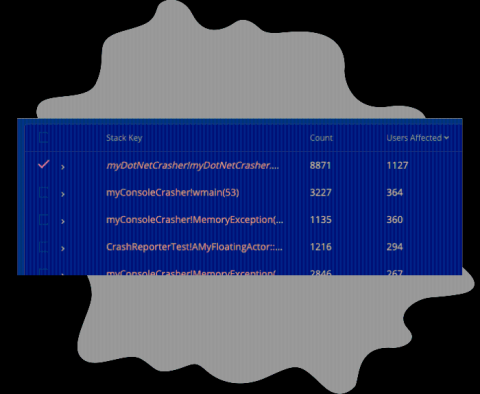
We've just released a way to track the number of users affected by a crash! If you navigate to the Summary page, you'll now see a column labeled 'Users Affected’, this column shows how many unique users have been affected for each row in the crash summary table. With the data provided by this new column, you’ll have additional information available for prioritizing fixes. The ‘Count’ column is unchanged, and reports the total number of crashes reported by all users.

3 Ways to Send Emails with Ruby

For many developers, Ruby on Rails framework not only allows them to build web applications, websites, and efficient database solutions, but it can help them optimize mailing operations. You can easily use Ruby on Rails mailer, an automatic tool to build transactional messages of any kind, and make proper authentication. In this article, we review three main ways to work with email sending in RoR, which include some Ruby gems, the Net::SMTP class, and the facilities of the Socket system.

How Long Should You Hang Onto Your Data?

One of the most common questions that businesses operating under GDPR, LGPD or other similar data regulations have is how long should you keep data? As answers to this question typically seem to vary widely to clear up confusion, we’ve gathered insights from business leaders & specialists across a variety of industries to try and answer this question and shed light on what are reasonable timeframes to keep hold of data, whether that may be financial, employee or other potentially sensitive data.

The Ultimate Guide to AWS DynamoDB

DynamoDB is a key-value and document database with single-digit millisecond response times at any scale. It’s a fully managed durable database with built-in security, backup and restore capabilities. A keyword you’ll often hear with DynamoDB is that it is a NoSQL database, which simply means it doesn’t use the traditional SQL query language used in relational databases.