Operations | Monitoring | ITSM | DevOps | Cloud

TL;DR InfluxDB Tech Tips - Using and Understanding the InfluxDB Cloud Usage Template

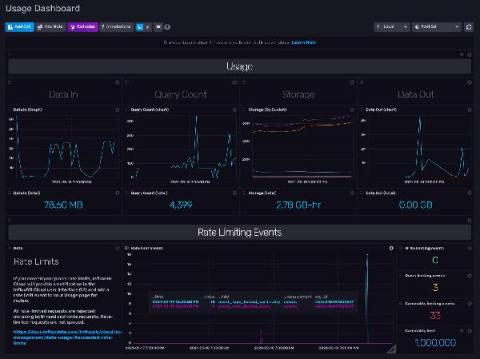
So you’re using InfluxDB Cloud, and you’re writing millions of metrics to your account. Whether you’re building an IoT application on top of InfluxDB or monitoring your production environment with InfluxDB, your time series operations are finally running smoothly. You want to keep it that way. You might be a Free Plan Cloud user or a Usage-Based Plan user, but either way, you need visibility into your instance size to manage resources and costs.

Observability vs. Monitoring: What's the Difference?

People often conflate monitoring and observability, and I can’t blame them. Marketers often use the terms interchangeably. However, monitoring and observability are two fundamentally different but related things. Understanding the differences between the two both technically and intuitively can help you become a better network troubleshooter, architect, and manager. After all, like many buzzwords before it, observability is an important concept if you can get past the fluff.

Understanding Where You Fit in the Web Performance Maturity Curve

We all know that faster is better. Research and results clearly indicate that faster experiences with fewer errors result in increased usage, conversion, and revenue. With the desire to improve business metrics in mind, organizations often seek immediate improvements in customer experience across digital properties. However, without proper planning and coordination, these attempts consistently fail.

Microsoft 365: Are You Flying Blind...and at What Cost?

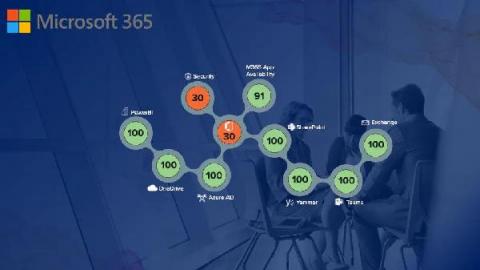
Many organizations today are migrating from on-prem solutions for email / calendar / communications to Microsoft 365. If this is you, this is your productivity cloud across work and life, designed to help you achieve more with innovative Office apps, intelligent cloud services, and world-class security.

Put a Stop to Data Swamps with Event-Driven Data Testing

Ensure data quality in your S3 data lake using Python, AWS Lambda, SNS, and Great Expectations. Data lakes used to have a bad reputation when it comes to data quality. In contrast to data warehouses, data doesn’t need to adhere to any predefined schema before we can load it in. Without proper testing and governance, your data lake can easily turn into a data swamp.

Monitoring Kubernetes with the Elastic Stack using Prometheus and Fluentd

Kubernetes is an open source container orchestration system for automating computer application deployment, scaling, and management, and seems to have established itself as the de facto standard in this area these days. The shift from monolithic applications to microservices brought by Kubernetes has enabled faster deployment, where dynamic environments become commonplace. But on the other hand, this has made monitoring applications and their underpinning infrastructure more complex.

How to Measure Network Performance: 9 Network Metrics

In this article we’re running you through what is Network Performance, how to measure network performance, what network metrics we should collect to measure network performance, what is the impact of poor network quality on the most commonly used applications, and what tools you should use to monitor network performance.

How Psyonix wins with better logging

When you grow your peak concurrent users by 5x nearly overnight, ensuring that your operations can successfully support that growth can be a make or break for your success. Rocket League is a popular online multiplayer game created by Psyonix described as arcade-style soccer and vehicular mayhem. In the summer of 2020, the game maker decided to switch the business model of the game from an upfront purchase to a free to play model.

User Identity Awareness with LoadMaster ESP and Flowmon

In one of the previous blog posts from the load balancing education series, we discussed the Edge Security Pack functionality to provide an additional layer of security in front of an application workload to ensure that only properly authenticated users can interact with the application. In this role, the LoadMaster acts as a gateway for the application and handles user authentication through a third-party identity provider such as Microsoft Active Directory.

Why Debugging JavaScript Sucks - And What You Can Do About It

What makes JavaScript great is also what makes it frustrating to debug. Its asynchronous nature makes it easy to manipulate the DOM in response to user events, but it also makes it difficult to locate problems. And JavaScript’s ubiquity has resulted in a variety of runtimes (e.g. Chromium’s V8, Safari’s JavaScriptCore, and Firefox’s SpiderMonkey) but having so many platforms can cause dizzying idiosyncracies — all of which need to be supported equally.