Operations | Monitoring | ITSM | DevOps | Cloud

Lessons Learned From Running Serverless In Production For 5 Years

I have been an AWS customer since 2010 and in the early days I, along with just about everyone else on AWS, spent a lot of my time just managing infrastructure. Patching AMIs, configuring load balancers, updating auto-scaling configurations, and so on. It was the sort of thankless task that no one cared about until something went wrong! The very definition of what Werner Vogel often refers to as “undifferentiated heavy-lifting”.
Automate Your Boring Stuff with Python

In many critical areas, you can automate the completion of repetitive chores in an efficient and effective manner by using a computer language such as Python. When you are just starting out, it’s vital to understand the fundamentals of Python via coding examples. However, if you want to improve your Python skills, you should concentrate on constructing things and automating real-world tasks.

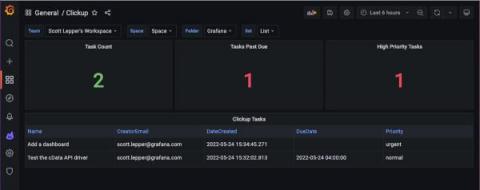
How to access and query REST APIs with the Sqlyze plugin in Grafana

A few months ago, I wrote about using the Sqlyze data source plugin in Grafana to query COVID-19 wastewater surveillance data on Databricks. Did you know that with the Sqlyze Enterprise plugin, you can also access REST APIs (web services), treat them as database tables, and query them using SQL? You can use any ODBC driver you like, and it’s not limited to relational databases, either. You can query NoSQL and document databases, too.

5 Downdetector Alternatives: Is There a Better Way to Know if a Service Is Down?

Downdetector is a platform that displays the current status of internet services, websites, mobile apps, and providers. The information is crowdsourced from users who report issues as they come across them. Downdetector is a popular service. Nowadays, organizations depend on a huge variety of services and so need to have the most reliable and detailed view of everything that’s going on.

Investigating digital experience with Synthetic Transaction Monitoring

Kentik Synthetics is all about proactively testing and monitoring specific elements of your network, the services it relies on, and the applications it delivers. That means using artificial traffic instead of end-user traffic to test a variety of aspects of digital experience monitoring like device availability, DNS activity, web application page load times, and BGP activity. But to test an end-user’s experience interacting with a website, we need to approach things differently.

Top 15 Docker Container Monitoring tools in 2022

One of the easiest ways to see if the application running in our nodes is in an optimized state or not is by monitoring them. It is the last yet critical stage of any software development lifecycle. It opens up many possible improvements in your application, networking, IT automation, and other miscellaneous configurations. As we move towards microservice architecture, containerization and orchestration tools are rising. Containers are special processes that run in isolation from other processes.

Building resilience for applications and services with Elastic Observability

Insights from the 2022 Results That Matter study Correlating data across multiple silos and applications to derive meaningful and actionable insights is an ongoing struggle. These challenges are only set to increase as high-speed connectivity becomes more ubiquitous and enables data-heavy, digital experiences.

Network Redundancy and Why It Matters

Network redundancy is process of providing multiple paths for traffic, so that data can keep flowing even in the event of a failure. Put simply: more redundancy equals more reliability. It also helps with distributed site management. The idea is that if one device fails, another can automatically take over. By adding a little bit of complexity, we reduce the probability that a failure will take the network down. But complexity is also an enemy to reliability.