Operations | Monitoring | ITSM | DevOps | Cloud

Key Server Metrics to Monitor for Peak Performance and Health

No matter how well-designed, flashy, or useful your application is for your target users, they may not take kindly to it being slow or, even worse, crashing once in a while. You will lose customers and revenue as a result. The solution is definitely not to add additional features to the application to bring back users. Instead, it’s as simple as paying close attention to the health of the servers where your application is hosted.

The Role of Middleware in Distributed Systems

In distributed systems, middleware is a software component that provides services between two or more applications and can be used by them. Middleware can be thought of as an application that sits between two separate applications and provides service to both. In this article, we will see a role of middleware in distributed systems.

Monitor your T2A-powered GKE workloads with Datadog

Arm processors have become increasingly popular in recent years, providing energy-efficient, cost-effective processing power to both mobile and cloud computing ecosystems. As a part of this growth, more and more organizations are choosing to leverage the many benefits of Arm-based architectures for their containerized workloads. Today, Google Cloud announced its Arm-based Tau T2A virtual machines (VMs), which you can also use to run workloads in Google Kubernetes Engine (GKE).

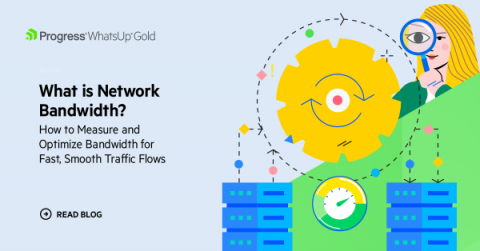
What is Network Bandwidth? How to Measure and Optimize Bandwidth for Fast, Smooth Traffic Flows

Many think they know what network bandwidth is but conflate performance with capacity. This blog, among other things, will end that confusion. And for true IT experts, we’ll dive deep into the whys and wherefores of network bandwidth monitoring and optimization.

Mezmo Named a Top Vendor for Managing IT Performance by DEJ

We are thrilled to announce that Mezmo has been recognized as one of the Top 20 Vendors for Managing IT Performance in 2022 by Digital Enterprise Journal (DEJ). This list was created in response to DEJ’s study, 24 Key Areas Shaping IT Performance Markets in 2022. DEJ analysts surveyed more than 3,300 organizations around a variety of topics to craft a comprehensive understanding of the state of these programs today.

Infrastructure as Code (IaC) vs. Infrastructure as a Service (IaaS)

The heart of any software development operation is infrastructure. This combination of virtual and physical assets ensures that the flow, storage, processing, and analysis of data remains efficient and as seamless as possible. When it comes to selecting a model for managing and deploying infrastructure, IT managers typically have two choices: infrastructure as code (IAC) or infrastructure as a service (IaaS).

Cribl Search Unlocks The Value of ALL Data

We announced Cribl Search in May, and customer reaction has been incredibly positive. We’ve heard for some time that organizations have data everywhere. They have data in their observability lakes, analytics tools, object stores, and at the edge. The big challenge facing enterprises is that existing search models require you to take all of this data that you don’t know is valuable or not, move it into one place, and then make decisions about whether this is valuable?

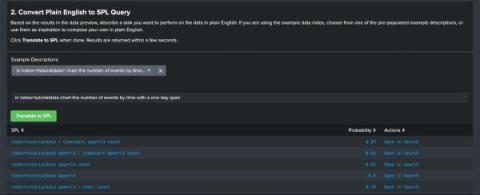
Machine Learning at Splunk in Just a Few Clicks

The Machine Learning team at Splunk has been hard at work over the last several months preparing for a few exciting launches at.conf22, held just a few weeks ago. Splunk customers want to leverage machine learning (ML) in their environments, but many aren’t sure how to use it, or even how to get started.

Three Critical Questions for Healthcare

Before the pandemic, healthcare was already experiencing staffing shortages. The patient population was getting older and needing more care. Many healthcare professionals were also heading towards retirement. Unhealthy lifestyles were spreading, and the level of education required to enter healthcare professions was rising. Demand exceeded supply.

Top 7 Java Performance Metrics to Monitor

Today, almost any metric you can think of can be tracked down and reported, as opposed to the past when the software was traditionally provided in boxes and its performance in production could not be predicted. The issues we are currently facing are not due to a lack of information, but rather to an abundance and scale of information. This becomes significantly more difficult to manage when dozens or even hundreds of servers are in use.