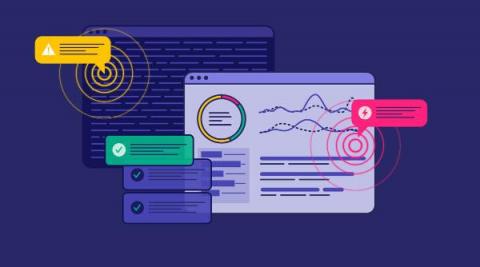
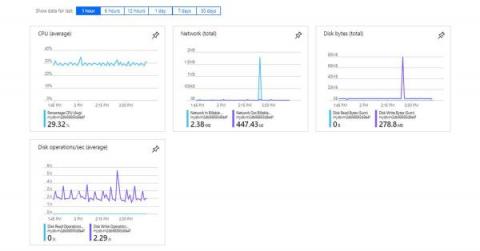
Observable and secure platforms use three connected data sets: logs, metrics, and traces. Platforms can link these data to alerting systems to notify system administrators when an event requires intervention. There are nuances to setting up these alerts so the system is kept healthy and the system administrators are not chasing false positive alerts.
Pandora FMS Open Source is not a freemium software, it is not bloatware nor shareware (*Wink for those born before the 80s). Pandora FMS is licensed under GPL 2.0 and the first line of code was written in 2004 by Sancho Lerena, the company’s current CEO. At that time, free software was in full swing and MySQL was still an independent company, as was SUN Microsystems.
The OpenTelemetry Collector is an application written in Go. The GitHub readme does a great job of describing it: So the OpenTelemetry collector is a Go binary that does exactly what its name implies: it collects data and sends it to a back-end. But there’s a lot of functionality that lies in between. What a neat service! A local destination for data that handles the final sending of Open Telemetry information to your back end.
The Splunk Operator for Kubernetes team is extremely pleased to announce the release of version 2.0! This represents the culmination of many months of work by our team and continues to deliver on our commitment to provide a high-quality experience for our customers wishing to deploy Splunk on the Kubernetes platform.
In this two post series, we are going to explore some ways to trace and debug NodeJS Lambda applications. Delving into some methods to look further into resources utilized to and some methods to optimize code. AWS Lambda, an event-driven compute service first introduced roughly eight years ago, changed how we build out cloud applications as an industry.
With the recent advancements in service delivery through containers, Linux has gained a lot of popularity in cloud computing by enabling digital businesses to expand easily regardless of their size or budget. These advancements have also brought a new wave of attack, which is challenging to address with the same tools we have been using for non cloud-native environments.
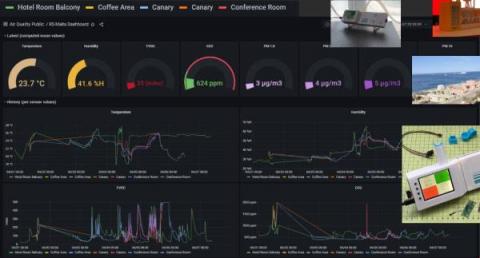
With climate change and other environmental factors causing pollution rates and ground-level Ozone levels to climb, poor air quality is an increasingly growing global problem. In fact, fossil air pollution is responsible for 1 out of 5 deaths worldwide, according to a 2021 study conducted by Harvard University.
User experience is the pinnacle of cloud technology. With cloud data centers handling 94 percent of all workloads, cloud optimization is vital. Users need fast, agile, scalable, and stable solutions over the long term. But how do you build these solutions? This is where cloud-native technology comes in. Cloud native computing provides the foundation for building, designing, running, and managing applications in the cloud.