Operations | Monitoring | ITSM | DevOps | Cloud

What Is An Observability Data Pipeline?

Have you ever wondered how to get your organization's data into one place so you can easily monitor and troubleshoot your systems? If so, you're not alone. This is a common challenge faced by many organizations. The solution is an observability data pipeline. To better understand what this is and how it works, we've put together a brief overview.

How to Integrate GitHub with Sentry to Increase Speed to Resolution

Toolchains are complicated these days - developers and engineering managers are working with more tools than they probably care to count. In order to work efficiently in today’s world, it is essential to have smart integrations in place that bridge the gap between your tools to get you what you need, faster.

Data Collection Strategies for Infrastructure Monitoring - Troubleshooting Specifics

Monitoring and troubleshooting; unfortunately, these terms are still used interchangeably, which can lead to misunderstandings about data collection strategies. In this article we aim to clarify some important definitions, processes, and common data collection strategies for monitoring solutions. We will specify the limitations of the described strategies, as well as key benefits which can potentially be also used for troubleshooting needs.

Instantly Diagnose a Database Outage with Flow Alerts

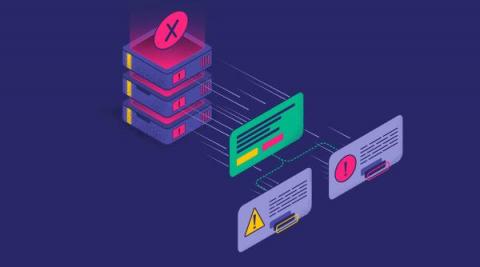
Stateful, commonly monolithic, and absolutely fundamental to system design, the quality of your database administration and operation is a key determinant of your overall success. Databases are the cornerstone of modern architecture, requiring constant effort, investigation, and iteration to get the most out of a database. This makes it all the more terrifying when an outage occurs.

New Features in the Content Pack for Monitoring and Alerting

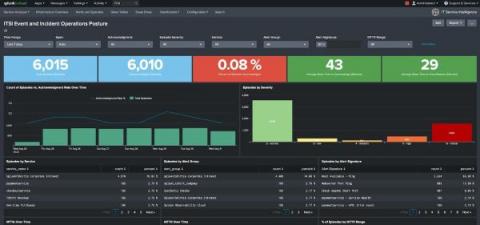
The 1.7 release of the Splunk App for Content Packs comes with a slew of new awesomeness for the Content Pack for ITSI Monitoring and Alerting designed to bolster your IT operations team’s visibility and AIOps posture! Previous versions of the content pack focused on making it easy for you to create and group Notable Events from ITSI Services and third-party monitoring tools.

Get the Most Value from Your Observability Investment by Building for the Future

Technically speaking, observability offers visibility into the data being generated by your infrastructure devices, systems, and applications — but in reality, it offers the opportunity to see what’s happening, There’s no guarantee that you’ll get what you want; you have to set things up in a way that makes it possible for you to get the insights you need.

Top 15 Key Categories of Monitoring Metrics in Kubernetes and OpenShift Environments

Over the last couple of years, Kubernetes (often called K8s) has become the most popular and well-known container orchestration system for automating application deployment, scaling, and management. Scheduling containers at scale in a cloud-native ecosystem is central to the technology. Kubernetes itself is an open-source project, and as such presents challenges for many enterprises especially in regulated industries with strong security requirements and formal SLA commitments.

What is N+1 query problem and how distributed tracing solves it?

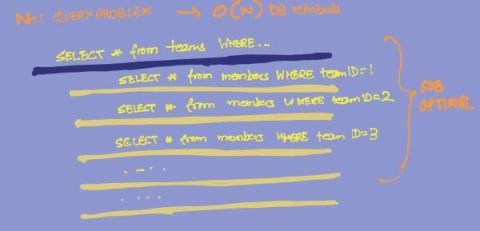
N+1 query problem is a problem in database retrieval where the related entities of an object are queried individually from a database, leading to O(n) queries where n is the number of related entities of the object. Mouthful of words, I agree 🙂 Let’s take an example to illustrate what it means.

Real World Insights - My Take on the Observability Maturity Model

A prelude to our upcoming six-part Observability Maturity Model Fundamentals blog series. By Lodewijk Bogaards At StackState, we have spent eight years in the monitoring and observability spaces. During this time, we have spoken with countless DevOps engineers, architects, SREs, heads of IT operations and CTOs, and we have heard the same struggles over and over.

Authors' Cut-No More Pipeline Blues: Accelerate CI/CD with Observability

It’s no secret that CI/CD pipelines make the lives of engineering and operations easier by accelerating the feedback loop for higher quality code and apps. They build code, run tests, and safely deploy new versions of your application. But just like any aspect of development, poor integration, invisible bottlenecks, and bugs can plague your pipelines. And debugging them? Well, it’s complicated.