If you’re finding it a little difficult to sift through all the varying, often conflicting information surrounding the topic of network observability, you’re certainly not alone.
When you design architecture to monitor your digital assets - either software applications or hardware devices, you need to use different strategies depending on your monitoring target. The factors you want to consider can vary including methods of retrieving monitoring data, frequency of data collection, and how you want to surface metrics and insight you find to stakeholders. In this article, we will mainly discuss how we can monitor your network SNMP devices using Hosted Graphite.
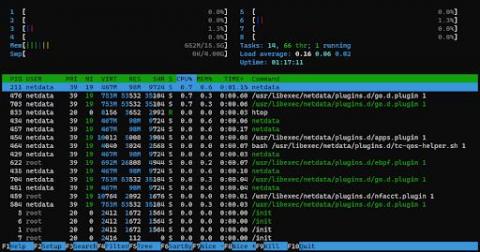
We often hear the term load used to describe the state of a server or a device, but we're here to tell you what it means, precisely, and how to monitor it.
Our own Chief Revenue Officer, Todd McNabb, recently sat down with Melissa Graham, Sr. Vice President of Global Sales at SHI International, to discuss our new partnership.
Rebuilt and reimagined storage engine built on open source project InfluxDB IOx delivers faster queries, unlimited time series, and introduces SQL for writing queries and BI tool support.
Two years ago I announced that InfluxData was working on a new core for InfluxDB, a project we named InfluxDB IOx. InfluxDB IOx is a cloud-native, real-time, columnar database optimized for time series data built in Rust on top of Apache Arrow and DataFusion. Today I’m excited to announce that we deployed our next-generation storage engine that’s built on InfluxDB IOx in our InfluxDB Cloud platform.
In the first post of this series, I detailed ways companies considering cloud adoption can achieve quick wins in performance and cost savings. While these benefits of the cloud certainly remain true in theory, realizing these benefits in practice can be increasingly difficult as applications and their networks become more complex.
As long as humans have written software, we’ve needed to understand why our expectations (the logic we thought we wrote) don’t match reality (the logic being executed). To that end, we developed techniques to help measure reality—logging text strings, or capturing aggregated metrics—and persevered, seeking out newer and fancier logging or monitoring solutions over the intervening decades.
Although Java has been around for 27 years, enterprise applications still favor it as one of their preferred platforms. Java's functionality and programming flexibility increased concurrently with technological advancement, keeping it a useful language for more than 25 years. Outstanding examples of this progression include new garbage collection algorithms and memory management systems.