Operations | Monitoring | ITSM | DevOps | Cloud

Sponsored Post

What Is the Controllability and Observability of Cloud Applications?

There are many computing resources used in different cloud application services to provide online software-as-a-service (SaaS). SaaS differs from traditional applications in that it works from a cloud computing environment. This means that both the application service as well as user data are being hosted by a cloud provider in the cloud. Therefore, the SaaS and data are accessible from anywhere as long as there's online access. This model provides a distinct advantage from a software perspective.


Bring Your Zombie Data Back to Life with Cribl Search

We’ve reached the point where our ability to collect data has actually exceeded our ability to process it. Nowadays, it’s commonplace for organizations to have terabytes or even petabytes worth of data sitting in storage, waiting patiently for well-intentioned systems admins to eventually analyze it.

Sponsored Post

What Makes Citrix Difficult for Synthetic Monitoring Solutions?

Synthetic monitoring and automated testing are a major advantage if you can use them. Unfortunately, some challenges stand in the way of running these technologies outside of a web browser. Trying to run synthetic monitoring on Citrix is even more challenging. Thankfully, 2 Steps has identified and solved these issues. In this post, we'll take your through the challenges that running a synthetic monitoring and automated testing solution on Citrix poses and tell you how 2 Steps makes those challenges go away.

Introducing Splunk App for Chargeback

The Splunk App for Chargeback provides the ability to analyze and manage how internal business units, departments, and individuals are consuming Splunk resources. The three main features of the App are: The Splunk App for Chargeback allows you to manage, monitor, and forecast resource utilization in your shared Splunk environment. You can use Splunk App for Chargeback to focus on any business unit, department, or an individual user.

How DevOps Monitoring Works: Concepts, Types & Best Practices

DevOps is an IT delivery concept that combines people, practices and tools with the shared goal of accelerating the development of applications and services. Adopting DevOps at enterprise level typically requires: The continuous development of DevOps practices, as well as other factors like the rapid pace of modern code changes, facilitates a need for DevOps monitoring: a set of tools and processes to support the entire software development lifecycle.

What's the hype about Machine Learning?

Can it help businesses? Machine learning is an inescapable buzzword for many in the operations sector. Even friends and colleagues tend to make us aware of a new ML tool that may or may not be useful. While there are many ML tools in the market, not all are suitable for every business. Some tools, when tested, struggle to solve basic, everyday use cases. Therefore, when evaluating ML tools, other deeper questions and issues do arise.

7 types of Redis latency and how to fix it

Redis is designed to be fast. In most cases, it is. However, there are times when Redis may be slow, due to network issues, disk latency, or other factors. When this happens, it is important to be able to detect the slow down and investigate the cause. Latency is the maximum delay between the time a client issues a command and the time the reply to the command is received by the client. Redis has strict requirements on average and worst case latency.

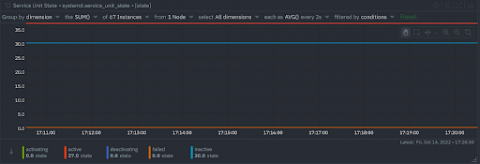
How to monitor systemd service liveness

The life of a sysadmin or SRE is often difficult, but occasionally very simple things can make a huge difference. Basic monitoring of your systemd services is one of those simple things, which we sometimes overlook. The simplest question one would want to know is if the thing that’s supposed to be running is actually running at all. If you use systemd services, you can guarantee an answer to that question within minutes using Netdata.

Modern IT Infrastructure Management: Three Pillars for Success

Your IT Infrastructure team faces untenable demands on their time and resources as your organization increasingly relies on complex hybrid infrastructures and an ever-growing set of technologies and cloud-based services. You can actually limit visibility and slow triage as you add monitoring tools to cover this expansion, blocking critical insight into your environment at the IT service level. What’s really required to be successful in today’s IT infrastructure environment?

Introducing PrivateLink Support for Enterprise

Network topology can get very complicated in the cloud, especially when you’re sending data to external SaaS providers. You will likely need to configure gateways and firewalls and keep close tabs on those points of egress. However, if your infrastructure exists within AWS, there’s a much simpler way and that’s through an AWS PrivateLink endpoint.