Operations | Monitoring | ITSM | DevOps | Cloud

SD-WAN Performance and User Experience: Gaining Unified Visibility with DX NetOps

As the use of SD-WAN continues to expand, benefits and challenges may seem to be proliferating in equal measure as well. In this post, we look at some of the advantages and obstacles presented by SD-WAN, and we detail how DX NetOps by Broadcom delivers the visibility teams need to monitor and manage their SD-WAN and legacy network environments.


3 Strategies for Becoming a Network Visionary

As businesses become more digitized, IT leaders must consider the ability of the network to transform business operations in every functional area. Many organizations are already doing this today, demonstrating best practices in how the network can be an innovation partner in marketing, service delivery, customer service, and logistics, among many other areas. However, those who rest on their laurels today may find themselves playing catchup in the not-so-distant future.

What Is Adaptive Flowspec and Does It Solve the DDoS Problem?

Managing modern networks means taking on the complexity of downtime, config errors, and vulnerabilities that hackers can exploit. Learn how BGP Flow Specification (Flowspec) can help to mitigate DDoS attacks through disseminating traffic flow specification rules throughout a network.

Availability: A Beginner's Guide

Availability is the amount of time a device, service or other piece of IT infrastructure is usable — or if it’s available at all. Because availability, or system availability, identifies whether a system is operating normally and how effectively it can recover from a crash, attack or some other type of failure, availability is considered one of the most essential metrics in information technology management. It is a constant concern.

Using Cisco Meraki Solution for SD WAN? ScienceLogic Was Built for That.

Since its acquisition by Cisco in 2012, Meraki has taken off as one of the most valuable tools for simplifying networking in the cloud era. Organizations using Meraki to install and configure software-defined networking (SDN) and software-defined wide area networking (SD-WAN) devices across their IT estates can attest to the fact.

The benefits of web performance testing with Grafana k6 browser and Grafana Faro

Performance tests created with the Grafana k6 browser module use lab data collected from pre-defined environments, devices, and network settings. Lab data allows you to repeatedly reproduce performance results, making it useful for detecting and fixing performance issues early. Lab data, however, doesn’t account for one very important testing component: real user experience.

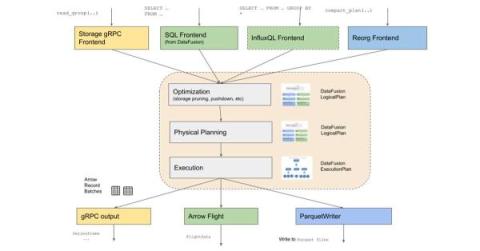
Flight, DataFusion, Arrow, and Parquet: Using the FDAP Architecture to build InfluxDB 3.0

This article coins the term “FDAP stack”, explains why we used it to build InfluxDB 3.0, and argues that it will enable and power a generation of analytics applications in the same way that the LAMP stack enabled and powered a generation of interactive websites (by the way we are hiring!).

Kubernetes Deep Dive: Key Features, Visibility and Optimization

Kubernetes or K8s is an open-source production-grade container orchestration system for automating, scaling, and managing containerized applications. A container is a lightweight, standalone, executable ready-to-run software package that contains everything needed to run an application. It includes the runtime, code, libraries, systems tools, and default values for any essential settings.

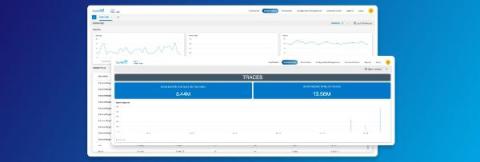
How OpsRamp Closes the Complexity Gap with Distributed Tracing

As distributed, interconnected microservices have replaced monolithic applications, application monitoring has had to evolve to support these modern, complex architectures. Rather than monitoring a single application and code base, organizations need to monitor the performance and network connectivity of multiple services that interact with each other.