Operations | Monitoring | ITSM | DevOps | Cloud

Dashboard Studio: New Features Highlighted At .conf21

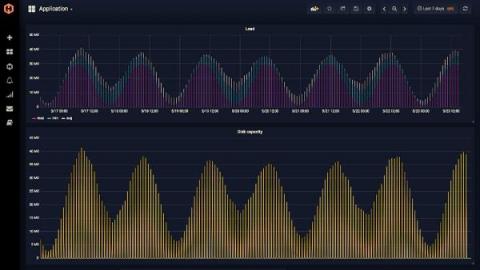
I am very excited that this year’s.conf21was the first.conf where we got to showcase Dashboard Studio, which has come built-in with every Splunk Enterprise and Splunk Cloud Platform release, since 8.2 and 8.1.2103, respectively. I am even more excited to share a packed list of new features in the 8.2.2109 release, which coincides with.conf21! This blog post will highlight a few capability areas we've been heavily focused on that will help you do even more with your dashboards.

Increasing the efficiency of customer service delivery

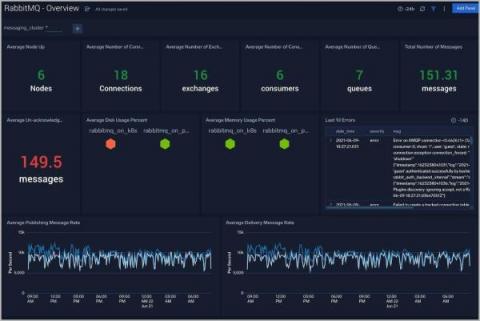
Running a customer contact center to meet the sky-high expectations of today’s customers is hard work. Success depends on having agents who can empathize with and advocate for your customers in order to give them satisfactory answers and resolutions. This is no small task, and the dynamic nature and complexity of all the factors involved make it even more difficult.

Datadog Cloudsmith Integration

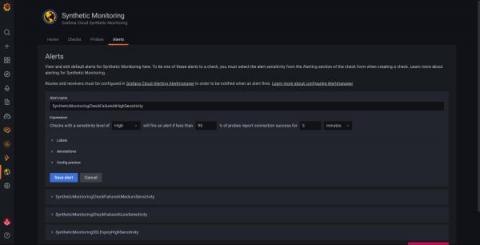
Cloudsmith is happy to announce an integration with Datadog to help our customers monitor their Cloudsmith account. Datadog is an observability service for cloud-scale apps, providing monitoring of servers, databases, tools, and services through a SaaS based data analytics platform. At Cloudsmith we are big fans of Datadog and use it to monitor and visualize how our system is performing across a range of services and tools.

The World After Covid-19: How Jobs, Bosses, & Firms May Improve

In 1993 the management guru Peter Drucker argued that “commuting to office work is obsolete.” As of last year, his vision hadn’t quite come true: nearly half of global companies in one survey still prohibited remote working. Then the pandemic hit. Suddenly millions of people started doing their jobs from home. Work will never be the same.

5 Sustainable IT Practices for Your SaaS Applications

With web browser-accessed applications reaching record levels, employees are now spending most of their productive work time inside a cavern of business web applications. These may be custom applications built by a company for specific business purposes, or commercial SaaS applications for important functions such as collaboration, workflow management, scheduling, communication, transactional business, single sign-on, development, service desk, CRM, HR, and others.

Kubernetes Fully Managed: Overcoming CIOs challenges

Kubernetes is everywhere! In the public and private cloud, and from the enterprise to startups, the majority of IT executives around the world have explored Kubernetes, and how it has evolved the way many organisations are developing and deploying their applications. But what is scary about it, and how can organisations better leverage one of the greatest tools in the field while overcoming the biggest challenges facing CIOs when adopting Kubernetes?

Ubuntu optimised for Intel processors accelerates adoption of IoT innovations

2 November 2021: Canonical published the first Ubuntu images optimised for the next generation of Intel IoT platforms, which address the unique requirements of the intelligent edge across multiple industry verticals. Both companies are dedicated to enabling on Ubuntu the Intel IoT platforms’ specific features such as real-time performance, manageability, security, and functional safety, as well as allowing users to take advantage of their improved CPU and graphics performance.

How to Parse JSON with Telegraf into InfluxDB Cloud

In Telegraf 1.19 we released a new JSON parser (json_v2). The original parser suffered from an inflexible configuration, and there were a handful of pretty common cases where data could not be parsed. While a lot of edge cases for parsing can be resolved using the Starlark processor, it is still a more advanced approach that requires writing scripts. We have made a lot of enhancements to the new JSON parser that can help you easily read in your JSON data into InfluxDB.

What is Microsoft Azure Portal and its Benefits?

With the help of its continually growing global network of data centres, Microsoft has developed Azure, a cloud platform for developing, deploying, and managing services and applications from any location. Azure is available now. Azure’s platform as a service (PaaS) approach allows you to add cloud capabilities to your current network, while its infrastructure as a service (IaaS) model allows you to entrust Microsoft with all of your computing and network requirements (IaaS).