Operations | Monitoring | ITSM | DevOps | Cloud

Linux and embedded system: What you should know

Open-source software and embedded Linux? Ever-proliferating cybersecurity concerns? Get up-to-speed with the current status in the embedded landscape with this short video. And if you are longing for more and want to know why Linux is the OS of choice for embedded systems, check the ultimate guide to Linux for embedded applications. In this exclusive webinar, you will learn more about the embedded landscape, the IoT and how Ubuntu Core is raising the bar for embedded Linux.

Proactive Debugging with Offensive Programming

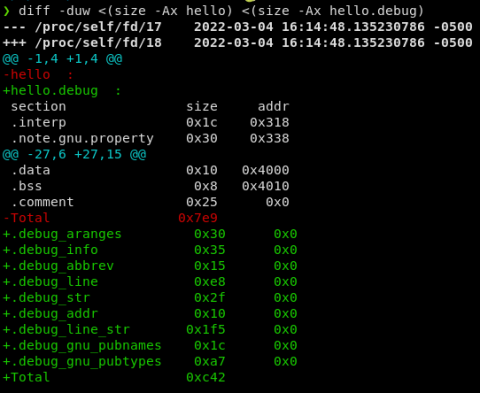
When bugs inevitably make their way into production firmware, defensive programming practices give you peace of mind that your devices will keep running despite issues occurring in the background. However, defensive programming can lead to more issues than it solves if not used carefully. Often the better approach to take is to use the practice of offensive programming, which will help surface issues more quickly and easily and help you iterate towards bug-free firmware and a better overall product experience.

Revisiting The Things Network: Connecting The Things Network V3 to InfluxDB

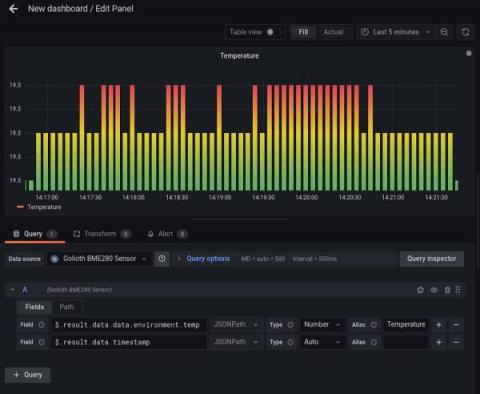
Back in 2019, David Simmons created an awesome blog introducing LoRaWAN devices and The Things Network. He also showed you how easy it was to connect The Things Network V2 to InfluxDB. Since then, a few things have changed and I thought it was time to revisit the Things Network with a new project.

IoT Security: How Important are Logs for System?

IoT has rapidly moved from a fringe technology to a mainstream collection of techniques, protocols, and applications that better enable you to support and monitor a highly distributed, complex system. One of the most critical challenges to overcome is processing an ever-growing stream of analytics data, from IoT security data to business insights, coming from each device. Many protocols have been implemented for this, but could logs provide a powerful option for IoT data and IoT monitoring?

InfluxData Announces New Customers and Accelerated Momentum in Industrial Data and Internet of Things

InfluxData today announced accelerated momentum in Industrial Data and Internet of Things (IoT) driven by new customers, product enhancements and expanded industrial partnerships fueled by the growth of time series data. Customers including Tesla, Rolls Royce, Airbus, Teck, Graco and Graphite Energy are using InfluxDB to collect industrial data from devices and sensors.

Graphite Energy Uses Time Series Data to Drive Industrial Decarbonization Efforts

One major challenge with decarbonization of industrial heat is converting the variability of renewable energy into the reliability required by process plants. Solar panels only generate energy when the sun is out, and wind turbines generate energy when the wind blows. Industry, however, has a consistent and persistent need for energy. Graphite Energy, based in Australia, recognized this disconnect and set out to create a solution to it.

A Platform Gaining Momentum: Announcing New InfluxDB Features for Industrial IoT

Data – specifically time series data – continues to be the key ingredient for successful digital transformation. No matter the industry, time series data helps companies understand the activities and output of people, processes and technologies impacting their business. The effective management and use of time series data has emerged as the best path towards this goal.

Low latency Linux kernel for industrial embedded systems - Part III

Welcome to the concluding chapter of this three-part blog series on the low latency Ubuntu kernel for industrial embedded systems. Each blog is standalone and can be read independently from the others, although you may want to start at the beginning for some continuity. If you need a quick refresher on userland and kernel space, we recommend you check Part I out first.

Low latency Linux kernel for industrial embedded systems - Part II

Welcome to Part II of this three-part blog series on adopting the low latency Ubuntu kernel for your embedded systems. In case you missed it, check out Part I for a brief intro on preemptable processes in multiuser systems and memory split into kernel and user space. The low-latency Ubuntu kernel ships with a 1000 Hz tick timer granularity (CONFIG_HZ_1000) and the maximum preemption (CONFIG_PREEMPT) available in the mainline Linux kernel.