Operations | Monitoring | ITSM | DevOps | Cloud

Low latency Linux for industrial embedded systems - Part I

Welcome to this mini blog series on the low latency Linux kernel for industrial embedded systems! The real-time patch, which is not fully upstream yet, has had many developers wonder about stable alternatives for their projects adopting an embedded Linux operating system (OS) with latency requirements in the milliseconds’ range. The low-latency Ubuntu Linux kernel from Canonical is less costly to maintain than real-time alternatives.

Real-time drone tracking and management with Grafana

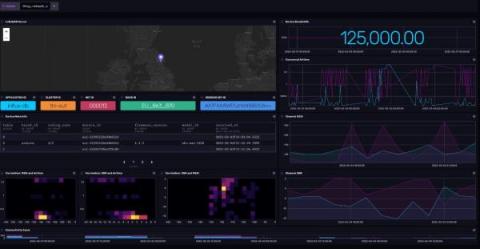
The number of internet-connected assets around us that are powering services and utilities in a wide array of sectors is rising at an exponential rate. As a result, it’s becoming critical for businesses that provide such services and utilities to have an observability stack tailored to the type of physical hardware devices that are generally deployed in swarms.

Percepio Releases Tracealyzer 4.6 with Improved Zephyr and ThreadX Support

Percepio®, the leader in visual trace diagnostics for embedded systems and the Internet of Things (IoT), today released Tracealyzer 4.6 with official support for Zephyr RTOS and Microsoft Azure RTOS ThreadX. The new release also includes Percepio’s next generation trace recorder library with improved support for snapshot trace.

Tracing on the Race Track

Today is test day at Curborough Sprint Track, and the University of Nottingham’s Race Team is taking its creation out for a spin. Frankie is their fully electric 2WD vehicle, able to achieve speeds of up to 80mph (129 km/h). The Team uses Tracealyzer to test the functionality of their embedded software; while writing the code, to record the trace while Frankie is running, and to review the data afterwards. And with great results.

Design Considerations for Software Distribution to Edge & IoT Applications

Make no mistake: You can’t overlook software distribution in DevOps. At risk are the reliability, security and speed of your software releases — and your business itself. This is especially true in enterprises that are releasing across numerous edge endpoints or IoT devices. As your releases’ cadence and payload grow, software distribution challenges multiply, particularly at the edge.

Nash's Four Favorite Firmware Debug Tools

As much as I enjoy writing firmware, I am, at heart, a hardware engineer. I love hunting for minutia in chip datasheets. I love fiddling with eval boards, tacking on wires, and reworking nets together. I love flipping through The Art of Electronics, finding a new circuit, and piecing through its operation. This is why, when invited to write for Interrupt, I jumped at the chance to write about a hardware-related topic that’s near and dear to my heart: debug tools.

The 'Decade of IoT' is off and running

If 2021 was the soft launch of the Decade of the Internet of Things (IoT), 2022 is set to accelerate IoT-related technologies and investments, addressing societal and economic issues. The rollout of 5G, maturing of artificial intelligence algorithms for streaming IoT data, increased computing power at the edge and cheaper/better sensor technology is the “convergence” that has supercharged IoT adoption.

Percepio Joins the Zephyr Project

Last summer, we added support for the open source Zephyr RTOS to Tracealyzer. Today, in recognition of the potential of Zephyr to become the leading independent platform for small IoT devices, Percepio joined the Zephyr Project as a Silver sponsor. Percepio made significant contributions to the Zephyr source code, extending the tracing subsystem to allow full tracing of Zephyr applications in line with the capabilities of Tracealyzer.

IoT in Banking: Examples of IoT technology used in financial services

Banking is becoming more convenient thanks to the Internet and our many connected devices, and the future of the banking industry is growing increasingly digital. Whether discussing the future of retail banking or the future of mobile banking, technology is playing a larger role in our everyday transactions. The Internet of Things (IoT) is part of this rapid evolution toward the bank of the future, and both consumers and financial institutions need to adapt to these retail and mobile banking trends.