Operations | Monitoring | ITSM | DevOps | Cloud

The latest News and Information on Monitoring for Websites, Applications, APIs, Infrastructure, and other technologies.

Roundtable: The Complexities of Cloud Migration - Dash 2021 (Datadog, LaunchDarkly, StockX)

Often when completing a migration project, you’re having your organisation straddle between two systems. You’re fighting habits and changing attitudes while also attempting to complete a high-risk operation. Every software team at one stage in their career will have to complete a migration. Whether it’s to improve scalability and performance, or transition between an on-prem to cloud solution, you’ll need a deep understanding of your current environment to create a strategy that minimises downtime for your team.

How to do serverless monitoring right #shorts

Monitoring CPU load and memory usage is common practice, but with serverless no action is required. In this video, we quickly explain that if your Cloud Run instances start hitting high CPU load, Google Cloud will automatically spin up new instances for you, and vice versa!

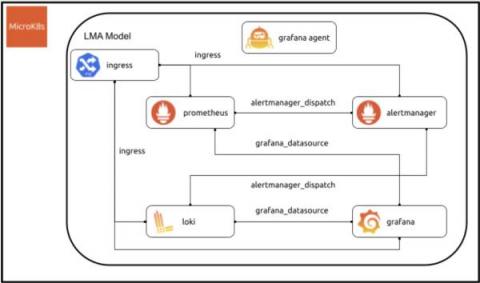
"Open source done right": Why Canonical adopted Grafana, Loki, and Grafana Agent for their new stack

Michele Mancioppi is a product manager at Canonical with responsibility for observability and Java. He is the architect of the new system of Charmed Operators for observability known as LMA2. Jon Seager is an engineering director at Canonical with responsibility for Juju, the Charmed Operator Framework, and a number of Charmed Operator development teams which operate across different software flavors including observability, data platform, MLOps, identity, and more.

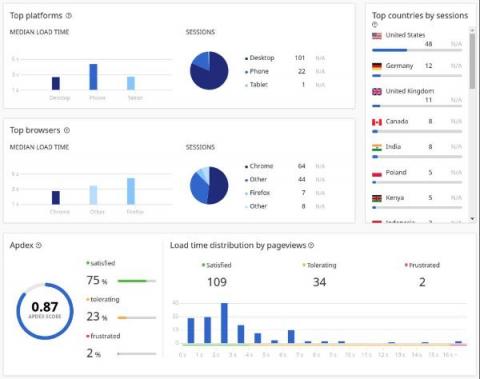
How Pingdom's Real User Monitoring Can Help Optimize Your WordPress Website

Enterprise web applications or medium-to-large, consumer-facing websites are typically built by teams of engineers, administrators, web developers, and other professionals. However, once a site goes live, the operations team is responsible for keeping the site up and running at optimal performance. Online users aren’t forgiving, often abandoning a site as soon as they encounter an issue with functionality, complexity, or performance.

Working With the WordPress REST API

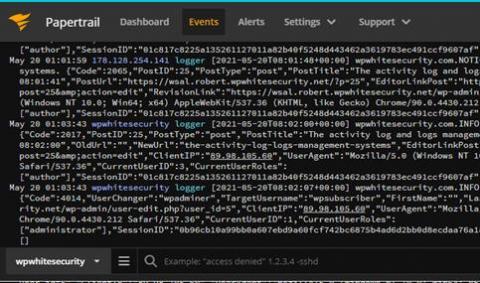
Logging is an important part of every software application. In addition to capturing user activity, well-structured logs can make it easier to debug problems should they occur. But if your application is split up across several different subsystems, collecting and analyzing disparate logs can be a real challenge. Picture this scenario: You work at a startup that uses a CMS managed by a few admins. You also have a standalone front-end application for users to communicate with your platform via an API.

Changes In Technology: How Catchpoint Monitors And Observes The Internet, From 2008 To Today

Last month, Catchpoint celebrated its 13th birthday, a milestone which has us feeling more than a little nostalgic. As we embark on our teenage years as a company, we have also been looking back and reflecting on all the changes the world of technology has seen since Catchpoint was “born” back in 2008. The world looks very different today than it did at our founding and, for that matter, so do we!

Capitalizing on Cloud to Drive Greater Value from Data and Analytics Insights: A New Accenture Splunk Business Group Business Group

We’ve had a busy week in the Splunk Partnerverse! In addition to the new Splunk Partnerverse Program announced last week, we also shared some significant partnership news with one of our longest-standing partners, Accenture.

Having Trouble Getting the Right Insights From Your Cloud Network Monitoring? Preview Splunk NPM Today!

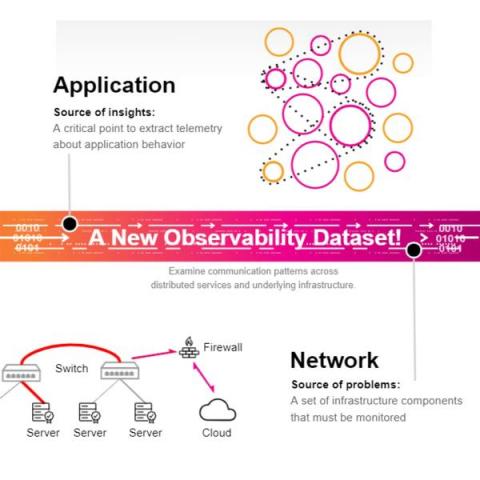
With cloud computing, containers, virtualization and the move to software-defined infrastructure, your cloud infrastructure monitoring is consistently evolving. New challenges can impact the reliability of business services where network performance is a significant subset. Your network is filled with a multitude of hosts, distributed services, and containers. It’s hard to monitor the health of these ephemeral cloud infrastructure components. How is their behavior affecting your applications?