Operations | Monitoring | ITSM | DevOps | Cloud

The latest News and Information on Monitoring for Websites, Applications, APIs, Infrastructure, and other technologies.

Status dashboards: Get visibility across teams and services all in one view

Applications are built and run by many people and made of many components: infrastructure, code pipelines and end users to name a few. Understanding the status of those components and teams is never straight forward. In this blog, we will be unpacking the problem faced by most organizations and taking a look at how SquaredUp can empower you and your organization with status visibility across different teams / components / services – all in one view.


Changes are Observability's Biggest Blind Spot

Classically, the space of observability lies within layers of information on a dashboard. It operates by using the fundamental trio of data — metrics, logs and traces — from each layer of the environment to assess the health of an IT infrastructure. However, a time component is critical, making the stack observable at any point in time. Gathering reliable data and insights into your IT infrastructure remains the primary role of observability tools and services.

SignalFlows to SLOs

How are you tracking the long-term operation and health indicators for your micro and macro services? Service Level Indicators (SLIs) and Service Level Objectives (SLOs) are prized (but sometimes “aspirational”) metrics for DevOps teams and ITOps analysts. Today we’ll see how we can leverage SignalFlow to put some SLOs Error Budget tracking together (or easily spin up same with Terraform)!

Three New Standards Compound Security Engineering Challenges

A recent ESG/ISSA survey highlighted that security professionals are overwhelmed with competing proprietary data standards and integration challenges. Today’s security landscape often comprises dozens of tools, each with its own unique format. Even if the format is defined and widely adopted, like Syslog, implementations vary widely from tool to tool, or even from release to release for the same tool. How big of a problem are these differing data formats?

Replay Data from Azure Blob with Cribl Stream

One of the core features of Cribl Stream is the Replay capability. We pride ourselves on giving customers choice and control over their data. The ability to archive data in cheap object storage, and then providing the ability to reach into the same object storage is one example of this. It’s safe to say that S3 and AWS have become synonymous with the term object storage. It’s like a modern-day Kleenex, or Band-Aid. However, it’s important to remember that there are other, equally featured object storage options available. In this video, we’ll walk through an example of Replay with Azure Blob, and view logs within Humio.

Top 10 Questions to Ask about the Microsoft Teams User Experience

For more than a million organizations around the world, Microsoft Teams is at the core of communications and productivity in today’s hybrid workplace. Having made the investment in Teams, organizations have realized a challenge when it comes to Microsoft Teams user experience: visibility into the many factors that can impact Teams performance, from networks and ISPs to misconfigured routers.

Honeycomb Announces Major Updates to PagerDuty Integration

Today, we’re announcing major new updates to Honeycomb’s PagerDuty integration. These updates put more of the information you need into PagerDuty notifications and allow for greater configurability. These enhancements are available to all users who leverage Honeycomb Triggers and Burn Alerts to send notifications via PagerDuty.

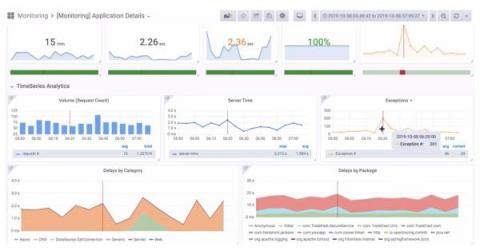
Augmenting APM with InfluxDB for Faster Issue Resolution

An enterprise IT company hosted a large industry event that drew attendees from all around the globe, including key technology leaders. Organizers knew that their IT offerings needed to be top notch to ensure attendees were happy when it came to event experience. The event application allowed attendees to browse and register for sessions at the event. So, organizers needed to be able to identify issues in real-time and fix them quickly.