Operations | Monitoring | ITSM | DevOps | Cloud

The latest News and Information on Containers, Kubernetes, Docker and related technologies.

kr8 - Configuration Management for Kubernetes Cluster

This article originated from http://leebriggs.co.uk///blog/2018/11/07/kr8-kubernetes-config-mgmt.html Previous visitors to this blog will remember I wrote about configuration mgmt for Kubernetes clusters, and how the space was lacking. For those not familiar, the problem statement is this: it’s really hard to maintain and manage configuration for components of multiple Kubernetes clusters.

Deploying the LogDNA Agent With Helm

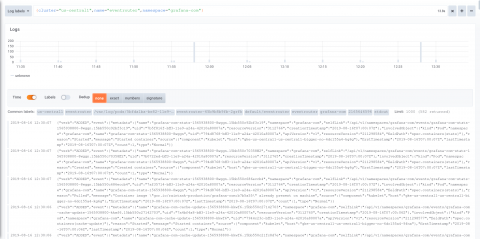
Logging your Kubernetes clusters to LogDNA is already a breeze, and now the LogDNA Kubernetes agent Helm chart makes it even easier. Helm is the official package manager for Kubernetes. With Helm, deploying and managing Kubernetes applications is as simple as typing a single command. This makes deploying the LogDNA agent across your cluster absolutely effortless.

Applying Site Reliability Engineering 'Golden Signals' to your Kubernetes Cluster

Understanding how to monitor the "Golden Signals" of Site Reliability Engineering (SRE) in your Kubernetes cluster(s) is an important skill for any engineer, especially for Day 2 Operations. Fortunately, there are some very useful, powerful, and open source tools and technologies out there for accomplishing these tasks. This training session will go over how to monitor these "Golden Signals" in a Kubernetes cluster using Prometheus and Slack.

Sysdig Secure now integrates with AWS Security Hub

Today, Sysdig is proud to announce our integration with the AWS Security Hub. AWS Security Hub consolidates alerts and findings from multiple AWS services including, Amazon GuardDuty, Amazon Inspector, as well as from AWS Partner Network (APN) security solutions, which Sysdig is already a part of. This single pane of glass gives you a comprehensive view of high-priority security alerts and compliance status across AWS accounts.

Kubernetes Security Essentials

Getting started with Kubernetes is really easy. In just a matter of minutes you can set up a new cluster with minikube, kops, Amazon EKS, Google Kubernetes Engine, or Azure Kubernetes Service. What isn’t so easy is knowing what to do after you set up your cluster and run a few apps. One of the most important parts of setting up a Kubernetes cluster is to make sure your cluster is secure. In this blog post, we will go over some of the strategies you can use to help secure your Kubernetes cluster.

Single Sign-On for Kubernetes: The Command Line Experience

One of these problems is that Kubernetes has no login process. Ordinarily, the client software would initiate this login flow, but kubectl does not have this built in. Kubernetes leaves it up to you to design the login experience. In this post, I will explain the journey we took to get engineers logged in from the terminal and the challenges we faced along the way. The first step to SSO was to set up Dex as our Identity Provider.

Monitoring Kubernetes, part 4: the Sensu-native approach

At this point in our series, you’re likely quite familiar with the many opportunities and challenges that Kubernetes presents (especially when it comes to monitoring!). The last couple of posts take at a look at Prometheus for monitoring Kubernetes, with a side-by-side comparison with Sensu, and illustrate how they work in tandem.

KlusterKit - Enable Kubernetes based Architectures in Air Gapped Deployments

Early adopter enterprises across verticals such as Retail, Manufacturing, Oil & Gas are looking to incorporate containers and Kubernetes as a way of modernizing their applications. Choosing k8s as a standard ensures that these applications can be deployed these on different data center infrastructures (bare metal/VMware/KVM on OpenStack etc) or on public clouds (AWS/Azure/GCP etc).