Operations | Monitoring | ITSM | DevOps | Cloud

Container Orchestration: A Comprehensive Guide

Containerization has deeply changed the way applications are built, deployed, and managed. Containers include both an application and its dependencies, enabling consistent and efficient deployment across diverse environments. However, as applications scale and become more complex, managing numerous containers manually becomes increasingly challenging. Container orchestration streamlines the deployment, scaling, and management of containerized applications.

Reliability-Driven Fleet Management with Komodor

Maintaining a few K8s clusters is hard enough. Maintaining 1000+ clusters is virtually impossible without embracing new tooling and paradigm shifts. Join us for an insightful LIVE workshop exploring the possibilities of Kubernetes Fleet Management with Komodor, lead by Itiel Shwartz* In this session, we will dive into the challenges of multi-cluster management and how Komodor's comprehensive platform simplifies operations. Discover how to gain real-time visibility into your clusters, automate routine tasks, and troubleshoot issues across your entire fleet efficiently.

The Definitive Guide to Kubernetes Cluster Upgrades

Kubernetes continues to play a pivotal role in orchestrating containerized applications with its cloud-native capabilities. Of course, capabilities like flexibility and scalability mean organizations must be extra vigilant, especially when it comes to maintaining the health and efficiency of Kubernetes clusters.

Kubernetes network policies: 4 pain points and how to address them

Kubernetes is used everywhere, from test environments to the most critical production foundations that we use daily, making it undoubtedly a de facto in cloud computing. While this is great news for everyone who works with, administers, and expands Kubernetes, the downside is that it makes Kubernetes a favorable target for malicious actors. Malicious actors typically exploit flaws in the system to gain access to a portion of the environment.

14 benefits of using Site24x7 in Kubernetes observability

Launched in June 2014 as an open-source container orchestration software, Kubernetes is now ten years old. Being increasingly adopted by organizations of all sizes, Kubernetes has today become an essential part of the IT landscape. Kubernetes now completes the modern IT picture, along with Linux, the cloud, and containers that form the backbone of how most IT applications are developed and delivered.

Logz.io Anomaly Detection: Shedding Light on the Unknown Unkowns

With Anomaly Detection for App 360, Open 360 users can now enlist targeted automation to do more of the work for them — automatically monitoring and alerting any issues occurring within the specific services and microservices they identify as being most critical, which are often those that immediately impact business or SLO-related requirements.

Container vs Virtual Machines (VM): Key Differences & Overview

Container vs virtual machines – what is there to know? These are key virtualization technologies that are used by developers, system administrators, and increasingly, home users to run applications. While they are similar, they have different use cases and function differently in key ways.

Logz.io Infrastructure Monitoring Product Tour

See how you can centralize your metrics at any scale and unify them with logs and traces for full visibility into infrastructure health and performance. Slice and dice your metric data to quickly gain insights into any component within ephemeral infrastructure. Track tens of thousands of metrics out-of-the-box with open source-based integrations like Prometheus or Logz.io’s Telemetry Collector, while easily filtering out unneeded data to reduce costs. Utilize Kubernetes 360 to get a complete overview of infrastructure health and performance with minimal configuration.

AWS EKS Pricing Explained: A 2024 Guide

Cloud computing demands efficient application deployment, management, and scaling. Amazon EKS offers a solid solution, simplifying cloud computing management for organizations. At its core, AWS EKS harnesses the power of Kubernetes to automate tasks within AWS’s secure cloud infrastructure. It supports smooth and reliable application performance, which is crucial for organizations scaling their operations. This guide details AWS EKS pricing and offers practical tips on reducing costs.
Sponsored Post

Achieve quick application deployments and container orchestration with proactive container monitoring

Containers are self-contained units of software that include application code along with all necessary dependencies, libraries, and components needed for the code to run smoothly in any environment. They simplify distribution and deployment by packaging everything required for the application to function, without the need for extra infrastructure. While container infrastructure continues to grow and is used by organizations across the globe, it also poses a set of management challenges and can create unnecessary issues if left unattended.

3 Ways to Optimize your Kubernetes Clusters with Resource Control

We cover some real world cases and provide valuable insights into how resources might be the source of future angst that you could avoid. With so many moving parts and so many settings it is nearly impossible to avoid resourcing issues and unnecessary cost in container environments.

Managing Kubernetes Add Ons in a Fleet of Clusters with Gianluca Mardente

In this Navigate video, Gianluca Mardente from Cisco's AppDynamics business unit introduces Project Sveltos, an open-source tool for managing add-ons in a fleet of Kubernetes clusters. Gianluca explains the features of Sveltos, including its cluster profile, modes of operation (continuous, one-time, and continuous with drift detection), and its ability to handle templates and scale efficiently. The session includes a live demo using Civo clusters to showcase the practical application of Sveltos.

#028 - Kubernetes for Humans Podcast with Chris Bailey (IBM Instana)

Chris is an IBM Distinguished Engineer and CTO for Instana, leading the technical strategy and development of Observability and IT Automation solutions at IBM. He is a recognized technology leader across programming languages, runtimes, platforms, observability, and automated IT operations. He has pioneered projects that fundamentally enhanced open-source communities and cloud-native platforms.

Blue-Green and Canary Releases for Kubernetes

Today I am very happy to announce the general availability of Blue Green and Canary releases for Kubernetes on Cloud 66. Allowing Blue Green and Canary releases for Kubernetes is the result of months of hard work by the team here at Cloud 66 and I am very pleased with the results. We wanted our Blue Green and Canary releases to be simple to use and I think we have found the sweet spot between flexibility and ease of use. Today we are also rolling out Preview deployments to GA for all our customers.

Shaping a World Where Tech Empowers and Responsibility Leads with Mark & Isabella Boost

Join us at Civo Navigate Local for "Igniting Tomorrow: Shaping a World Where Tech Empowers and Responsibility Leads" with Mark and Isabella Boost. Dive into the challenges and opportunities in cloud computing, hear from industry veterans about the evolving landscape, and learn about our commitment to sustainability and innovative solutions. Discover how Civo is working towards a fairer, more open, and community-driven tech environment.

Why you NEED Runtime Security updated with Mike Coleman

Join Mike Coleman, Developer Advocate at Sysdig, as he explores the critical need for runtime security in cloud-native environments. Learn how the open-source tool Falco can help detect and respond to suspicious activities in your Kubernetes and container setups. This session covers the evolution of security practices, practical implementation tips, and a live demo. Perfect for developers, platform administrators, and security professionals looking to enhance their security posture.

Accelerating Business Innovations in Computer Vision with FilterBox with Zac Nickens & Kit Merker

Discover how to accelerate business innovations in computer vision with FilterBox! Join Kit Merker and Zach Nickens of PL Side Technologies as they discuss the challenges of implementing computer vision and demonstrate how their innovative FilterBox solution makes it easier. This session includes practical applications, live demos, and interactive Q&A. Don't miss out on their engaging and insightful presentation.

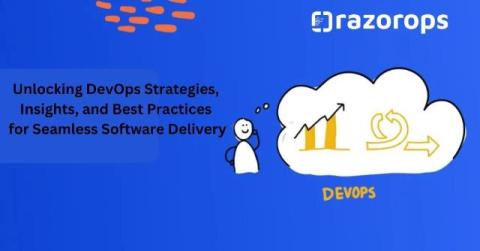
Unlocking DevOps Strategies, Insights, and Best Practices for Seamless Software Delivery

software quickly and reliably is crucial for staying competitive. DevOps, a set of practices that combines software development (Dev) and IT operations (Ops), aims to shorten the development lifecycle and provide continuous delivery with high software quality. Here, we explore strategies, insights, and best practices to unlock the full potential of DevOps for seamless software delivery.

A Rethinking of Ubiquitous Computing and Digital Economies with Dan Desjardins & Jeroen van Bemmel

Join us as we explore the power of distributive computing, demonstrating how we can utilize idle computational resources across various devices. From reducing costs to enhancing sustainability, this presentation showcases the potential of a decentralized approach to computing. Watch to see live demos and learn about the future of compute infrastructure.

Kubernetes Unleashed: Mastering Installation, Configuration, and Cluster Management

Join Colin Griffin & Dinesh Majrekar as they dive into Kubernetes Unleashed, exploring the setup and management of Kubernetes clusters using Terraform, IAC, and GitOps. We'll cover essential tools like Rancher, Argo CD, and Helm, providing a hands-on demo of how to automate deployments and maintain infrastructure as code.

Adding config to AWS ECS tasks

When deploying Docker containers to AWS ECS, you can encounter a situation where you want to run an image that requires some configuration. For example, let's say you wanted to run Vector1 as a sidecar to your main application so you can ship your application's metrics to a service like Honeybadger Insights. To run Vector, you only need to provide one configuration file (/etc/vector/vector.yaml) to the image available on Docker Hub.

Implementing AI Technologies into Developer Tools with Tsavo Knott

In this talk, Tsavo Knott, CEO and technical co-founder of @getpieces, discusses how AI technologies are transforming developer tools. From small task-specific models to large conversational and vision processing models, learn how Pieces has built a world-class product for macOS, Linux, and Windows. Tsavo and Chief AI Officer Sam reveal the challenges and breakthroughs in integrating AI into every aspect of the developer experience. Don't miss the live demos and insights into the future of AI in software development.

6 Tips to Integrate Container Orchestration and APM Tools

Application performance monitoring (APM) setup and strategies vary based on the application’s infrastructure design. Containers managed by orchestration tools like Docker Swarm or Kubernetes are dynamic and ephemeral, significantly affecting monitoring strategies. Container development speeds up an organization’s ability to build, deploy and scale new features.

etcd in Kubernetes: What is it and Why is it Important?

A Comprehensive Guide for SREs Build Foundational Knowledge on How etcd fits into the Kubernetes Ecosystem etcd is the single source-of-truth data store for the Kubernetes cluster. As a Key-Value store with advanced features, etcd stores mission-critical Kubernetes data: configuration data, the cluster state and metadata. This information is key for the Kubernetes cluster to scale and self-heal. If etcd malfunctions, it can cause failures on the Kubernetes cluster.

Happy 10th Birthday Kubernetes!

As Kubernetes celebrates its 10th anniversary, it’s an opportune moment to reflect on the profound impact Kubernetes has had on the cloud technology landscape. Since its inception, Kubernetes has revolutionized the way we deploy, manage, and scale containerized applications, becoming the de facto orchestration platform for today’s cloud-native ecosystem.

Effective Observability for MLOps Pipelines at Scale with Rishit Dagli

Join Rishit Dagli as he explores effective observability for ML pipelines at scale. Learn about the critical differences between observability and monitoring in ML applications, common challenges like distribution shifts, and feedback loops. Rishit demonstrates practical methods for logging and interpreting various metrics to maintain model performance and reliability.

Building a Docker Swarm on AWS EC2: A Step-by-Step Guide

In today's tutorial, we're diving into the world of container orchestration by setting up a Docker Swarm on AWS EC2 instances. Docker Swarm allows you to manage a cluster of Docker hosts as a single virtual system, making it easier to deploy and scale your containerized applications. By leveraging the power of AWS EC2, we'll walk through each step to get your Swarm up and running smoothly.

The Top Three Technology Decisions Teams Make When Building a Platform

Creating a platform? You're in the right spot. Our mission at Cycle started with a clear purpose: to create the best platform for building platforms. Here's the thing, there's really no easy way to build a platform. It requires making a lot of tough technology decisions that can affect success, growth, and upkeep for years to come. There are however some ways to make things simpler. Here are the three technology decisions I've seen make the biggest impact and how to navigate them.

How We Build Serverless AI with Civo and Deep Green with Matt Butcher & Chris Matteson

Join Matt Butcher and Chris Matteson from @fermyontech as hey explore how serverless AI is built using Civo and Deep Green. They discuss optimizing GPU usage, the advantages of WebAssembly, and demonstrate a practical application for sentiment analysis. Discover how Deep Green's sustainable technology is making a difference in AI performance and efficiency.

Native and eBPF-based Kubernetes Workload Profiling for Kubernetes Clusters

System observability is an essential part of identifying performance issues within your environment because it provides a comprehensive view of how your systems are operating at a glance. Typically, observability is achieved through the collection and analysis of metrics. These metrics, generated by your applications, are deliberately incorporated by developers into the source code to offer insights into the application’s internal processes.

Effortless DevOps Efficiency: How Cycle.io Gets You to 80% on Day One

In the world of DevOps, engineering organizations are constantly seeking solutions that can simplify operations, reduce overhead, and accelerate development. While a number of container orchestration platforms exist, their complexity and high maintenance demands often leave engineering leaders seeking alternatives. This is where Cycle comes in. Cycle’s LowOps container orchestration and infrastructure management platform is designed to get your team to 80% efficiency from day one.

How to Skynet your Kubernetes Clusters with LocalAI with Engin Diri

Join Engin Diri from Pulumi at Civo Navigate NA 24 as he explores "How to Skynet Your Kubernetes Clusters with Local AI." In this session, you'll discover the rapid advancements in AI, the truth behind common myths, and practical applications using LocalAI. Learn about the benefits and challenges of open-source large language models and see a live demonstration of embedding domain-specific knowledge using Pinecone.

Delivering Generative AI Solutions in the Enterprise with James Gress

Join James Grass, Senior Technology Architect at @Accenture as he delves into the impact of generative AI on enterprise solutions. Learn about the latest advancements, challenges, and practical applications in the field, including insights on OCI, Coher, and ChatGPT. Discover how organizations are leveraging AI to transform their processes and stay ahead in a rapidly evolving technological landscape.
11 Best Tools To Improve Your Developer Experience (DevEx)

Developer Experience (DevEx) refers to the various tools, practices, and environments that developers interact with to make their work more streamlined and productive. The value of DevEx is immense, as a better developer experience is directly tied to increased productivity and the production of higher-quality software. I have shortlisted 11 great tools that provide an outstanding developer experience by automating routine tasks, encouraging collaboration, and reducing hurdles in the development journey.