Operations | Monitoring | ITSM | DevOps | Cloud

Sponsored Post

Top 7 Platforms for Ephemeral Environments (September 2024 Edition)

In the ever-evolving software development landscape, ephemeral environments are short-lived, automated setups used for testing, staging, or development. These environments exist only temporarily-created when necessary and destroyed afterward-allowing developers to work in isolation without impacting others. Ephemeral environments are crucial for efficient, conflict-free development, accelerating time-to-market, and enhancing team collaboration. As businesses increasingly adopt agile development practices, platforms for ephemeral environments are growing in demand.

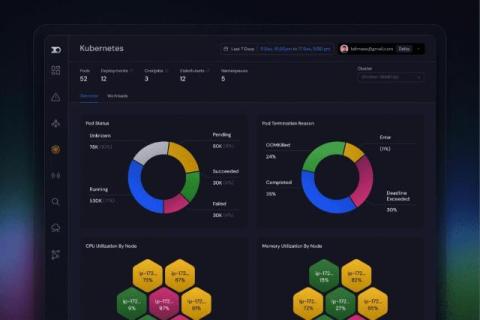
Kubernetes cluster metrics 101

Kubernetes clusters facilitate the management of containerized applications. Imagine coordinating a seamless flow of workloads across servers, ensuring they operate in harmony, regardless of scale. This is exactly what Kubernetes clusters can do for the smooth deployment of your applications. Read on to learn more about Kubernetes clusters, including how to manage them using our list of critical metrics.

All you need to know about Horizontal Pod Autoscaling in Kubernetes

For most organizations, Kubernetes is the preferred containerization platform thanks to its scaling capabilities. Scaling is more than a mere technical endeavor—it helps maintain reliability, efficiency, and smooth user experiences while handling huge data without any business disruptions. It also aids in reducing business expenditures by cutting down on manual labor and avoiding deployment failures.

Pod Exec in K8s: Advanced Exec Scenarios and Best Practices

Remember using SSH to access servers? It was the go-to method for troubleshooting or making changes to a system. But in the world of containers, SSH doesn't quite fit. Kubernetes and containers work differently; they're dynamic and spun up and down frequently. That’s where kubectl exec comes in. It lets you run commands inside a pod directly, without needing to rely on SSH or worry about the pod being ephemeral. It’s simple and fits the nature of modern, containerized environments.

Managing External-DNS & cert-manager with Komodor

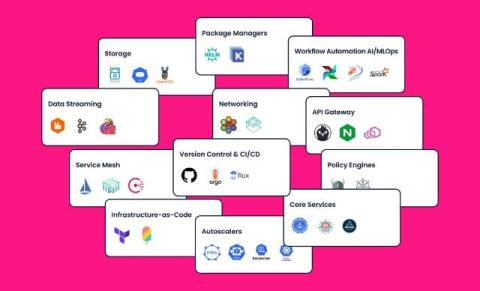
Recently we’ve explored the evolving role of Kubernetes as a full ecosystem, rather than just a platform, diving into the power and complexity of add-ons. These tools, as highlighted previously, are key to augmenting Kubernetes core capabilities, and adding-on (as their name implies) essential capabilities not supported directly by Kubernetes itself.

DeepSeek vs Llama vs GPT-4 - Open-Source AI models compared

Artificial intelligence is no longer a futuristic concept—it is shaping how businesses operate, how researchers innovate, and how people interact with technology. Models like DeepSeek-R1 , a promising new entrant, alongside established players such as Llama 3 and GPT-4o, are at the forefront of this transformation. These tools are not just about technological advancement; they are about solving real-world problems and driving meaningful progress.

Kubernetes Pods vs Nodes: What Sets Them Apart

Kubernetes has revolutionized how we manage containerized applications, bringing scalability, reliability, and flexibility to the forefront. Two fundamental components of Kubernetes are Pods and Nodes, and understanding their differences is crucial for anyone working with Kubernetes clusters. While most people are familiar with these terms, a deeper dive into the specifics can help you optimize your Kubernetes setup and avoid common pitfalls.

GenAI: A New Paradigm for Problem-Solving with Undefined Inputs

Traditional programming is built around well-defined inputs and deterministic logic. Developers write functions that take structured inputs, apply a predefined set of operations, and return a structured output. This model works well when the input space is predictable, but it struggles with problems where inputs are ambiguous, unstructured, or constantly evolving.

A critical look at the UK Government's AI opportunities action plan

The UK government’s recently announced AI Opportunities Action Plan marks an ambitious step forward in harnessing artificial intelligence to drive economic growth and societal progress. As the CEO of Civo, a UK-founded company committed to reimagining the cloud with sustainability, innovation, and sovereignty at its core, I welcome this bold vision.

Fargate Vs. Lambda: Understanding AWS Serverless Solutions

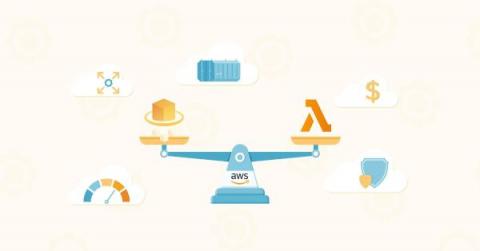
Things are changing. Technology differences between serverless and container-based systems are rapidly blurring. In 2020, Amazon Web Services (AWS) enabled AWS Lambda to package and deploy functions as container images instead of bundling all of a function’s code and dependencies in a.zip file. Today, more organizations are increasingly deploying Lambda functions as Docker container images. These companies want to reap the benefits of serverless computing, containers, and container orchestration.

Voices of the Community: Cycle.io in 2024 and Beyond

The customer is the lifeblood of any company, and a good customer has the potential to make a huge impact on the direction and success of your business. Here at Cycle.io, we are no exception. We believe that when you come to Cycle, you are not only getting great tech but also receiving an excellent customer experience. The customers we work with every day are paramount in driving innovation and keeping us honest.

An introduction to Kubernetes multi-tenancy

Have you ever needed to serve multiple customers with a single instance of your application but ran into challenges like isolating each customer's data and configuration? If you have, then you've encountered a multi-tenant architecture. In this blog post, we'll introduce the core concepts behind multi-tenancy and explore how it works. We'll then dive into how Kubernetes, the popular container orchestration platform, provides primitives that enable building multi-tenant architectures.

OpenTelemetry Collector with Docker: A Detailed Guide

Monitoring and observability have become the backbone of reliable software systems. OpenTelemetry, a CNCF project, has gained immense traction as the go-to framework for collecting and exporting telemetry data. But what makes it even more powerful is its Collector—a vendor-agnostic tool that simplifies data processing. Combine that with Docker, and you’ve got a robust, portable, and scalable observability solution.

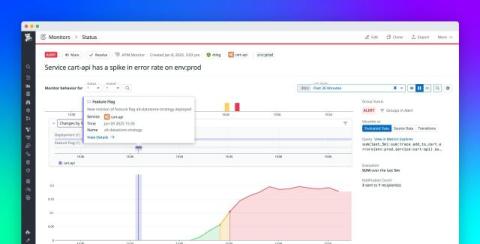
Unify visibility into changes to your services and dependencies with Datadog Change Tracking

In modern application development, changes happen constantly: Deployments are pushed, feature flags are toggled, and Kubernetes events reshape infrastructure, to name just a few. While these practices drive innovation and scalability, they also introduce complexity—especially during incidents. Fragmented tools and workflows across teams and organizations make it difficult to pinpoint the root causes of issues, leading to longer resolution times.

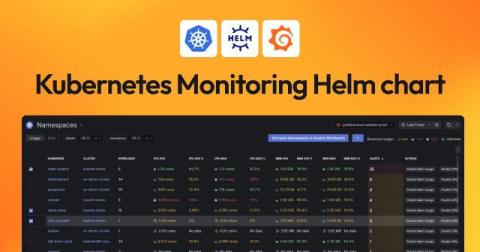
Kubernetes Monitoring Helm chart 2.0: a simpler, more predictable experience

The Kubernetes Monitoring Helm chart 2.0 is here, and it comes with some exciting changes to improve your experience collecting observability data. The Kubernetes Monitoring Helm chart makes it easy to start gathering telemetry data from your Kubernetes clusters. With one deployment, you can capture all of the metrics, logs, traces, and profiles from your cluster and the applications running on it!

Simplifying DNS Automation with ExternalDNS and cert-manager

Managing DNS records in Kubernetes at scale is complex, especially as clusters grow and the number of applications increases. Enter ExternalDNS—a tool designed to automate DNS record synchronization with Kubernetes resources, providing the agility and scalability needed for modern application environments.

Getting Started with the OpenTelemetry Helm Chart in K8s

Managing observability in cloud-native environments can feel like juggling a thousand things at once. OpenTelemetry makes this easier by becoming a favorite among developers for collecting, processing, and exporting telemetry data without breaking a sweat. Now, let’s talk about the OpenTelemetry Helm Chart. It’s like having a shortcut button for deploying OpenTelemetry in Kubernetes.

Fast-Track Kubernetes Observability with Logz.io and OpenTelemetry: A quick getting started guide

In formal terms, OpenTelemetry is an open source framework used for instrumenting, generating, collecting, and exporting telemetry data for applications, services, and infrastructure. It provides vendor-neutral tools, SDKs and APIs for generating, collecting, and exporting telemetry data such as traces, metrics, and logs to any observability backend, including both open source and commercial tools.

#034 - Infrastructure Automation & the Future of Ops with Cory O'Daniel (Massdriver)

This podcast features Cory O'Daniel, CEO of Massdriver, an infrastructure automation platform. O'Daniel discusses his extensive background in software engineering and cloud operations, highlighting his expertise in Erlang and Elixir programming languages and their applications within Kubernetes. He explains Massdriver's role in simplifying infrastructure management for both developers and operations engineers by visually representing infrastructure-as-code.

Lumigo Upgrades Kubernetes Operator for More Insights, Exponential Savings, and Simplicity

We’re excited to introduce the enhanced Lumigo Kubernetes Operator, now more powerful than ever. With just a quick installation, you gain comprehensive observability—bringing together logs, metrics, and traces in a single platform to provide deeper insights and faster troubleshooting. The improved Lumigo Kubernetes Operator unlocks cluster-wide visibility by collecting key infrastructure metrics and logs—allowing you to monitor, analyze, and optimize with minimal effort.

Demystifying the OpenTelemetry Operator: Observing Kubernetes applications without writing code

The promise of observing your application without writing code (i.e., auto-instrumentation) is not new, and it’s extremely compelling: run a single command in your cluster and suddenly application telemetry starts arriving at your observability backend. What else could you ask for? The OpenTelemetry Operator aims to fulfill such a dream for Kubernetes environments by using a set of well known patterns such as operators and custom resources.

Beginner's guide to getting started in machine learning

Machine learning (ML) has shifted from being a niche research field to a powerhouse behind many technologies we use daily. From personalized recommendations on streaming platforms to chatbots and image recognition, ML’s influence is everywhere. But what exactly is machine learning, and why should you invest time in learning about it? This blog will walk you through ML’s fundamentals, explain what you need to know, and outline a practical step-by-step plan to start your ML journey.

Unlocking the Power of GPUs and LLMs: Scalable AI Solutions with Civo

As the demand for large language models (LLMs) and AI-powered applications continues to grow, businesses are facing challenges in scaling compute capabilities and managing costs. GPUs have become the cornerstone of AI innovation, but their integration requires scalable and efficient solutions tailored to enterprise needs.

Simplify AI Adoption with relaxAI : Privacy, Performance, and Savings!

In this demo, taken from our webinar 'Unlocking the Power of GPUs and LLMs: Scalable AI Solutions with Civo,' Josh Mesout, Civo's Chief Innovation Officer, showcases relaxAI’s powerful yet user-friendly interface, designed to simplify AI adoption for both technical and non-technical users. Learn how to migrate from models like ChatGPT in under an hour, save on costs, and ensure compliance with robust data privacy controls.

Traditional Managed Services vs. DevOps Automation Platforms: A Comprehensive Comparison

Infrastructure management is critical for companies building and scaling applications. Traditional managed services (MSPs) handle these tasks externally but often come with high costs, slow execution, and limited flexibility. For teams needing control, speed, and efficiency, DevOps automation platforms might offer a much better alternative.

Mastering Multi-Cluster Kubernetes Certificate Management with cert-manager

Managing TLS certificates in Kubernetes is no small feat, and the complexity only grows when you’re dealing with multiple clusters. Ensuring secure communication, automating certificate renewals, and integrating with external Certificate Authorities (CAs) are just a few of the challenges Kubernetes administrators, DevOps engineers, and security professionals face.

Navigating the Cloud with Civo: Understanding Public vs. Private Solutions

As businesses evolve in today’s digital landscape, the need for efficient and scalable computing resources has become paramount. In the early days of the Internet, large corporations would build or rent out large data centers to run their applications and serve customers. This was great as they could use dedicated hardware and expand as they pleased.

Getting started with Tensor Cores

Technology is advancing rapidly, and with it comes a growing demand for powerful computers, especially in fields such as machine learning (ML), artificial intelligence (AI), and high-performance computing. As these areas develop, the size and complexity of the data they handle also increases. This surge in computing power requirements necessitates new methods for processing large amounts of data efficiently, without sacrificing accuracy or speed.

Why Kubernetes Is Becoming the Platform of Choice for Running AI/MLOps Workloads

Artificial intelligence (AI) and machine learning operations (MLOps) have become crucial across a wide swath of industries, with the two technologies working in tandem to provide value. AI enables data-driven insights and automation, while MLOps ensures efficient management of AI models throughout their lifecycle. With AI’s growing complexity and scale, organizations need robust infrastructure to manage intensive computational tasks, giving rise to platforms like Kubernetes.

Is the Cloud Broken? Rethinking Simplicity, Value, and Purpose in Cloud Computing

As someone deeply embedded in the cloud-native space, I’ve witnessed how the rapid evolution of cloud computing has unlocked remarkable opportunities—but also introduced significant challenges. Recently, I revisited some research we conducted back in 2022, which revealed a critical trend: despite the hundreds of services offered by the major cloud providers (the Big Three hyperscalers), most businesses use fewer than 10 services from their cloud provider.

Your data applications, contained and maintained

It’s time to stop proclaiming that “cloud native is the future”. Kubernetes has just celebrated its 10 year anniversary, and 76% of respondents to the latest CNCF Annual Survey reported that they have adopted cloud native technologies, like containers, for much or all of their production development and deployment. Cloud native isn’t the future – it’s here and now. Data-intensive workloads are no exception.

Docker vs Docker Swarm: Key Differences Explained

Docker has transformed how we deploy, manage, and scale applications. As applications grow in complexity, the need for effective orchestration increases. This is where Docker Swarm comes into play. Docker’s native clustering and orchestration tool simplifies the management of multi-container applications. Together, Docker and Docker Swarm form a powerful combination for building and scaling modern, distributed systems.

Key metrics for Kubernetes performance monitoring: A practical guide

Kubernetes is known to be the best container orchestration tool, but it can also add complexity to resource management, particularly as your clusters expand. Without proper monitoring, problems can rapidly worsen, resulting in subpar application performance, service interruptions, and higher expenses. In this blog, you will learn the key metrics for monitoring Kubernetes performance and how monitoring these can assist you in maintaining optimal performance in your environment.

Docker Networking 101

This series will guide you through the most crucial container networking concepts. You don't need to be a Docker expert to apprehend the different concepts introduced here, though a basic understanding of networking, Docker, and Kubernetes is required. You can fast-track to the second part by going to Docker Networking Part II. Docker is a tool designed to create, build, and run isolated environments inside containers. It's widely used to containerize applications to run inside lightweight containers.

Accelerate root cause analysis with Watchdog and Faulty Kubernetes Deployment

Understanding and managing the impact of Kubernetes changes is one of the biggest challenges for modern DevOps teams. Every modification to a manifest, whether it’s adjusting memory limits, tweaking CPU allocations, or updating container images, has the potential to destabilize services or degrade performance.

The Secret Weapon for Product Success: Developer Documentation Explained

Discover why developer documentation is your product's secret weapon for success. In this talk from Civo Navigate Europe 2024, Frédéric Harper, Principal Developer Advocate at Construct, breaks down why great documentation is essential for user adoption and business growth. Learn actionable tips to improve your docs, avoid common pitfalls, and create a flawless developer experience that drives retention and customer satisfaction.

How is Civo making AI more accessible through affordable GPUs?

To read the full findings from this research, visit the AI for All white paper by clicking here. Artificial intelligence (AI) and machine learning (ML) are reshaping industries and unlocking unprecedented opportunities. However, the widespread adoption of these technologies hinges on addressing a critical issue: the accessibility of GPUs.

What are Kubernetes events? How can you use Kubernetes events for effective monitoring?

Kubernetes events play a predominant role in helping ensure the peak performance of your Kubernetes clusters. These occurrences reflect important changes in states and offer immediate insights into the activities within your clusters. Whether a pod fails to initialize, a node becomes unreachable, or an application deployment encounters problems, Kubernetes events help you comprehend the root causes of these occurrences.

Fireside with Ashneer Grover: Unveiling Startup Secrets at Civo's India Launch!

Join us for a candid fireside chat with Ashneer Grover at Civo’s India Region launch party! Explore insights on scaling unicorns, navigating regulatory hurdles, adopting a money-first mindset, and preserving your company’s core values. Hear Ashneer’s take on remote work, Indian market nuances, and the journey from startup to global success. Don’t miss this behind-the-scenes glimpse into the world of a two-time unicorn founder!

Understanding Docker Networking Part II

Docker is a helpful tool for application management. You can use Docker in various ways: in the standalone mode, using Docker Compose on a single host, or by deploying containers and connecting Docker engines across multiple hosts. The user can use Docker containers with the default network, the host network, or other more advanced networks like overlays. This depends on the use case and/or the adopted technologies.

The Year of GPUs: Reflections and Predictions for 2025

Last year, we reflected on the progress that AI made in 2023 with tools like ChatGPT lowering barriers to entry and driving broader adoption across industries. Looking ahead, we anticipated even greater advancements in AI's accessibility and governance, including the democratization of technology, enhanced large language models for specific applications, and growing concerns around the ethical implications of synthetic content and intellectual property rights.

Kubernetes at the Cutting-Edge of Innovation

Edge computing is a decentralized computing approach that processes data and performs computations near the source of the data—local servers, smart devices, or edge nodes—rather than depending on a centralized data center. This reduces latency, which is often a result of data having to travel long distances and improves bandwidth efficiency. Discover how edge computing and Kubernetes revolutionize data processing and deployment.

Kubernetes Cost Efficiency and Performance Optimization: Best Practices for Managing Your Cluster

As organizations increasingly embrace Kubernetes for container orchestration, optimizing both cost and performance has become a critical challenge. Kubernetes, with its flexible and powerful features, allows for efficient resource management, but without proper configuration and monitoring, it can also lead to over-provisioning, wasted resources, and skyrocketing costs.

What does OOMKilled mean and how do I prevent it?

When creating production-level applications, enterprises want to ensure the high availability of services. This often results in a lengthy development process that requires extensive testing for the applications or a new release. This involves testing the behavior of the application under load, measuring the performance metrics, and accounting for the resource consumption. All this is done to ensure that the application does not behave unexpectedly when being used by clients.