Operations | Monitoring | ITSM | DevOps | Cloud

Monitor Azure Container Apps with Datadog

Azure Container Apps is a serverless platform that enables you to deploy containerized applications and microservices—regardless of their code or framework—without managing any underlying cloud infrastructure or orchestrators. By using serverless containers, Azure Container Apps can automatically scale based on HTTP requests or events supported by Kubernetes event-driven autoscaling (KEDA) in order to accommodate peak demand and meet your budgeting goals.


Understanding Hyperconverged Infrastructure at the Edge from Adoption to Acceleration

You may be tired of the regular three-tiered infrastructure and the management issues it can bring in distributed systems and maintenance. Or perhaps you’ve looked at your infrastructure and realized that you need to move away from its current configuration. If that’s the case, hyperconverged infrastructure (HCI) may be a good solution because it removes a lot of management overhead, acting like a hypervisor that can handle networking and storage.

What's new in Sysdig - September 2022

Welcome to the September edition of What’s New in Sysdig in 2022! I’m Ayu Shah, Principal Sales Engineer based out of San Francisco Bay Area. I joined Sysdig a little over six months ago and it has been an exciting journey to say the least! I have worn many hats in my career, from Software Engineering to Sales and everything in between. I am excited to share some updates to What’s New in Sysdig for this month!

Practical Guide on Setting up Prometheus and Grafana for Monitoring Your Microservices

Observability is a very important aspect of software that’s often taken for granted. You need to have visibility into what your application is doing at different levels to better understand an issue when it occurs. There are multiple open-source tools and initiatives to help you achieve improved visibility. When we talk about observability, there are three parts to consider: logs, traces and metrics.

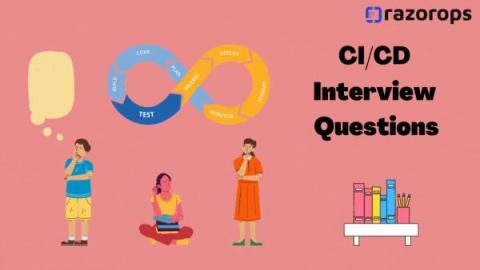
Top 20 CI/CD Pipeline Interview Questions & Answers

The key to acing a CI/CD interview is preparation. The first step in preparation is to learn as much as you can about the possible company, including its background, offerings, and hiring practices. In order to help you master your next interview and land your dream job, this blog post includes CICD interview questions, all neatly organized into themes.. Refreshing your technical knowledge is the next item on the list because it will help you stand apart.

What is new in Calico v3.24

A couple of weeks ago, TIgera engineers released the new version of Calico, as part of a community effort to drive cloud security and networking even further. But before I begin diving into the details of this new release, I want to first spotlight a few of our community members who have merged their contributions to Calico Open Source for the first time.

The Complete Kubectl Cheat Sheet [PDF download]

Kubernetes is one of the most well-known open-source systems for automating and scaling containerized applications. Usually, you declare the state of the desired environment, and the system will work to keep that state stable. To make changes “on the fly,” you must engage with the Kubernetes API.

Civo All Things Kubernetes London Meetup

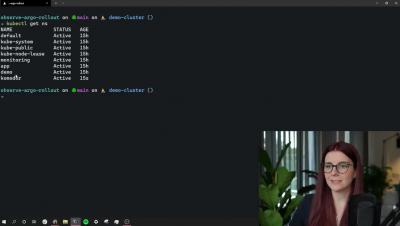
On Tuesday 10th May 2022, at Investigo in Central London, we hosted our first in-person meetup where we discussed and had multiple talks on "All Things Kubernetes". Around 60 community members joined us, where they networked with others in the space and engaged in cloud-native conversations. Check out our All Things Kubernetes London Meetup and learn more about the talks from our team, and the behind the scenes of all the action!

9 Key Reasons to Use or Not Kubernetes for Your Dev Environments

We all know that Kubernetes is the best container orchestration tool in the industry. However, it is not frequently used in development environments due to its complexity and time to set up. That deprives you of many benefits you can gain from Kubernetes in the development environment. In this article, we will discuss the pros and cons of deploying Kubernetes in a development environment. We will go through various factors which decide the suitability of Kubernetes for your organization.

How to Run Solr Cloud on Docker Containers | Setup Tutorial for Beginners - Sematext

Solr is one of the most powerful and popular open-source search engines. And being able to put Solr in docker is an absolute must for anyone looking to get into DevOps. In this video tutorial, we will discuss the benefits of putting solr in containers, the 2 types of architecture solr can utilize, and containerize solr cloud in docker.

How to monitor OpenShift with Sysdig Monitor

Monitoring Red Hat OpenShift brings up challenges compared to a vanilla Kubernetes distribution. Discover how Sysdig Monitor, and its exclusive features in OpenShift, will help you monitor and troubleshoot your issues fast and easily. OpenShift builds many out-of-the-box add-ons into its Kubernetes foundation. For example, the OpenShift API server, Controller Manager, Ingress, or Marketplace ecosystem. This creates a more complex environment that can cause you to struggle.

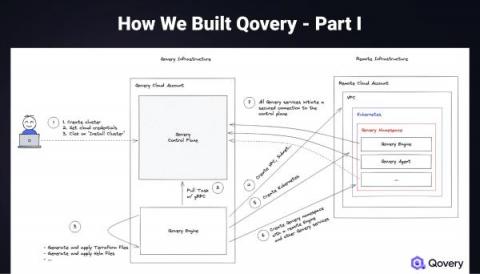
How We Built Qovery - Part 1

I am excited to launch a new series of engineering articles to dig into all the details of How we Built Qovery. A platform built for DevOps, SRE, Platform Engineers, and Developers since January 2020. Since day 1, the Qovery team has strived to make Qovery as open as possible and fight against the black box effect! In this series of 5 articles, I will explain as much as possible how things work behind the scene.

Quick Bytes - Getting started with ECS monitoring

Lumigo provides visibility into your ECS clusters and the underlying services and tasks in real-time by leveraging out-of-the-box dashboards and turn-key integrations with AWS. All the key metrics you need to monitor your clusters, services and tasks are displayed with easy access to corresponding traces. With one-click distributed tracing, Lumigo lets developers effortlessly find and fix issues in serverless and containerized environments

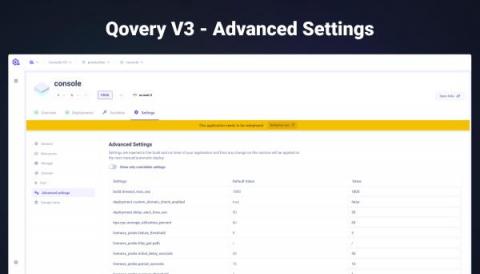
Qovery V3: Advanced Settings Building the Path to Beta Testing

Right at the beginning of the summer was the launch of our console V3 in Alpha testing; as explained in this article, the main goal of this V3 was to solve the UX issues present in the V2; it's also fully open source and rewritten from scratch in React. We gathered many feedbacks, and our Frontend team is continuing to add every feature already available on the V2 to go from Alpha to Beta testing at the end of September.

An overview of Monitoring Azure Kubernetes Services

Modern applications are increasingly built using containers and microservices packed with their dependencies and configurations. Kubernetes is open-source software for deploying and managing those containers at scale—and it is also the Greek word for helmsmen of a ship or pilot. Monitoring the health and performance of your Azure Kubernetes Service (AKS) cluster is critical to ensure that your applications are up and running as expected.

Understanding Kubernetes Evicted Pods

What does it mean that Kubernetes Pods are evicted? They are terminated, usually the result of not having enough resources. But why does this happen? Eviction is a process where a Pod assigned to a Node is asked for termination. One of the most common cases in Kubernetes is Preemption, where in order to schedule a new Pod in a Node with limited resources, another Pod needs to be terminated to leave resources to the first one.

How to deploy a React app to Kubernetes using Docker

The concept of containerization helps you run applications as lightweight virtual machines. As a web developer, setting up local development environments can be tiresome. However, using tools like Docker and Kubernetes gives developers an upper hand to quickly set up and deploy applications. This guide uses Docker to deploy a React app to Kubernetes.

Partnership: Save Your Cloud Costs with Usage AI and Qovery

You are using Qovery, and you love the product, but what about saving some money on your cloud bills on top? Today, we are making your dreams come true with a brand new partnership with Usage AI, and today, I will explain everything you need to know about it.

What is a service mesh?

The rise of the containerized software environment has left archaic, monolithic application structures behind. Cloud-native applications running via a range of containers, or individual, self-contained software packages, are now the norm. Platforms and tools like Kubernetes and Docker allow developers to create apps that work irrespective of device or operating systems, vastly reducing time to market and increasing potential user base numbers.

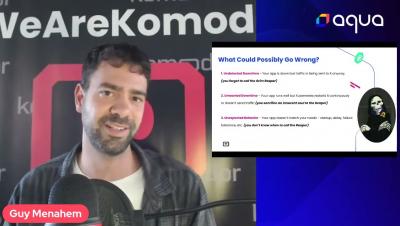
Making Peace with the Grim Reaper - Liveness & Readiness Probes | Guy Menahem & Anais Ulrichs

Learn all about liveness and readiness probes (done right) from Guy Menachem - Solution Architect at Komodor, the first Kubernetes-native troubleshooting platform, with vast experience working with DBs from old-timey mainframes to cloud-native systems.

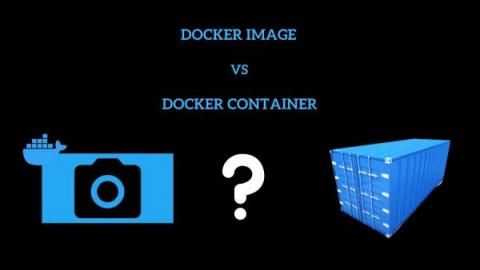
Difference between Docker Image & Docker Container

A Docker image is a combination of instructions and for creating a docker container a instruction is used to execute code in a Docker container. Docker images work as a set of instructions to build and run a Docker container, as a template. Docker images also perform as the initial point when using Docker. A Docker image contains read-only files. when a docker image is created it can not be changed and modified, insert template that has instructions for deploying containers.

Kubernetes Load Testing: Speedscale vs NeoLoad

In this article, you’ll be introduced to two tools: Speedscale and NeoLoad. Both of these tools offer you a way to load test your applications. This post will compare their ease of setup, development experience, fit within a modern infrastructure, and integration into CI/CD. Load testing is not a new concept in any way: the term was common even before Google Trends started recording data in 2004.

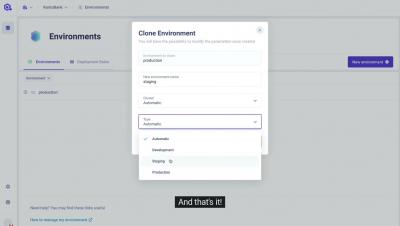
How to Manage Staging Environments to Speed Up Your Deployments By 5x

The staging environment plays a crucial role in product development. It's the last checkpoint before the product updates are live for customers. Every successful product has a robust and effective staging environment on the back. However, the traditional staging environments cannot keep pace with the modern CI/CD workflow. This article will go through how traditional shared and static staging environments hinder faster deployments and efficiency.

IBM LinuxONE and Sysdig: Building cyber resilient systems in hybrid cloud environments

On September 13, 2022, IBM announced the latest IBM LinuxONE Emperor 4, a highly secured and sustainable Linux-based enterprise server designed for companies of all sizes. Sysdig with IBM LinuxONE provides unified visibility across workloads and cloud infrastructure through a single cloud-native monitoring and security platform.

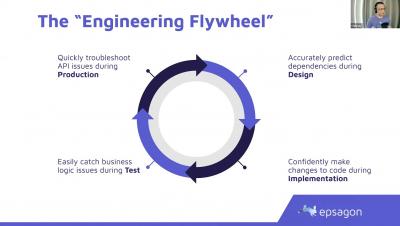
Observability and Resilience in Microservices-based Environments [Komodor + Epsagon Webinar]

Kubernetes has made it easier to manage and scale microservices. However, keeping track of so many moving parts is often challenging for Dev & Ops teams. Achieving clear observability for better monitoring and troubleshooting is key to improving the development process.

Civo Update - September 2022

In August, we announced a brand new tech event, Civo Navigate! This event will bring together the brightest minds in cloud native technology to provide a packed event with over 50 speakers. Civo Navigate is focused on bringing together the cloud native community and creating an environment where everyone can share ideas, collaborate and learn more. If you are interested in joining us in person, register now to get in-person access to all keynote sessions, workshops, and breakout sessions.

Developer Week Cloud Austin: Hit or Miss?

Hi there, Albane writing, Product Marketing Manager at Qovery, writing to your from Texas 🤠 With Romaric (CEO at Qovery) and Morgan (Co-founder at Qovery), we spent the last two days promoting Qovery at the Developer Week Cloud that took space in Austin, Texas. After weeks of preparation, quite a few hours of travel, and a whole setup, let me give you some insights about our first-ever conference as an exhibitor!
Sponsored Post

Top Tools to Help Debug Kubernetes Applications

When building cloud-based applications, managing the infrastructure becomes a bigger challenge as you scale. Kubernetes brings order to the chaos, letting you control and automate the containers used to deploy your application. Debugging in the cloud presents further challenges, and the complexities of distributed applications make it hard for many debugging setups to keep pace. Tools designed to run locally aren't effective. However, there are Kubernetes debugging tools that can handle the shift in paradigm. In this article, you'll read about several options that make debugging Kubernetes applications much easier.

What's new in Kubernetes v1.25?

Kubernetes as a project is growing at a rapid pace, resulting in many features being added, deprecated, and removed throughout the process. With the announcement of Kubernetes v1.25, there were a total of 40 enhancements and 2 features being either deprecated or removed. This blog will look at the significant changes coming with the release of Kubernetes v1.25 and how this will impact future use.

A technical deep dive into Kubeflow 1.6

Kubeflow 1.6 is finally here! 🎉🎉🎉 The open source MLOps platform of choice keeps evolving year over year, growing in popularity and available features. Learn about the technical aspects of the new release and listen to a deep dive into the new features with the engineering team of Charmed Kubeflow. We will be talking about pipelines, Katib and the news about the scheduler.

How to deploy the Grafana stack using Podman

You may be asking yourself: What exactly is Podman? Podman is short for Pod Manager and is a daemonless, open source container engine alternative to Docker that allows for rootless containers. Podman is available for Linux, Mac, and Windows operating systems. It only requires a simple and easy install on RPM-based Linuxes, such as Red Hat Enterprise Linux, CentOS, Rocky, or AlmaLinux.

Is Docker Good for Hosting?

Do you already know about Docker and finding out whether it is good for hosting? Are you wondering why Docker containers are so popular? If the answer to any of these questions is yes, you are at the right place. Here we’ll discuss the meaning and working of Docker hosting. By the end of this article, you will also be aware of the advantages and disadvantages of Docker. I’ll be covering the best server for Docker and throw some light on whether you should use Docker at all.

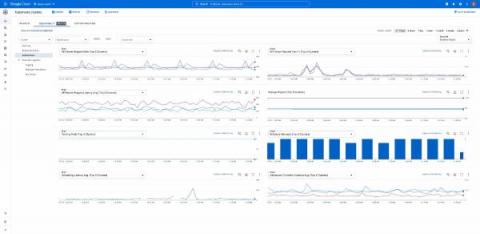
Introducing Kubernetes control plane metrics in GKE

An essential aspect of operating any application is the ability to observe the health and performance of that application and of the underlying infrastructure to quickly resolve issues as they arise. Google Kubernetes Engine (GKE) already provides audit logs, operational logs, and metrics along with out-of-the-box dashboards and automatic error reporting to facilitate running reliable applications at scale.

Deploy a Dockerized Laravel application

As web applications become more complex, software engineering teams must rely on many different products and services to create the best developer experience. The application development ecosystem has grown beyond version control and hosting deployment. Manually managing the deployment of new features across all services can create a serious bottleneck in the software development lifecycle. It also introduces the risk of human error.

Customizing and Securing Your Epinio Installation

As I’ve written about before, Epinio is built to be very flexible. In this blog, I will highlight several places we can hook into the rest of your existing infrastructure to give you a better experience. If you’re new to Epinio, it’s the application development engine for Kubernetes that lets you to go from code to URL in one step.

Tech Story: Papershift x Qovery Infrastructure Scaling Made Easy

A few days ago, I chatted with Florian Suchan (CTO and Co-Founder at Papershift) about their journey to easy infrastructure autoscaling. As you will see in the article, they tried a wide range of solutions before finding the right fit; if you feel you’re going through the same journey, this article is for you!

Top 15 Key Categories of Monitoring Metrics in Kubernetes and OpenShift Environments

Over the last couple of years, Kubernetes (often called K8s) has become the most popular and well-known container orchestration system for automating application deployment, scaling, and management. Scheduling containers at scale in a cloud-native ecosystem is central to the technology. Kubernetes itself is an open-source project, and as such presents challenges for many enterprises especially in regulated industries with strong security requirements and formal SLA commitments.

7 Common Kubernetes Pitfalls

Kubernetes is the industry's most popular open-source platform for container orchestration. It helps you automate many tasks related to container management. Companies use it to solve their problems related to deployment, scalability, testing, management, etc. However, Kubernetes is complex and requires a steep learning curve. In this article, we will go through some common Kubernetes pitfalls most companies fall to.

4 Tips With Qovery To Reduce Your Cloud Costs

While the cloud offers significant benefits compared to traditional on-premise infrastructure, its inherent elasticity and scalability lead to uncontrolled costs. Cloud costs can be opaque and difficult to analyze — and without some system of identifying the source of costs and how to manage them — they can quickly undermine your profit margins. Since Qovery makes it easy to create on-demand environments, it can drastically grow your cloud costs.

Canonical Kubernetes 1.25 is now generally available

The Canonical Kubernetes team is delighted to announce that Canonical Kubernetes 1.25 is now generally available, with Charmed Kubernetes joining our Microk8s release last week, following the release of upstream Kubernetes on 23 August. We consistently follow the upstream release cadence to provide our users and customers with the latest improvements and fixes, together with security maintenance and enterprise support for Kubernetes on Ubuntu.

Top 8 CI/CD Best Practices for Building Successful Applications

Developers commonly integrate the code and these frequent modifications in a central repository as part of the software development method is known as continuous integration (CI). Improved software quality, faster quality audit and bug fixes, and quick validation and release cycles are all major goals of continuous integration. Continuous Delivery (CD), which builds on top of Continuous Integration(CI), includes automating both builds and the complete software release process.