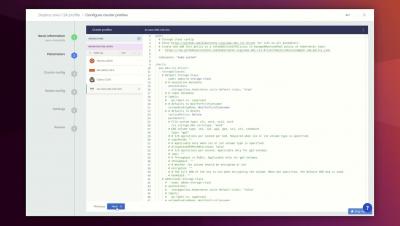
StormForge Optimize Live is a machine learning-powered performance and resource optimization solution for Kubernetes workloads. Optimize Live ingests and analyzes production observability data and recommends specific actions to optimize CPU and memory utilization. You can take these actions manually or set them to occur automatically, making it easier to maintain a high level of application performance while minimizing cloud costs.
Have you ever wondered how you can help Kubernetes manage your pods in the most efficient way? Kubernetes can do a decent job “out of the box,” but it can be optimized just like any other system. One such optimization in the Kubernetes world is introducing liveness probes, and in this post, you’ll learn everything about them.
We are excited to announce the early preview of Calico Enterprise 3.16. This latest release extends the active security platform’s support for egress access controls, improves the usability of network-based threat defense features, and scales visualization of Kubernetes workloads to 100s of namespaces. Let’s go through some of the highlights of this release.
As Mobile World Congress 2023 approaches, the latest technological advances in the telecom industry will take center stage. At the forefront of these advances are the innovations brought about by open-source technologies. At Canonical, we are leading the way in this space, with groundbreaking developments in OpenRAN automation and distributed compute management that outperform our competition.
Kubernetes, one of the most popular container management systems, automates the work necessary for deploying and scaling a containerized application by managing a large number of interdependent microservices. Additionally, it allows for the migration and deployment of containerized applications across different platforms in a multi-cloud environment.
5G is the fifth generation of wireless technology which is transforming the way we connect and communicate. With data transfer speeds up to 100 times faster than 4G, 5G technology enables faster download and upload times, lower latency and a higher number of connected devices. Additionally, 5G networks will support a wider range of frequencies, including high and low bands, which will ensure wider coverage and greater reliability.
What’s New in Sysdig is back again with the February 2023 edition! I am Michael Rudloff, an Enterprise Sales Engineer based in the United Kingdom, and I am very excited to update you with the latest feature releases from Sysdig. This month, Sysdig Secure brings a couple of new features. We have added reports to Risk Spotlight – Risk Spotlight can show you which packages with vulnerabilities are currently in use in a running container across your whole Kubernetes environment.
With the current financial climate, cost reduction is top of mind for everyone. IT is one of the biggest cost centers in organizations, and understanding what drives those costs is critical. Many simply don’t understand the cost of their Kubernetes workloads, or even have observability into basic units of cost. This is where FinOps comes into play, and organizations are beginning to implement those best practice standards to understand their cost.
Prometheus is one the the most acclaimed solutions for Kubernetes monitoring. There are multiple add-ons and exporters that facilitate the task of pulling Kubernetes metrics. Sysdig Monitor is a cloud-native observability platform that helps businesses with the whole observability lifecycle. It provides simplicity at all times, allowing companies to rapidly pull their Kubernetes and Prometheus metrics without headaches.
Kubernetes Secrets are a built-in resource type that's used to store sensitive data. This blog teaches you how to work with Secrets in Kubernetes. Kubernetes can do many things, but we usually refer to it as a “container orchestrator.” Orchestrating containers means starting and restarting them when needed, ensuring their configuration matches the declared state, and autoscaling them. But Kubernetes can do much more than that.
We are excited to announce the launch of gopaddle, the Low-Code Internal Developer Platform, as a community addon for MicroK8s edge cloud. This addon will help Kubernetes developers accelerate the development of distributed applications at the edge. In today’s fast-paced business landscape, the ability to quickly and efficiently develop new applications is critical to success.
As an open-source container management system, the Kubernetes (commonly referred to as K8s) platform’s constant growth warrants an intricate cluster network, making it challenging to gain system-wide visibility. Even a tiny disruption within the network could collapse the entire operation, resulting in the failure of dependent applications. Businesses that rely on such containerized applications may experience a huge impact in revenue.
Nowadays, when most people think about the term “machine learning,” they think of advanced, refined applications such as Chat-GPT, the chatbot-based deep learning text generator, or AlphaGo, the computer program that’s currently the “world's best player” of the board game Go.
The default pod provisioning mechanism in Kubernetes has a substantial attack surface, making it susceptible to malevolent exploits and container breakouts. To achieve effective runtime security, your containerized workloads in Kubernetes require multi-layer process monitoring within the container.
Content As we already discussed in previous articles, the Kubernetes control plane is made up of a few key components playing different roles. Those are necessary to ensure both Kubernetes and applications are functional and behaving properly.
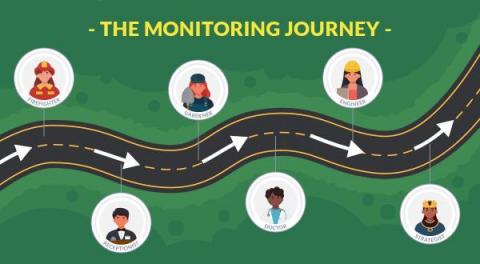
Monitoring is not a goal, but a path. Depending on the maturity of your project, it can be labeled in one of these six steps of the cloud monitoring journey. You will find best practices for all of them and examine what companies get from each one. From classic virtual machines to large Kubernetes clusters or even serverless architectures, companies have adopted the cloud as a mainstream way to provide their online services.
Kubernetes is a quintessential operating system for the cloud, providing a platform for the deployment, scaling, and management of containerized microservice applications. At the heart of Kubernetes is the Kubernetes API, which serves as the primary entry point for interacting with the system. The official client for the Kubernetes API is kubectl, a Kubernetes CLI tool that allows users to manage a Kubernetes cluster and perform a wide range of tasks.
Managing your clusters has become a complex and confusing task. With scattered tools and the requirement to learn specific tools from cloud providers, many companies have trouble making the most of the cloud. That's where OpenCP comes in. Join us as we explore the benefits of simplifying management across cloud platforms with OpenCP. We’ll dive into the benefits of using OpenCP, how it works, and how it is built on the best practices of kubectl and kubeapi.
Managing infrastructure while developing, building, and running an application is difficult for developers. In fact, many businesses often struggle with infrastructure management besides managing their applications. To tackle this problem, Platform-as-a-Service or PaaS came into existence. PaaS provides a platform with a cloud-based environment for developers to develop and manage their applications with pre-configured tools and frameworks.
Testing is a vital aspect of security. Unfortunately, there are vulnerabilities that bypass the testing stage and introduce flaws in the production environment. Kubernetes vulnerabilities make more impact when exploited on running applications and production environments. These vulnerabilities can allow hackers to exploit the host machine if the container has escalated privileges.
As the cloud native environment becomes increasingly more complex, new systems are needed to combat this issue and create simplified, secure, and stable working environments. Sidero Labs developed Talos Linux as a way to run Kubernetes consistently across all platforms, such as Edge, Cloud, Virtual, and Bare Metal. Talos Linux is a secured Linux distribution designed specifically for managing Kubernetes.
Containers are a useful tool for deploying applications because they allow for the packaging of an application’s code, libraries, and dependencies into a single, isolated unit. This makes it easy to deploy and run the application on any computer or server that has the necessary container software installed.
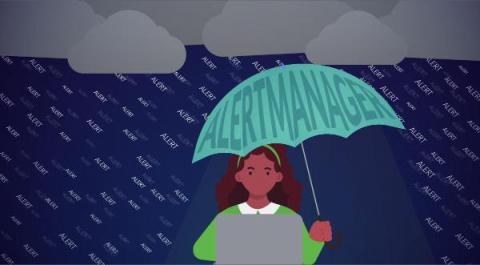
Have you ever fallen asleep to the sounds of your on-call team in a Zoom call? If you’ve had the misfortune to sympathize with this experience, you likely understand the problem of Alert Fatigue firsthand. During an active incident, it can be exhausting to tease the upstream root cause from downstream noise while you’re context switching between your terminal and your alerts. This is where Alertmanager comes in, providing a way to mitigate each of the problems related to Alert Fatigue.
I am thrilled to announce that SUSE has been recognized by G2, the world’s largest and most trusted software marketplace, as one of the Top 25 German Companies in their “Best Software Awards” for 2023. At SUSE, we have always been dedicated to providing our customers with the best possible software solutions and services. This award by G2 is a testament to the hard work and dedication of our entire team.
Kubernetes has come a long way, but the current state of Kubernetes open source monitoring is in need of improvement. This is in part due to the issues related to an unnecessary volume of data related to that monitoring. For example, a 3-node Kubernetes cluster with Prometheus will ship around 40,000 active series by default. Do we really need all that data?
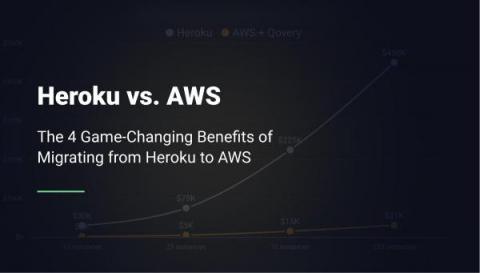
Companies face multiple challenges when migrating their applications and services to the cloud, and one of them is infrastructure management. The ideal scenario would be that all workloads could be containerized. In that case, the organization could use a Kubernetes-based service, like Amazon Web Services (AWS), Google Cloud or Azure, to deploy and manage applications, services and storage in a cloud native environment. Unfortunately, this scenario isn’t always possible.
This blog will cover what the Calico/VPP dataplane is and demonstrate the performance and flexibility advantages of using the VPP dataplane through a benchmarking setup. By the end of this blog post, you will have a clear understanding of how Calico/VPP dataplane, with the help of DPDK and accelerated memif interfaces, can provide high throughput and low-latency Kubernetes cluster networking for your environment.
Sysdig Monitor has long integrated with a variety of Notification Channels, allowing users to forward alerts to a multitude of third-party services. Currently, users can choose to forward Sysdig Monitor’s alerting events to external services like PagerDuty, Slack, Email, Microsoft Teams, and many more.
While more and more teams are adopting Kubernetes as their standard container orchestration technology, cost insight is lacking. Teams often don’t know how much they’re spending, where in their organization they are spending, or what is driving their infrastructure cost increases. OpenCost helps alleviate this problem by bringing real-time cost monitoring to Kubernetes workloads with a solution that encompasses both an open specification and an open source project.
Our latest open-source project, Helm-Dashboard, just crossed 3K stars on GitHub (and hundreds of daily active users), only three months since it was released! We thought this milestone was a good chance to take a look back at our journey, announce the release of v. 1.0.0, discuss future plans, and, most importantly, give our utmost thanks to the amazing contributors and Kommunity members that made it all possible! What capabilities would you like to see next in Helm-Dashbaord?
Kubernetes has firmly established itself as the leading choice for container orchestration thanks to its robust ecosystem and flexibility, allowing users to scale their workloads easily. However, the complexity of Kubernetes can make it challenging to set up and may pose a significant barrier for organizations looking to adopt cloud native technology and containers as part of their modernization efforts.