Operations | Monitoring | ITSM | DevOps | Cloud

Get Ready for the Next Level of Gaming!

Recorded at Civo Navigate Austin 2025, join industry experts from Perforce, Gametree, and Streamfog as they share their insights on the current state of technology in gaming, cloud-native technologies, and the future of tech in gaming. This panel discussion explores the latest trends and innovations in game development, AI-powered gaming, and emerging business models, revealing how the gaming industry is leveraging cloud-native technologies, AI, and other cutting-edge tech to drive innovation and growth.

Kubernetes Cost Optimization Done Right

Kubernetes was never just about cost savings. It was built to be a robust, scalable, and efficient platform for orchestrating containerized applications. And it was meant to abstract infrastructure away so developers could move quickly and go about their business of developing. But as Kubernetes adoption scaled, so did cloud bills. FinOps tools emerged to rein in spending, but most only scratch the surface.

A Quick Guide To Kubernetes Observability

Many companies are rapidly adopting cloud-native computing services, like containers, microservices, and serverless computing. Unlike monolithic applications, these technologies rely on distributed architectures. Whether you are running them in the cloud, on-premises, or both, distributed systems consist of thousands or millions of processes and components. The challenge now is to make these complex systems’ inner workings visible, controllable, and improvable.

13: Effective Resource Optimization and Kubernetes Insights with Daniele Polencic

Kubernetes, container resources, request and limits, sizing, the impact of getting things wrong, CPU limits, JVMs, HPA and VPA, does Karpenter fix the request and limit problem? We’ve got a great episode for you today! Thanks for joining us on Densify Talks! We welcome Daniele Polencic, one of the lead instructors at LearnK8s, which specializes in containers and Kubernetes technologies.

Pepperdata Resource Optimization for Data Workloads on Kubernetes

Struggling with underutilized Kubernetes resources or rising cloud costs? Learn how Pepperdata Capacity Optimizer delivers real-time, automated resource optimization for Kubernetes and Amazon EMR workloads—helping teams reduce costs and boost performance without manual tuning. In this video, discover how Pepperdata helps DevOps, platform engineers, and FinOps teams.

#046 - Simulating, Scheduling, and Saving: Optimizing Kubernetes with David Morrison (Applied Res...

In this episode, Itiel has an insightful conversation with Dr. David Morrison, a research scientist and founder specializing in Kubernetes scheduling and autoscaling. David shares his journey from operations research to leading distributed systems efforts at tech giants like Yelp and Airbnb. Learn about the transition from Apache Mesos to Kubernetes at Yelp, including the role of their open-source API layer, Pasta.

Kubernetes Costs: More Than Meets The Eye

As organizations expand their Kubernetes deployments and scale production workloads, effective cost management becomes an essential priority. The rapid innovation demanded from development teams often intersects with a shortage of advanced Kubernetes expertise, leading to resource inefficiencies and unnecessary expenses. This challenge is further amplified by the growing prevalence of AI/ML workloads and the intricate demands of GPU utilization.

How to Deploy Helm Charts on Kubernetes the Easy Way with Qovery

Deploying Helm charts on Kubernetes can be complex, especially when dealing with configuration overrides, security, and environment-specific setups. In this article, we show how Qovery simplifies Helm chart deployment through a seamless developer experience, robust security defaults, and powerful automation, without sacrificing flexibility.

How to Configure Docker's Shared Memory Size (/dev/shm)

Your Node.js app runs fine on your machine. But inside Docker? You start getting weird crashes—ENOSPC: no space left on device. Chrome headless tests fail out of nowhere. PostgreSQL throws shared memory errors under load. The problem? It’s probably /dev/shm, the shared memory volume Docker sets up by default. Most containers get just 64MB of space here.

Infrastructure monitoring with Site24x7 | Cloud, Kubernetes, and Hybrid Environments

Modern IT environments are dynamic, distributed, and constantly evolving. You need more than traditional monitoring to keep everything running smoothly. Site24x7 is your all-in-one, AI-powered infrastructure monitoring solution. What this video covers: Whether you're overseeing AWS, Azure, GCP, OCI, VMware, or Kubernetes, Site24x7 simplifies it all with a single agent and AI-driven insights.

6x Developer Velocity: Intuit's Secret to Unlocking Innovation

Join Jimil Patel, Head of Technical Product Marketing and Developer Advocacy at Intuit, as he shares the company's transformative journey from cloud-native to AI-native, resulting in a 6x increase in developer velocity. Recorded at Civo Navigate Austin 2025, this talk explores Intuit's Modern SaaS AIR platform, AI-powered developer tools, intelligent auto-scaling, and AIOps-driven operations. Discover how Intuit is redefining the future of software development with real-world examples, including IKS AIR for self-healing runtimes and AI-driven observability, which cut MTTR by 50%.

8 GKE Monitoring Best Practices For Peak Performance

Kubernetes (K8s) is the most popular container orchestration platform today. But it can also be quite complex. To overcome this management challenge, you can deploy your Kubernetes containers using the Google Kubernetes Engine, which is a fully managed service. Yet, to get the most from GKE, you still need to follow best practices. The following tips and best practices for monitoring GKE clusters will help you get started.

Unlocking Cost Optimization Through Full-Stack Kubernetes Visibility

In Kubernetes environments, cost is rarely just about spend. It’s about performance, node utilization, workload behavior, and how all of those align with your team’s operational goals. Komodor’s approach to cost optimization has an operational advantage due to its deep visibility into your entire Kubernetes estate. Imagine the potential for cost optimization when you have complete visibility into every aspect of your Kubernetes operations.
Building a Better Cloud: Inside Civo's Vision for What Comes Next

Recorded live at Civo Navigate Austin 2025, Civo CTO Dinesh Majrekar explores how cloud infrastructure is evolving to meet the demands of modern workloads. From rising AI adoption to the need for data sovereignty and cost transparency, Dinesh shares Civo’s vision for a simpler, more efficient, and developer-focused cloud. Learn how Civo is addressing customer challenges around choice, control, and performance and why rethinking how we build and deliver cloud infrastructure is more relevant than ever.

Unlocking Developer Productivity: SUSE Application Collection extension for Rancher Desktop

Same as in the community, Enterprise developers need tools that are both powerful and flexible. They need to innovate quickly, iterate efficiently‌ and deploy with confidence. This is where the synergy between Rancher Desktop and SUSE Application Collection truly shines, offering a comprehensive environment for modern enterprise developers.

Is Your Data Truly Yours? Why Data Sovereignty in India Matters More Than Ever

As businesses in India embrace the cloud, a critical question looms: Where does your data really live, and who controls it? In 2025 alone, India’s cloud market is projected to reach US$ 21.4 billion, with further growth in 2030 expected to reach US$ 52.2 billion. This helps to underscore the rapidly expanding scale and strategic importance of cloud infrastructure in the country. But with this growth comes growing concern: Is your data secure, compliant, and under your control within Indian borders?

Goodbye imagePullSecrets, Hello Kubernetes Credential Providers

Previously, we showed you how to securely pull Docker images from Cloudsmith to Kubernetes using OIDC with a CronJob-based approach. We concluded the post discussing credential provider plugins from Kubernetes 1.20 and an enhancement in Kubernetes 1.33 that offers a new approach for external registries like Cloudsmith. We have now built a credential provider that takes advantage of this new capability. This article explores what this means for the future of pulling images from Cloudsmith on Kubernetes.

Using a Kubernetes credential provider with Cloudsmith

Join Ian Duffy, Senior Site Reliability Engineer at Cloudsmith, as he discusses using credential providers in Kubernetes to securely pull images from private repositories. Credential providers are a great new feature that appeared in recent versions of Kubernetes. They allow you to pull images using a short-lived authentication token, which makes them less prone to leakage than long-lived credentials - bolstering security in the software supply chain.

GenAI: 80% Adoption by 2026... Are You Ready?

In this video, we explore the growing adoption of Generative AI in enterprise, the common pitfalls companies face, and how to build GenAI infrastructure that’s secure, scalable, and production-ready. We also introduce how relaxAI, Civo’s AI assistant, helps solve key challenges around privacy and infrastructure, giving you full control by bringing the LLM to your data.

Fewer Bindings, More Power: Rancher's RBAC Boost for Enhanced Performance and Scalability

Managing permissions in sprawling Kubernetes landscapes can often feel like untangling an ever-growing knot. As clusters and user bases expand, so does the intricate web of RoleBindings, impacting everything from UI responsiveness to the very stability of etcd. This complexity, if unaddressed, can become a significant hurdle to achieving scalability and maintaining optimal performance in Rancher. SUSE is committed to improving its container management platform.

What is Container Orchestration

In the simplest of terms, container orchestration is the automated process of deploying, managing, scaling and networking containers. Containers are lightweight, portable self contained units that include an application or the processes needed to run applications. Docker is a great example of a project that helps to containerize or package applications, and was a large reason why containers gained such popularity around 2013. Before Docker there were Linux Containers (LXC).

Infrastructure Management: Containers vs Virtual Machines

Trends in tech come and go, but certain underlying primitives stick around forever. In software, two such primitives are virtual machines and containers. Virtualization paved the way for the cloud to become massive. Data centers would likely never have been commercially viable without it. While still relatively new, containerization has already made a serious mark on the software engineering world.

Configure and customize Kubernetes Monitoring easier with Alloy Operator

What if you were to tell Kubernetes Monitoring what you wanted, and the system configured collectors based on your choices? We wondered that as well—wondered enough to create Alloy Operator and its Helm chart for version 3.0 of the Kubernetes Monitoring Helm chart. We’re excited to share that the new Kubernetes Monitoring Helm chart is now available, and it introduces a dynamic way of setting up your telemetry data collection with Alloy Operator.

Are You Correctly Deploying LLMs on Kubernetes in 2025?

We are in mid-2025, and teams across industries are rolling out large language models, or LLMs, to power everything from conversational agents to document understanding. However, getting them to run smoothly in production… That’s still a challenge. A working model isn’t just about putting it in a container and tossing it into a Kubernetes cluster.

Kubernetes CPU Limit: How to Set and Optimize Usage

Kubernetes makes it easy to scale applications. But when it comes to CPU resource management, a poorly tuned cluster can quickly become unstable or inefficient. For network engineers, setting CPU requests and limits correctly—and understanding the deeper implications—is essential for keeping workloads efficient, costs predictable, and noisy neighbors in check.

Announcing Qovery Observability: the simplest way to understand your application

We are thrilled to announce the next major milestone in our platform vision: Qovery observability! Qovery Observability is our new product, ready to give you the fastest way to gain a crystal-clear, unified understanding of your application and infrastructure. Fully managed, zero lock-in, you keep the data. Devs love it, no DevOps needed. Coming soon!

Kubernetes sidecar deployment using CircleCI

Kubernetes excels at managing complex, containerized systems, and one of its most impactful patterns is the sidecar. Sidecar containers extend applications by running supplementary processes in tandem. This modular architecture enables enhanced observability, networking, or security layers — all without changing the core application code. Continuous Integration and Continuous Deployment (CI/CD) practices are key to reliably shipping these configurations.

Serverless vs. Containers: A Comprehensive Guide to Choosing the Right Solution

In the rapidly evolving world of cloud computing, network engineers often need to decide between serverless computing and containerization. Both technologies offer unique advantages and are suited to different types of applications. This article aims to provide a comprehensive comparison of serverless computing and containers, helping network engineers make an informed decision based on their specific needs.

Is AI the Future of Software Development, or Just a new Abstraction? Insights from Kelsey Hightower

Join Kelsey Hightower as he shares his thoughts on the current state of AI and its potential impact on software development. In this discussion with Mark Boost and Dinesh Majrekar, Kelsey explores the possibilities and limitations of AI, and how it may change the way we build and interact with software. From the importance of pragmatism to the role of abstraction, Kelsey offers valuable insights for developers, engineers, and anyone interested in the future of technology.

Canonical delivers Kubernetes platform and open-source security with NVIDIA Enterprise AI Factory validated design

To ease the path of enterprise AI adoption and accelerate the conversion of AI insights into business value, NVIDIA recently published the NVIDIA Enterprise AI Factory validated design, an ecosystem of solutions that integrates seamlessly with enterprise systems, data sources, and security infrastructure. The NVIDIA templates for hardware and software design are tailored for modern AI projects, including Physical AI & HPC with a focus on agentic AI workloads.

Rancher Live: The Kubernetes report card

Join Divya Mohan live on July 17th at 2 PM UTC on to explore OpenReports—a new project for unified, API-driven reporting. Discover how OpenReports simplifies capturing and consuming policy, security, and compliance reports via a vendor-neutral API. See live demos, real-world use cases, and learn how this project brings clarity and consistency to Kubernetes reporting. Don’t miss it!

A Simple Guide To GKE Cost Allocation And Cluster Spend

Running workloads on Google Kubernetes Engine (GKE) delivers impressive scalability and flexibility. Yet, it can also introduce a tricky challenge: tracking GKE costs accurately. Remember, GKE costs rarely scale linearly. Overprovisioned nodes, idle autoscalers, and orphaned workloads can quietly balloon your bill in the background. And while GKE’s native tools offer some visibility, they often miss the full picture.

Infrastructure Management: When to Pick Bare Metal or Virtualized Servers

Infrastructure management isn't about taking sides. Too often, teams get pulled into “X is better than Y” debates that miss the bigger picture: your compute stack should serve your needs, not industry hype. A common decision point in the past has been the choice between bare metal or cloud hyperscalar virtualization. Nowadays, the answer isn't 1 or 0.

#045 - Beyond Cluster Creation: Mastering Multi-Cluster Kubernetes with Gianluca Mardente (Cisco)

Join Itiel as he chats with Gianluca Mardente, a Principal Engineer at Cisco Systems. Gianluca shares his path to tech and Kubernetes, including his work history and the inspiration behind his open-source project, Sveltos. They dive into the significant challenges of managing a large fleet of Kubernetes clusters – ensuring consistency, handling upgrades, and coordinating resources across different clusters.

Rancher Live: Balancing Open Source Activities in Corporate Environments

Join the discussion about how to balance Open Source Activities in the context of corporate live. Based on Amanda and Kim's talk at KubeCon Europe 2025 in London - Achieving a balance between corporate goals and open source activities is essential for organizations that offer and rely on both commercial and open source technologies. This balance can be hard to achieve when you have goals, needed results, and resource constraints all pulling in different directions.

Monitoring ECS Metrics: A Guide for Developers and Operations Teams

For anyone leveraging cloud computing, Amazon Elastic Container Service (ECS) continues to provide a seamless solution for managing containerized applications. AWS Fargate takes this cloud-native architecture a step further by allowing you to run containers without servers or clusters. As a serverless offering for ECS, Fargate provisions compute capacity and scales it based on demand.

Secure Docker Image Pulls from Cloudsmith to Kubernetes using OIDC

Pulling Docker images from private registries for containerised applications presents a security challenge. It requires authentication management, network access, and trust across distributed systems. Credentials must be securely handled and rotated, and image pulls can break due to network restrictions or expired tokens. All of this makes deployment and security harder.

Open Container Initiative (OCI) Support in Cloudsmith

Kubernetes has become the de facto platform for orchestrating containers. Open standards complement Kubernetes by defining best practices for its implementation. These standards are developed by the open-source Kubernetes community (not a single vendor), ensuring vendor neutrality, easier integration with other tools, and overall system efficiency.

Top 5 Observability Tools DevOps Teams Should Know

Observability and monitoring are the cornerstone of resilient, high-performing applications. Nearly every IT or software engineering leader we come into contact with emphasizes the importance of the ability to understand and diagnose what is going on with their applications at all times. Having clear and concise visibility into your applications is no longer optional.

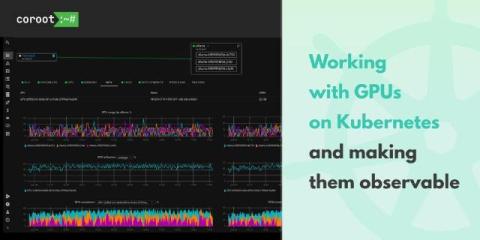
Working with GPUs on Kubernetes and making them observable

GPUs are everywhere powering LLM inference, model training, video processing, and more. Kubernetes is often where these workloads run. But using GPUs in Kubernetes isn’t as simple as using CPUs. You need the right setup. You need efficient scheduling. And most importantly you need visibility. This post walks through how to run GPU workloads on Kubernetes, how to virtualize them efficiently, and how Coroot helps you monitor everything with zero instrumentation or config.

AI in Action with Kunal Kushwaha: 2 Demo Showcase. See What's Possible!

Join Kunal Kushwaha, Field CTO at Civo, for two demos using relaxAI. In the first demo, we'll show you how to deploy your own Large Language Model (LLM) inference engine using Ollama, giving you full control over your AI model. In the second demo, we'll demonstrate how to build custom AI integrations using relaxAI API, making it easy to add AI features to your existing applications. Whether you're an AI developer, MLOps team, or just curious about AI, this video is for you.

Deploy Istio at Scale With Rancher

Managing and deploying applications across multiple Kubernetes clusters presents significant challenges, especially as the number of clusters grows. Traditional methods, like manually applying Helm charts or manifests per cluster, become cumbersome, error-prone, and difficult to scale or maintain consistency for Day 2 operations. While Rancher allows managing Helm chart repositories and apps, this is done on a per-cluster basis via the UI.

Community Vigilance, Enterprise Response: Addressing CVE-2024-21626 in Rancher

In backend engineering, many days follow a familiar rhythm: coffee, code reviews, maybe deploying a new feature. But occasionally, the routine is interrupted by a message that signals a different kind of challenge, like a Slack notification from the security team: “Hey, we’ve identified a potential issue. Need to sync up.” This post details one such instance—our journey addressing CVE-2024-21626, a privilege escalation vulnerability reported in Rancher.

How to Log Into a Docker Container

When your Docker container isn't behaving the way you expect, you need to get inside and see what's going on. Maybe your app is throwing errors, a service won't start, or you just need to check some configuration files. Getting into a running Docker container is simpler than you might think, but there are several ways to do it depending on your situation. This guide shows you exactly how to log into Docker containers, troubleshoot common issues, and debug your applications effectively.

Is AI already replacing me? Insights from Civo Navigate

With all the rapid advancements in machine learning and AI, it can feel like we’re constantly playing catch-up. Over the last two Civo Navigate conferences, Berlin 2024 and San Francisco 2025, Civo brought together leading experts to discuss the future of AI, machine learning, and the growing challenges and opportunities for developers and businesses.