Operations | Monitoring | ITSM | DevOps | Cloud

Top Kubernetes CI/CD Tools in 2025

As Kubernetes continues to dominate the container orchestration space, the need for robust CI/CD tools to streamline deployment workflows is greater than ever. With a plethora of options available, choosing the right CI/CD platform can significantly impact the efficiency and scalability of your DevOps pipeline. In this blog, we’ll explore the top Kubernetes CI/CD tools in 2025 and why RazorOps is a standout choice.

Top 50 Trends That Will Impact the Future of DevOps in 2025

As a DevOps practitioner with over a decades of experience, I have witnessed the evolution of this domain from its nascent stages to becoming a critical aspect of modern software delivery. As we look forward to 2025, the DevOps ecosystem is poised for significant transformation, driven by technological advancements, organizational shifts, and the growing complexity of software systems. Here are the top 50 trends that I believe will shape the future of DevOps in 2025.

#032 - Kubernetes for Humans Podcast with Solomon Hykes (Dagger.io)

Solomon Hykes began his career as a System Administrator at Fairgame in 1999 and later worked as a Junior Software Engineer at the San Diego Supercomputer Center in 2002. In 2003, he became self-employed and worked as a Tech Mentor & Instructor until 2004. Solomon then joined CEIS as a Trusted Infrastructure Engineer from 2004 to 2006. Solomon Hykes then joined SmartJog as a Solutions Engineer from 2006 to 2007.

Building India's Digital Future with Cloud Computing

With India projected to become a US$ 26 trillion GDP economic superpower by 2047, the demand for scalable, secure, and compliant digital infrastructure has never been more urgent. As home to the world’s largest, youngest, and most digitally adept population, India's digital economy is expanding rapidly, driven by a wave of innovation and public cloud adoption.

10+ Kubernetes Architecture Best Practices For Performance, Security, And Cost Efficiency

Looking to optimize your Kubernetes architecture? While the word “Kubernetes” translates to “helmsman” (i.e., someone who steers a ship), Kubernetes ultimately functions more like an orchestra conductor than a ship captain. Kubernetes (also known as K8s) simplifies the orchestrating containers for engineers. This frees engineering up to focus on innovation, reduce time to market, and optimize cloud spend.

Need for Automation: How to Scale Infrastructure Effectively

As businesses scale, managing infrastructure becomes increasingly complex and distributed, leading to challenges in consistency, performance, and security. Manual configurations and outdated practices can no longer meet the demands of today’s highly competitive businesses. To tackle these issues, adopting a phased approach; Day 0, Day 1, and Day 2; provides a practical roadmap for scaling infrastructure automation effectively.

New Feature: Instance Type Filtering in Karpenter

We're excited to announce a significant enhancement to Karpenter, an intelligent Kubernetes autoscaling solution that automatically optimizes your infrastructure costs and performance. Since integrating Karpenter six months ago, it has helped our users automatically provision the right AWS instances for their workloads.

Keeping Time in Distributed Systems

We all know that keeping a server clock "on time" is an ongoing problem that computer scientists have wrestled with for decades. Nowadays, most servers keep time using a quartz crystal oscillator that's powered by a CMOS battery. The crystal vibrates at a very precise frequency and that's how it maintains accuracy (cool right). Events like rebooting and power loss can cause the server to abandon its primary clock source and fall back to an OS-level timekeeping system.

Build and Deploy Kubernetes Applications with Skaffold

Skaffold is a command line tool that facilitates continuous development by streamlining the workflow for building, pushing, and deploying Kubernetes applications. Skaffold handles the complexities of Kubernetes deployments, allowing developers to focus on local application iteration while managing deployments efficiently. Get started with our tutorial.

10 Kubecost Alternatives For Maximum Kubernetes Cost Visibility

Kubernetes is one of the most significant advances in cloud computing since the public cloud. It provides an open-source, highly scalable, and cloud-native platform for orchestrating containerized applications. More organizations now use Kubernetes to deploy, network, scale, and manage containers at scale. In addition, the Kubernetes architecture empowers them to deploy containerized applications swiftly across various platforms, support distributed systems, and scale operations to meet demands quickly.

The Role of Data Sovereignty in Securing the Future of UK Enterprise AI

Data sovereignty has become increasingly critical for UK enterprises, particularly in regulated sectors like finance, healthcare, and the public sector. This is due in part to growing concerns over data security and the need for compliance with increasingly stringent regulations.

Deploying Prometheus With Docker

There are different ways you can use to deploy the Prometheus monitoring tool in your environment. One of the fastest ways to get started is to deploy it as a Docker container. This guide shows you how to quickly set up a minimal Prometheus on your laptop. You can then extend that setup to add a monitoring dashboard, alerting, and authentication.

#031 - Kubernetes for Humans Podcast with Daniel Bryant (Syntasso)

Daniel Bryant is the Head of Product Marketing at Syntasso. His technical expertise focuses on ‘DevOps’ tooling, cloud/container platforms, and microservice implementations. Daniel is a long-time coder, platform engineer, and Java Champion, contributing to several open-source projects. He also writes for InfoQ, O’Reilly, and The New Stack and regularly presents at international conferences such as KubeCon, QCon, and JavaOne. In his copious free time, he enjoys running, reading, and traveling.

Rich Logs Collector for Docker Compose Services with SigNoz

Our production services run on a Linux machine using Docker Compose, keeping our infrastructure simple and manageable. Docker Compose allows us to easily define and manage multi-container applications, providing a straightforward way to orchestrate services, which helps reduce complexity in our infrastructure. Recently, we decided to switch to SigNoz to gain more flexibility and control over our observability stack. Following the SigNoz setup guide, we used logspout to collect and forward logs.

Why Civo joined the Open Cloud Coalition

At Civo, we’ve always believed that the cloud industry should be fair, open, and accessible to companies of all sizes - not just the select few with deep pockets and large platforms. When the Open Cloud Coalition (OCC) was first proposed, we immediately saw it as an opportunity to cut through the noise and amplify the important voices of the cloud industry.

Autoscaling Amazon EKS with Karpenter: A Step-by-Step Guide

Managing resource scaling in EKS clusters can quickly become complex, especially with fluctuating workloads. Traditional autoscaling solutions often require predefined configurations, which can lead to inefficiencies and unnecessary costs. This is where Karpenter comes in—a powerful, open-source project designed to dynamically manage and scale nodes in response to real-time application demands.

Get complete Kubernetes observability by monitoring your CRDs with Datadog Container Monitoring

Custom resources are critical components in Kubernetes production environments. They enable users to tailor Kubernetes resources to their specific applications or infrastructure needs, automate processes through operators, simplify the management of complex applications, and integrate with non-native applications such as Kafka and Elasticsearch.

A guide on scaling out your Kubernetes pods with the Watermark Pod Autoscaler

While overprovisioning Kubernetes workloads can provide stability during the launch of new products, it’s often only sustainable because large companies have substantial budgets and favorable deals with cloud providers. As highlighted in Datadog’s State of Cloud Costs report, cloud spending continues to grow, but a significant portion of that cost is often due to inefficiencies like overprovisioning.

Kubernetes autoscaling guide: determine which solution is right for your use case

Kubernetes offers the ability to scale infrastructure to accommodate fluctuating demand, enabling organizations to maintain availability and high performance during surges in traffic and reduce costs during lulls. But scaling comes with tradeoffs and must be done carefully to ensure teams are not over-provisioning their workloads or clusters. For example, organizations often struggle with overprovisioning in Kubernetes and wind up paying for resources that go unused.

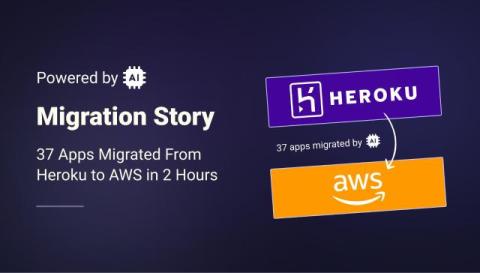
How AI Helped To Migrate 37 Apps From Heroku To AWS Under 2 Hours

Startups relying on Heroku often hit roadblocks as they scale. Rising costs, technical limitations, and lack of control over infrastructure force many to explore alternatives. One such startup recently migrated 37 applications from Heroku to AWS using Qovery’s DevOps AI Migration Agent. Here’s how they accomplished this migration in less than two hours, saving days of manual work.

Kubernetes is Not Just a Platform - It's a Whole Ecosystem

As someone who is building a platform that is intended to make Kubernetes operations easier for everyone––I’ve learned a lot about production Kubernetes operations. The main thing I’ve noticed folks getting wrong, is that it isn’t simply a platform, it’s an entire ecosystem.

Build Your Own Developer Platform in 90 Minutes

In today’s fast-paced technology landscape, creating a robust developer platform is essential for streamlining software development processes and ensuring efficient collaboration across teams. In this talk, we will explore how you can build your own developer platform in just 90 minutes using a powerful combination of Backstage, ArgoCD, and Kubernetes (K8s).

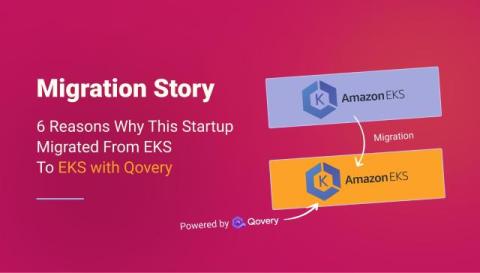
From AWS EKS to AWS EKS with Qovery - 6 Reasons Why This Startup Migrated

Sometimes, even when you’re running on a solid infrastructure like AWS EKS, a growing company needs to rethink how they manage it. One startup, fresh off a successful Series A raise, found themselves in just that situation. They had been running two EKS clusters — Production and Staging — managed entirely by their CTO, who is an experienced AWS power user.
3 Ways to Streamline Kubernetes Operations with PagerDuty Automation

Kubernetes popularity continues to grow, with over 60% of organizations maintaining multiple Kubernetes across diverse environments and teams in some capacity. However, as clusters multiply, so do operational challenges: from monitoring hundreds of microservices to responding to and escalating incidents across distributed systems.

Troubleshooting Kafka Monitoring on Kubernetes

Let’s be honest: setting up Kafka monitoring on Kubernetes can feel like you’re trying to solve a puzzle without all the pieces in place. Between connectivity snags, configuration issues, and keeping tabs on resource usage, it’s easy to feel like you’re constantly firefighting. But tackling these issues head-on with a few go-to solutions can save a lot of headaches down the road.

Top 5 Best Container Monitoring Tools in 2025

Monitoring provides real-time insights into containerized applications' performance, resource utilization, and overall health. It allows organizations to identify bottlenecks, track resource allocation, detect anomalies, and ensure optimal performance of their containerized infrastructure. Let's explore the world of container monitoring software and discover the leading options that empower you with the necessary tools to monitor and optimize your containers effectively in 2025.

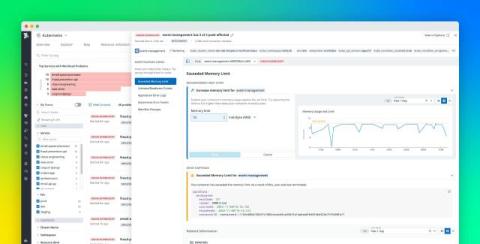
Troubleshoot and resolve Kubernetes issues with AI-powered guided remediation

As teams adopt Kubernetes at greater scale, they face increased complexity in keeping their growing list of workloads and services up and running. Achieving the visibility and context needed to detect and resolve incidents quickly is difficult amid a constant flood of telemetry data and alerts. Furthermore, Kubernetes expertise often remains siloed in DevOps and infrastructure teams.

Smooth Sailing to Amazon EKS: How Cortex Scorecards Simplify Your Kubernetes Migration

Migrating a Kubernetes cluster from a self-hosted environment to Amazon EKS (Elastic Kubernetes Service) offers considerable operational benefits—but this transition also brings challenges in reliability, compliance, and observability. By leveraging Cortex Scorecards, teams gain clear insights and structured benchmarks to simplify and improve the migration process. Here’s how Cortex Scorecards can make your EKS migration efficient and resilient.

How to Achieve SOC-2 Compliance on AWS

SOC-2 is a critical framework that ensures the security, availability, integrity, confidentiality, and privacy of systems and data. It is particularly important for organizations handling sensitive customer information. If you are using any cloud vendor, especially AWS, and aiming for SOC-2 certification then this article is for you. We will provide insights into how AWS supports SOC-2 compliance, and also go through a comprehensive roadmap and practical strategies for meeting these essential standards.

Mastering Kubernetes Fleet Management for Multi-Cluster Success

In today’s cloud-native world, enterprises increasingly manage multiple Kubernetes clusters across public and private clouds, edge, and on-premises environments. As clusters proliferate, efficient management is key to ensuring consistency, security, and reliability across the fleet.

Build Your Own Developer Platform in 90 Minutes Using Kubernetes, ArgoCD, and Backstage

This is a re-recording of the LIVE workshop from DevOpsDays Tel Aviv In today's fast-paced technology landscape, creating a robust developer platform is essential for streamlining software development processes and ensuring efficient collaboration across teams. In this talk, we will explore how you can build your own developer platform in just 90 minutes using a powerful combination of Backstage, ArgoCD, and Kubernetes (K8s).

Dev Containers Made Easy: Meet DevPod!

In this session from Civo Navigate Europe 2024 Hrittik Roy introduces DevPod, the open-source tool that empowers developers to create and manage their development environments effortlessly. Hrittik will guide you through the benefits of using DevPod, including cost savings and avoiding vendor lock-in, all while remaining compatible with popular IDEs like VS Code. Join us for a quick demo with Civo that showcases how DevPod helps developers and teams standardize their environments and streamline their workflows.

From Zero to Hero in AI: My Serverless LLM Adventure!

In this Civo Navigate 2024 session, Engin Diri shares his unexpected journey into managing Open-Source Large Language Models (LLMs) in a cloud infrastructure setting. Discover the three key strategies he proposed to clients, weighing the pros and cons of each approach. Engin also addresses the challenges faced along the way and the solutions implemented to overcome them.

Transform Your Development Game: Focus on Workloads Over Infrastructure!

In this session from Civo Navigate Europe 2024, Will Stewart, CEO of North Flank, reveals the secrets to transforming your development process by shifting focus from infrastructure to workloads. Discover how this revolutionary approach can help developers bypass the complexities of infrastructure management and prioritize delivering valuable features.

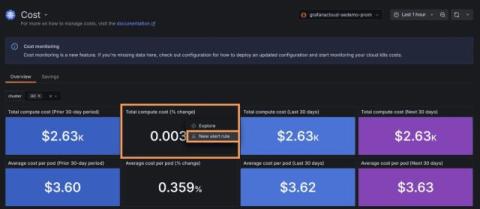
Creating alerts from panels in Kubernetes Monitoring: an overlooked, powerhouse feature

As a product manager here at Grafana Labs, I’ve learned that sometimes the most powerful features can sneak by unnoticed, buried in those three little dots off to the side of the panel. But what happens when one of those hidden gems suddenly becomes the star of the show? Recently, we released a new Kubernetes Monitoring feature in Grafana Cloud—an alert system you can use to create alerts from panels in the app.

3 Reasons Why This Startup Migrated From Clever Cloud to Scaleway Kapsule

Making infrastructure decisions can feel like a high-stakes puzzle: finding the right balance between technical capabilities, cost efficiency, and ease of management is no small feat. Recently, a company switched from Clever Cloud to Scaleway Kapsule (Kubernetes), with Qovery orchestrating its transition. Here’s what drove this change and how it’s paid off.

Azure Kubernetes Service Pricing: Complete Guide to Optimizing AKS Spend

Tired of managing your Kubernetes clusters all on your own? Don’t have the time to figure out how to deploy, run, and optimize usage? Azure has just the thing for you: Azure Kubernetes Services. This article will cover everything you need to know about Azure Kubernetes Services, how it works, what the Azure pricing will be, whether you should use it, and, if so, how to save on your cloud cost.

Kubernetes Migration: Tips and Best Practises

Are you considering migrating to Kubernetes but worried about the potential complexities? Well, you are not alone. Transitioning to Kubernetes brings unparalleled scalability and resilience for containerized applications, but it also introduces technical challenges that can overwhelm unprepared teams. Let's go through proven strategies to make the Kubernetes migration journey smoother, from planning and dependency mapping to using automation tools that reduce errors.

Revolutionize Your Workflow: The Power of Event-Driven Ansible!

Discover the future of IT automation with Fabio Alessandro Locati in his session from Civo Navigate Europe 2024 on Event-Driven Ansible! In today's complex IT environments, automating tasks and processes is more crucial than ever. This session introduces the powerful new feature of Ansible that allows you to automate IT tasks based on real-time events in your environment.