Operations | Monitoring | ITSM | DevOps | Cloud

How Cloud Native Can Reduce the Cost of Machine Learning

As engineers, we tend to pride ourselves on building a production-first mindset and operational excellence. According to a recent survey, 74% of executives believe that AI will deliver more efficient business processes, while 55% think that AI will help develop new business models and create new products and services. However, the reality is that 85% of ML projects fail to deliver, and 53% of machine learning prototypes don't make it to production.

Feature Spotlight: Dynamic Kubernetes Observability Dashboards

If you're a software engineer working with Kubernetes, you know how vital it is to have accurate, real-time information about your applications and resources. With StackState's dynamic Kubernetes observability dashboards, you can now access all the essential data you need for troubleshooting on a single screen. In this blog post, we'll discuss the key features of these dashboards, why they're valuable and how to get started with them.

How to Use Ephemeral Environments for End-to-End Testing

End-to-end testing is a critical process in software development that ensures the reliability and functionality of an application. However, setting up and managing end-to-end testing workflows can be challenging, often requiring complex infrastructure and time-consuming maintenance. This is where ephemeral environments come in.
What's New in Sysdig - March & April 2023

This month, Sysdig Secure’s Container Registry scanning functionality became generally available for all users. This functionality provides an added layer of security between the pipeline and runtime scanning stages. On Sysdig Monitor, we introduced a feature to automatically translate Metrics alerts in form-based query to PromQL. This allows you to choose between the convenience of form and the flexibility of PromQL.

Calico's 3.26.0 update unlocks high density vertical scaling in Kubernetes

Kubernetes is a highly popular and widely used container orchestration platform designed to deploy and manage containerized applications at a scale, with strong horizontal scaling capabilities that can support up to 5,000 nodes; the only limit in adding nodes to your cluster is your budget. However, its vertical scaling is restricted by its default configurations, with a cap of 110 pods per node.

Harnessing Cloud Native Tech for Business Value: Key Insights | Civo TV

​@bartfarrell, Cloud Native Community Leader, discusses the significance of business value in cloud-native technology adoption and the growing importance of open source projects in addressing organizational pain points. The video highlights the need to articulate benefits and ROI within companies.

How Bhuma Achieved Testing Automation in No Time with Qovery

We talked with Juan Carlos, the Head of Software Architects at Bhuma, a software company that strives to be the go-to platform for frontend operational analytics. They provide businesses with cutting-edge tools to easily manage and visualize their data but when the team began to transition to EKS, they faced the challenge of automating testing and integration for containerized platforms. In this article, discover how Qovery helped Bhuma overcome this challenge effortlessly.

How to deploy Prometheus on Kubernetes

This is a tutorial for deploying Prometheus on Kubernetes, including the configuration for remote storage on Metricfire. This tutorial uses a minikube cluster with one node, but these instructions should work for any Kubernetes cluster. Here's a video that walks through all the steps, or you can read the blog below. You can get onto our product using our free trial, and easily apply what you learned.

Why You Should Use Docker Over Buildpacks

Buildpacks and Docker are popular containerizations and modern software development tools that package and deploy applications that provide portable and reproducible containers. While providing similar end results, they have different approaches and use cases. In this article, I will expose our experience at Qovery dealing with Buildpacks and why we strongly advise you to move away from it as soon as your project gets any more serious.

State of Preview Environments Report 2023

The State of Preview Environments Report is a survey conducted by Qovery gathering feedback from 1,289 seasoned software engineers with diverse experiences, ranging from growing to enterprise-level organizations. This report aims to get a pulse on the perception and adoption of Preview Environments among the software engineering community.

Install Prometheus on Kubernetes: Tutorial & Examples

As one of the most popular open-source Kubernetes monitoring solutions, Prometheus leverages a multidimensional data model of time-stamped metric data and labels. The platform uses a pull-based architecture to collect metrics from various targets. It stores the metrics in a time-series database and provides the powerful PromQL query language for efficient analysis and data visualization.
Revolutionize Your Cloud-Native Deployments with CloudFabrix using Kubernetes and OpenTelemetry

The Cloud Native Computing Foundation (CNCF) is a non-profit organization dedicated to advancing the adoption of cloud-native technologies and practices. Established in 2015 as a part of the Linux Foundation, the CNCF has become a prominent open-source organization that aims to develop a standardized and vendor-neutral cloud-native stack. The CNCF seeks to enable the use of cloud-native computing for building scalable and resilient applications in dynamic environments.

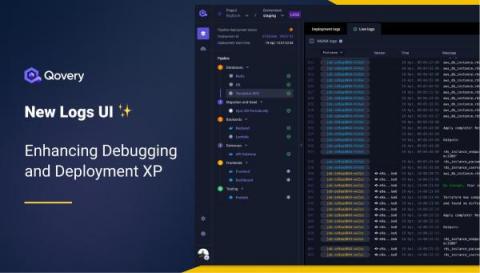
New Logs Interface: Enhancing Debugging and Deployment Experience

I am excited to announce the release of our new logs interface inside Qovery. This feature is a crucial milestone in our journey to improve the debugging experience and provide better insights into deployment failures. As we are just about releasing parallel deployment, we revamped the interface to accommodate the concept of Deployment Pipeline, ensuring a seamless experience when deploying your applications.

Demystifying Container Orchestration: A Beginner's Guide

As organizations increasingly adopt containerized applications, it is essential to understand what container orchestration is. This guide delves into what container orchestration is, its benefits, and how it works, comparing popular platforms like Kubernetes and Docker. We will also discuss multi-cloud container orchestration and the role of Rancher Prime in simplifying container orchestration management.

Web checks in Kubernetes: a simple alternative to Prometheus Blackbox Exporter

The continued adoption of Kubernetes, a leading container orchestration platform, increases the demand to monitor these complex environments accurately and efficiently. Maintaining optimal performance and ensuring quick issue resolution are vital aspects of efficient Kubernetes management.

Driving Innovation with Extensible Interoperability in Rancher's Spring '23 Release

We’re on a mission to build the industry’s most open, secure and interoperable Kubernetes management platform. Over the past few months, the team has made significant advancements across the entire Rancher portfolio that we are excited to share today with our community and customers.

Welcome to Rancher Academy

After tremendous work by our team, I am pleased to announce the launch of Rancher Academy. Rancher Academy is our online educational platform that provides free, community training on Kubernetes and Rancher. Available on-demand, these training courses are led by our team of expert technical evangelists and will instill confidence in Kubernetes and Rancher users as they learn from the very best in the industry.

SUSE Launches Dedicated Rancher Prime Knowledgebase in its Growing Customer Loyalty Program

Today I am delighted to launch the latest update to the SUSE Collective: a dedicated Rancher Prime Knowledgebase. All current and future Rancher Prime customers will receive an invitation to sign up for the free program, where they can access the exclusive content and engage with all the elements of the Collective. “SUSE Collective has become the go-to place for our customers to learn more about SUSE, share their feedback and earn rewards for their ongoing loyalty.

Utilizing the New Rancher UI Extensions Framework

The Rancher by SUSE team wants to accelerate the pace of development and open Rancher to partners, customers, developers and users, enabling them to build on top of it to extend its functionality and further integrate it into their environments. With Rancher Extensions, you can develop your own extensions to the Rancher UI. Completely independently of Rancher. The source code lives in your own repository. You develop, build and release it whenever you like.

Project Snow Cow: A hat-tip to Apple's MacOS Snow Leopard release that drove the inspiration for Stability, Reliability & Extensibility in Rancher

Kubernetes has reached an interesting point in its lifecycle where it is now the default choice to run business-critical applications across varied infrastructures, from virtual machines to bare metal and in the cloud. This, combined with the evolving need for a single pane of glass to centralize and manage infrastructure and application deployments, has required IT teams to focus on a stable, reliable and extensible platform that can scale on demand.

How to Successfully Implement an Environment as a Service (EaaS) Solution in Your Software Development Workflow

In today's fast-paced and competitive software development landscape, the ability to quickly and efficiently manage development environments is critical to success. This is where Environment as a Service (EaaS) comes in. EaaS is a cloud-based solution that lets developers quickly establish and manage development environments. EaaS simplifies infrastructure management, helping developers work faster and create better apps.

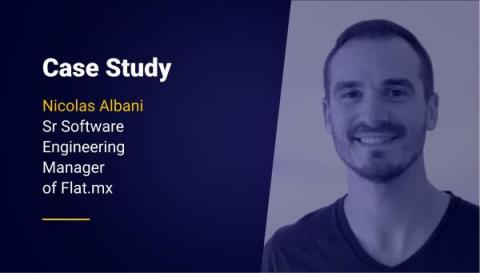
From Static to Ephemeral Environments: How Flat Significantly Increase Development Velocity with Qovery

Learn how Qovery helped Flat Mx, a proptech company in Mexico, speed their release cycle and scale their infrastructure efficiently. Initially launched three years ago, Flat Mx combines technology with real estate data and expertise to optimize the property valuation process and automate it. The engineering team at Flat Mx was facing challenges with their monolithic application and needed a more efficient solution for their cloud needs.

Increasing Implications: Adding Security Analysis to Kubernetes 360 Platform

A quick look at headlines emanating from this year’s sold out KubeCon + CloudNativeCon Europe underlines the fact that Kubernetes security has risen to the fore among practitioners and vendors alike. As is typically the case with our favorite technologies, we’ve reached that point where people are determined to ensure security measures aren’t “tacked on after the fact” as related to the wildly-popular container orchestration system.

Kubernetes for Humans

Exciting days for Komodor! As KubeCon + CloudNativeCon EU 2023 kicks off, we’re happy to share with the community our newest, developer-first set of capabilities. These new capabilities simplify the time-consuming, knowledge-intensive daily tasks associated with using Kubernetes as the underlying infrastructure for your applications. By doing so, Komodor empowers every developer to operate, troubleshoot and control Kubernetes applications through a single pane of glass.

Docker monitoring 101: Tools, key features, metrics, and more

Docker is a well-known open-source platform that is predominantly employed to bundle applications and their dependent components into containers for easy development and deployment. Docker is lightweight and efficient in resource consumption by operating as an executable packaged software with all the necessary framework, libraries, code, runtime, and files required to run an application.
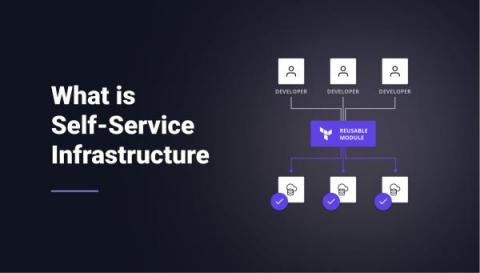
What is a Self-Service Infrastructure Platform?

In today's fast-paced technology landscape, companies are in a constant race to innovate and deploy applications quickly. Ensuring that development and operations teams can collaborate efficiently is critical to achieving this goal. Self-service infrastructure platforms have emerged as a vital solution to this challenge. In this article, we will explore the concept of self-service infrastructure platforms, the problems they address, and their benefits for engineering and DevOps teams.

The Magic Behind the Lumigo Kubernetes Operator

Kubernetes is the container orchestration platform of choice for many teams. In our ongoing efforts to bring the magic experience of Lumigo’s serverless capabilities to the world of containerized applications, we are delighted to share with you the Lumigo Kubernetes operator, a best-in-class operator to automatically trace your applications running on Kubernetes.

How to Monitor Your Windows Infrastructure

Nowadays many organizations still rely on classic Windows servers and virtual machines (VMs) for their business applications. Although Kubernetes is a trending topic, not everything running in the cloud is a container-based application. When it comes to monitoring Windows applications and infrastructure, many businesses leverage OSS Prometheus to get Windows metrics via its Prometheus Windows Exporter.
Ofcom interim cloud report: 5 key takeaways & where we go next

Ever since UK regulator Ofcom announced its market study into the cloud industry in 2022, there has been cautious optimism about whether this could be a genuine moment of truth for the hyperscalers. On 5 April 2023, we got our answer. In its interim report, Ofcom did not hold back in its criticism of the dominance that the hyperscalers, especially AWS and Microsoft, hold over the industry and the limits and even “harm” this creates for customers.

The Top 10 Products From AWS Summit Paris 2023

The AWS Summit Paris 2023 brought together some of the world's top companies and tech experts to showcase the latest innovations and products in the tech industry. With so many impressive companies in attendance, it can be difficult to narrow down the top products on display but after careful consideration, we've compiled a list of the top 10 products from the event.

Tackling GPU Scarcity & Complexity Head-On

In recent discussions about cloud-based GPU workloads, I was struck by these two recurring challenges: As the Head of Customer Success for a platform that confronts both of these problems, I wanted to take a moment to talk about their origin, what teams can do to mitigate, and finish up with a brief look at how Cycle might help.

Product Klips: Bite-Sized Feature Overviews

Komodor is the only unified, dev-first Kubernetes Platform, designed to enable Kubernetes across on-prem and cloud-native environments through a single pane of glass. Komodor’s platform empowers developers to confidently operate and troubleshoot their K8s applications while allowing infrastructure teams to maintain governance and optimize resources.

Canonical Kubernetes 1.27 announcement

Following the release of upstream Kubernetes on 11th of April, Canonical Kubernetes 1.27 is generally available in the form of MicroK8s, with Charmed Kubernetes expected to follow shortly. We consistently follow the upstream release cadence to provide our users and customers with the latest improvements and fixes, together with security maintenance and enterprise support for Kubernetes on Ubuntu.

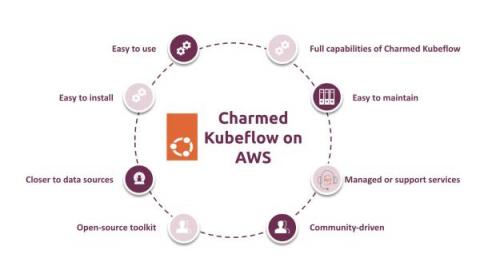
Charmed Kubeflow is now available on AWS Marketplace

Canonical is proud to announce that Charmed Kubeflow is now available as a software appliance on the Amazon Web Services (AWS) marketplace. With the appliance, users can now launch and manage their machine learning workloads hassle-free using Charmed Kubeflow on AWS. This reduces deployment time and eases operations, providing an easy-to-install MLOps toolkit on the public cloud.

How to collect and query Kubernetes logs with Grafana Loki, Grafana, and Grafana Agent

Logging in Kubernetes can help you track the health of your cluster and its applications. Logs can be used to identify and debug any issues that occur. Logging can also be used to gain insights into application and system performance. Moreover, collecting and analyzing application and cluster logs can help identify bottlenecks and optimize your deployment for better performance.

Components Deep Dive: Docker-Compose in Bunnyshell

Discover how to easily create an environment in Bunnyshell using your docker-compose.yaml file. This developer-focused video walks you through the process of importing your services and configuring your components using 100% Docker-compose syntax. Learn how to expose public hosts, attach volumes, and set up build arguments. We'll wrap up with a demonstration of how to deploy your environment in just a few minutes.

Components Deep Dive: Helm & Kubernetes in Bunnyshell

Learn how to deploy an environment in Bunnyshell using Helm charts and Kubernetes manifests. This developer-centric video breaks down the process of configuring components such as the frontend, backend, and databases. Dive into the details of using Helm components, running user-defined scripts, creating values files, and leveraging Helm's templating system. We also explore how to use Kubernetes manifests and perform replacements within your application.

Troubleshooting with Bunnyshell

This video demonstrates how to troubleshoot various issues using Bunnyshell, including failed builds, broken backend, and issues caused by generic components. Learn how to access pipeline logs, container outputs, and Kubernetes resources for debugging, as well as how to perform SSH into containers and port forward for databases. By utilizing these techniques, you can efficiently identify and resolve problems without needing direct access to the Kubernetes cluster or infrastructure.

Understanding Qovery Pricing: Transparent and Flexible Billing

At Qovery, we understand the importance of transparency when it comes to pricing, especially for our customers who rely on our services to power their applications. One of the most frequently asked questions we receive is about our billing system, the meaning of "Active Developers," and how we adjust pricing based on usage.

Scrape Azure metrics and monitor AKS using Grafana Agent

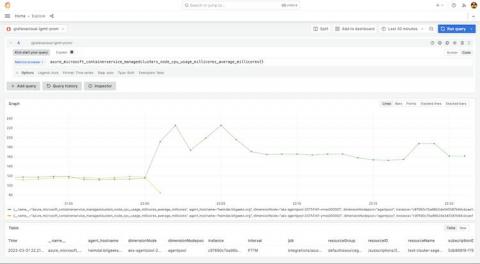
As more organizations adopt cloud-based services like Microsoft Azure Kubernetes Service (AKS), it becomes increasingly important to monitor and manage the performance and reliability of these services. If you’re using AKS today, then Grafana Cloud provides the flexibility, performance, and visualizations you need to monitor your distributed applications.

Sysdig Validated as AWS CloudOps Competency Launch Partner

This week AWS unveiled its new Cloud Operations Competency–aka the CloudOps Competency–designed to recognize qualified partners who help cloud customers build and manage hybrid cloud environments securely and efficiently. Sysdig is a launch partner and is now validated for the AWS CloudOps Competency in Compliance and Auditing, as well as Monitoring and Observability categories.

K3s vs. Talos Linux: What's the difference

Kubernetes has become the go-to container orchestration system for many organizations. But managing Kubernetes clusters can take time and effort, especially for smaller teams or organizations with limited resources. This is where focused Kubernetes distributions like K3s and Talos Linux come in. They offer simplified and streamlined versions of Kubernetes, making it easier to deploy and manage clusters. This blog will introduce you to K3s and Talos Linux and compare their features and capabilities.

How To: Kubernetes Inventory Monitoring with DX UIM

Learn how to install and configure new monitoring solution to discover, dashboard and monitor your enterprise Kubernetes deployment using DX Unified Infrastructure Management. DX UIM continues to expand its coverage of new-age technologies across hybrid, multi-cloud environments to provide full-stack observability from a single pane of glass.

Kubernetes 1.27 - What's new?

This release brings 60 enhancements, way up from the 37 enhancements in Kubernetes 1.26 and the 40 in Kubernetes 1.25. Of those 60 enhancements, 12 are graduating to Stable, 29 are existing features that keep improving, 18 are completely new, and one is a deprecated feature. Watch out for all the deprecations and removals in this version! The main highlight of this release is actually outside Kubernetes.

eBPF Explained: Why it's Important for Observability

eBPF is a powerful technical framework to see every interaction between an application and the Linux kernel it relies on. eBPF allows us to get granular visibility into network activity, resource utilization, file access, and much more. It has become a primary method for observability of our applications on premises and in the cloud. In this post, we’ll explore in-depth how eBPF works, its use cases, and how we can use it today specifically for container monitoring.

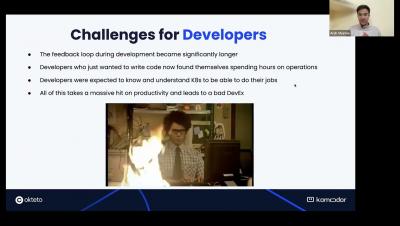
Making Kubernetes Dev-Friendly with Komodor & Okteto

Kubernetes has become the software world’s infrastructure, leading to significant changes in application architecture and packaging. Despite the introduction of new technologies and practices, they have not kept pace with the rapid growth of the K8s ecosystem. As a result, developers who once solely focused on coding are now spending hours on operations, leading to a longer feedback loop during development. They’re expected to have an understanding of Kubernetes in order to do their jobs, causing a significant drop in productivity and leading to a poor dev experience.