Operations | Monitoring | ITSM | DevOps | Cloud

The latest News and Information on Containers, Kubernetes, Docker and related technologies.

Announcing Preview Support for Istio

Today we are announcing support for Istio with Rancher 2.3 in Preview mode. Istio, and service mesh generally, has developed a huge amount of excitement in the Kubernetes ecosystem. Istio promises to add fault tolerance, canary rollouts, A/B testing, monitoring and metrics, tracing and observability, and authentication and authorization, eliminating the need for developers to instrument or write specific code to enable these capabilities.

Gianluca Arbezzano [InfluxData] | Kubernetes Monitoring with InfluxDB 2.0 & Flux | InfluxDays London

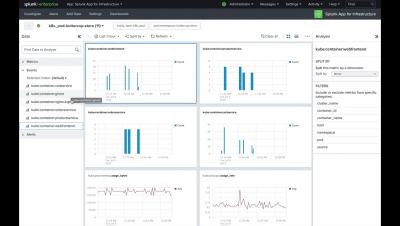
Gianluca will dig deep into how to monitor Kubernetes with InfluxDB using lessons learned from building and running InfluxDB Cloud on Kubernetes. He will cover what metrics should be collected, when to use push and pull metric collection, and the role that Prometheus plays in any K8s monitoring environment.

Deploying Elasticsearch in GKE with Elastic Cloud on Kubernetes

Dan Roscigno from Elastic will show you how to get started - from deploying a k8s cluster in GKE, to deploying the ECK Kubernetes Operator, and then deploying Elasticsearch and Kibana. After launching Kibana and enabling monitoring you will see the Elasticsearch cluster scale from one to three nodes.

Kubernetes: Tackling Resource Consumption

This is the third of a series of three articles focusing on Kubernetes security: the outside attack, the inside attack, and dealing with resource consumption or noisy neighbors. A concern for many administrators setting up a multi-tenant Kubernetes cluster is how to prevent a co-tenant from becoming a “noisy neighbor,” one who monopolizes CPU, memory, storage and other resources.

10 Reasons You Should Run Your Serverless Applications & FaaS on Kubernetes

Over the last year, along with Kubernetes, Serverless computing platforms have acquired tremendous mindshare among the development community. As Serverless implementations begin to proliferate, I want to make the case that there are tremendous synergies to be gained by bringing both these paradigms together. Some of these benefits have been covered in previous posts. The majority of enterprises are embarking on their DevOps journey. Scaling such processes across a large enterprise is complicated.

Manual Rotation of Certificates in Rancher Kubernetes Clusters

Kubernetes clusters use multiple certificates to provide both encryption of traffic to the Kubernetes components as well as authentication of these requests. These certificates are auto-generated for clusters launched by Rancher and also clusters launched by the Rancher Kubernetes Engine (RKE) CLI.

Kubernetes issues and solutions

Hi all! I am a part of the architecture team at Avito.ru, one of the world’s top classifieds (read more about Avito here). In this post I want to share our experience in implementing kubernetes at scale. Kubernetes is a powerful orchestration tool that helps us manage dozens of microservices, support robust and fast deploy. It’s really cool that we don’t have to manage resources manually, think about service discovery and so on.

Kubernetes as a Service: GKE vs. AKS vs. EKS

Kubernetes (K8s) is a prevalent open-source system for automating the deployment, scaling, and management of containerized applications. However, maintaining the service can be difficult and expensive. For that reason, it is easy to find platforms offering Kubernetes as a managed service. In this article, we will analyze three of the most popular services currently available: Google Kubernetes Engine, Azure Kubernetes Service, and Amazon Elastic Container Service for Kubernetes.

Kubernetes Master Class: How to Secure Production Kubernetes and Service Mesh Workloads on Rancher

As more container deployments move into production there will be an increasing level of attacks on application containers and the orchestration tools to manage them. The success of Kubernetes has been a major enabler for the “service mesh” concept to become a reality, as a “sidecar” container is the ideal form-factor for service mesh functions to be placed together with the service itself. The important thing to remember is that, although a service mesh has security features, it is NOT a security solution. It is not designed to provide the type of network, endpoint and host security required for defense in depth.