Operations | Monitoring | ITSM | DevOps | Cloud

The latest News and Information on DevOps, CI/CD, Automation and related technologies.

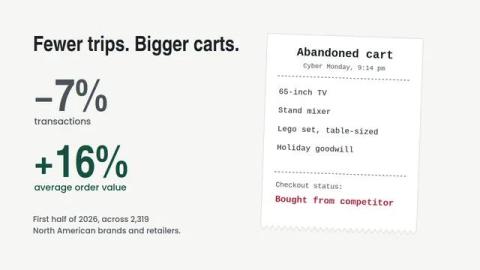
$4.48 a Gallon: Your Holiday Checkout Is the New Mall

Remember when “going shopping” meant getting in the car? This fall, filling the tank feels like applying for a small loan. U.S. regular gasoline averaged about $4.48 a gallon for the week of September 21, 2026. A round trip to the store starts competing with free shipping. And free shipping never needs a parking spot. That doesn’t tell us how many shoppers will move online this holiday season.

Test PostgreSQL With the Queries Your App Actually Runs

The first number from my local PostgreSQL 16 test was roughly 1,600 statements per second. It looked impressive. It was also the least useful result in the run. The useful part was the workload. It came from queries the demo app had actually sent: the same prepared statements, parameters, reads and writes. A synthetic benchmark tells you how PostgreSQL handles a synthetic workload. It does not tell you whether your migration just broke the UPDATE your app depends on.

How to Do Azure Cost Allocation by Team or Department

Learn how to allocate Azure costs across departments and get a clear view of who is spending what. In this video, we’ll show you practical ways to track and allocate Azure costs by department using Azure cost management practices. You’ll learn how to organize cloud spend, assign costs to teams or business units, improve cost visibility, and make Azure cost discussions easier between finance, engineering, and IT teams.

How does fragmented telemetry affect an AI system's ability to reason what's really happening?

Fragmented telemetry limits what AI can understand. When logs, metrics, and traces remain siloed, AI sees individual signals instead of the full story. That can lead to incorrect conclusions and unexpected outcomes. This is where AI observability matters. Virtana connects telemetry across the stack, giving AI the context it needs to correlate signals, understand dependencies, and identify what is really happening.

Who Is Actually Qualified to Oversee AI

Who should actually be trusted to oversee AI? As frontier AI systems become more powerful, the question isn't just whether we need more oversight — it's who is actually qualified to provide it. Adam Arellano, Martin Reynolds, and Bryan D. Payne debate whether governments, third-party evaluators, academics, former frontier-lab employees, or independent organizations can realistically hold companies like OpenAI and Anthropic accountable.

From SOCI Compliance to Continuous Infrastructure: How Puppet Helps Protect Critical Infrastructure

Australia’s critical infrastructure landscape has changed significantly. The Security of Critical Infrastructure Act 2018 (SOCI Act) has evolved from a framework focused primarily on identifying critical assets and reporting incidents into a broader risk-management and operational-resilience regime. The 2024 reforms reinforced that direction, increasing the focus on the systems, data, and technology dependencies that underpin Australia’s essential services.

You made coding faster. Guess where the bottleneck went next.

Somewhere in the last year, your team's code output went up. Pull requests are opened faster. The backlog of small fixes and routine changes started clearing quicker than it used to. If delivery still feels roughly as slow as it did before, that's what happens when you speed up one part of a process without touching anything downstream of it.

We stopped asking an LLM how much its own work would cost

There’s a specific kind of measurement problem worth naming precisely rather than dramatizing: this month we found that our model-routing agent was assigning a token budget to every unit of work, and that budget was noise in the strict sense. Fixing it meant improving a system that’s mostly right, not tearing one down.