CI/CD 101 | Continuous Integration, Delivery, & Keys to Success
In this video, you’ll discover the basics of continuous integration, delivery, and the keys to success with a CI/CD pipeline.


The latest News and Information on DevOps, CI/CD, Automation and related technologies.
Virtualization is the technique of creating a software-based virtual version of something, whether that be computers, storage, networking, servers, or applications. Virtualization creates a virtual layer over the hardware, enabling the creation of virtual machines (VMs), which are virtual computers that you can run multiple of on a single piece of hardware.
Speedscale is excited to join the AWS Partner Network (APN), the global community of partners who leverage Amazon Web Services (AWS) to build solutions and services for customers. AWS Partners are uniquely positioned to help businesses take full advantage of all that AWS has to offer and accelerate the journey to the cloud. As part of this achievement, Speedscale has completed the AWS Foundational Technical Review (FTR).
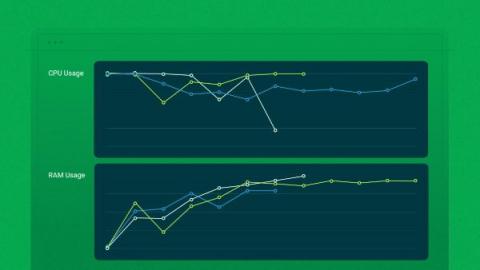
CircleCI cloud offers over 20 resource classes (varying CPU and RAM) across multiple execution environments. Finding the best resource class size for your job — not too big and not too small — can sometimes be a challenge. But now, you can view CPU and RAM usage for Docker executors within the UI. The new dashboard, found in the new Resources tab on the job details page, displays the CPU and RAM, for all parallel runs in your Docker job.
For the past three years, I have been running and facilitating a community where folks from all levels and departments at CircleCI can come together to discuss diverse topics. We call it “Let’s Talk Engineering.” Some of the topics we’ve covered have been technical in nature, while others have focused more on leadership: how different teams operate, personal growth, and writing to name a few. Let’s Talk Engineering celebrates interdisciplinarity and multidisciplinarity.
Are you looking for an open source cloud platform and you don’t know where to start? Are you getting lost in all the independent rankings and cloud platform comparison pages? Try OpenStack and get your open source cloud platform up and running today. OpenStack works at any scale: from a single workstation to thousands of nodes and installs in minutes. Sounds impossible? Give it a try or continue reading to explore where is it coming from.