Mailchimp
Not subscribed to OpsMatters Newsletter


Uptime Status Pages can now be shared publicly. You will find that they are a useful tool for information sharing under a variety of circumstances. Internal pages offer excellent insight for your team, but public status pages provide users and other parties helpful information about your services and websites.
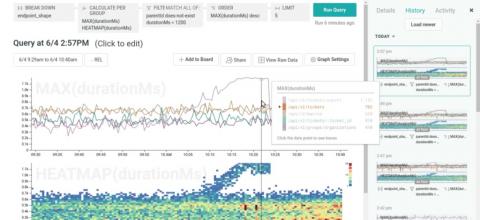
We’re excited to introduce Honeycomb Tracing! Now, you can both: Visualize individual traces to deeply understand request execution, and Break down, filter, and aggregate trace data to uncover patterns, find outliers, and understand historical trends.
Amazon Elastic Container Service for Kubernetes (Amazon EKS) is a managed service that makes it easyfor you to run Kubernetes on AWS without needing to install and operate your own Kubernetes clusters.
I recently spoke to Nick Rockwell, CTO at The New York Times (a Sentry customer), and Yonas Beshawred of Stackshare about simple solutions, React, and going serverless. Take a listen or read on for the highlights. Because why would we even bother with the lowlights?
Centralized log collection has become a necessity for many organizations. Much of the data we need to run our operations and secure our environments comes from the logs generated by our devices and applications. Centralizing these logs creates a large repository of data that we can query to enable various types of analysis. The most common types are conditional analysis and trend analysis. They both have their place, but trend analysis is perhaps the more often underutilized source of information.
Production logs can help ensure application security, reveal business insights and find and understand errors, crashes, and exceptions. But as useful as logs are, they’re difficult to manage and hard to keep track of. Making matters worse is that as log data volume grows, so does the difficult task of maintaining and managing them. It’s for this reason that developers, DevOps engineers, and CTOs turn to log management tools.