Mailchimp
Not subscribed to OpsMatters Newsletter


Kubernetes 1.16 is almost here and it’s packed with cool new features, like ephemeral containers for easy pod debugging, support for dual-stack network in pods, many new options for the scheduler… And we are just getting started! Here is the list of what’s new in Kubernetes 1.16.
Earlier this year we announced the official LogicMonitor - ServiceNow CMDB App, and it’s been exciting to see how quickly our customers are adopting the feature-rich integration. As with most workflow integrations across the LogicMonitor ecosystem, the CMDB App was built with customization in mind.
Secrets, i.e. passwords, API keys, certificates, and any other type of credential used for digital authentication, have exploded in number and type. Even small-sized organizations might have thousands of SSH keys for example. Secrets are also a common security weakness often exploited by attackers.
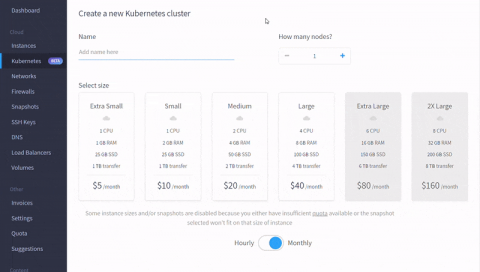
After many months of feverishly working behind the scenes, we’re beyond excited to announce that the #KUBE100 beta program is live. #KUBE100 is the name of the beta program for the Civo Kubernetes service. What makes it unique is that it’s the first k3s-powered managed Kubernetes service on the market. Here's a little more insight into what we want to achieve with #KUBE100, from our CTO, Andy.
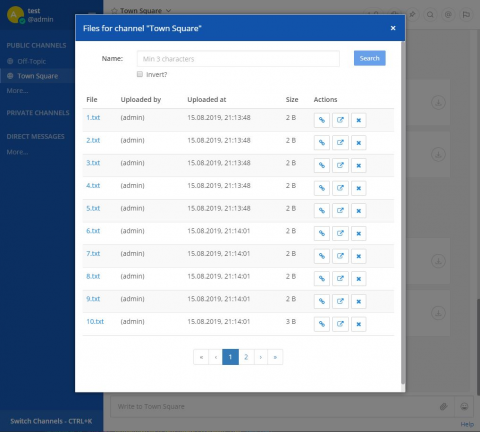
Mattermost 5.15 ships with new features that will help your team get more done in less time.
Some say you have to move all of your server infrastructure into the cloud. Others counter that you should keep your data safe and secure in your own datacenter. And then there are many people in between who use cloud services as an addition to their self-hosted servers. In fact, there’s no right or wrong, because as always in IT: It depends. We at Icinga always try to find a way to make everyone happy with their monitoring – be it in the cloud or on premise.
Today, technology problems can alter the trajectory of a business. Minutes of downtime or latency (slow is the new down) cost organizations dearly in lost revenue and can jeopardize customer relationships. However, there’s an even more important consequence of technology problems than top-line risk: reduced innovation as teams are forced into reactive fire drills that take time away from product development.
Cloud infrastructure refers to both hardware and software components—ranging from servers to storage to networking and virtualization software—that are required to support cloud computing. Thus, cloud infrastructure optimization refers to optimizing these components for: efficiency, performance, and cost.
Diamond mining is recognized as a dangerous occupation, causing serious accidents for mineworkers across the globe. Often times, these incidents turn out to be fatal because the victim didn’t receive immediate care from first responders. However, significant strides are being made to minimize the impact of these accidents by large, international organizations.