Mailchimp
Not subscribed to OpsMatters Newsletter


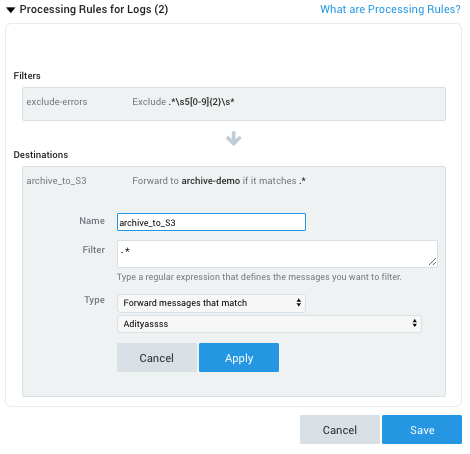
We are excited to announce the beta release of Sumo Logic’s Archive Intelligence Service, which enables customers to forward logs directly from Sumo Logic’s installed collector to their own, self-managed AWS S3 buckets. This service gives users the ability to reliably gather and economically store log data which may not be needed for immediate analysis or operations, but is still important to keep for later use.
Security is a top concern for any enterprise to move their applications and workloads to the public cloud. AWS offers a broad selection of native security tools and as our Continuous Intelligence Report noted, AWS customers are using several of these to improve the security of their AWS environment. However, it can be overwhelming to know where to start and how to deploy best practices for detecting security misconfigurations caused by human errors and attacks from external sources.
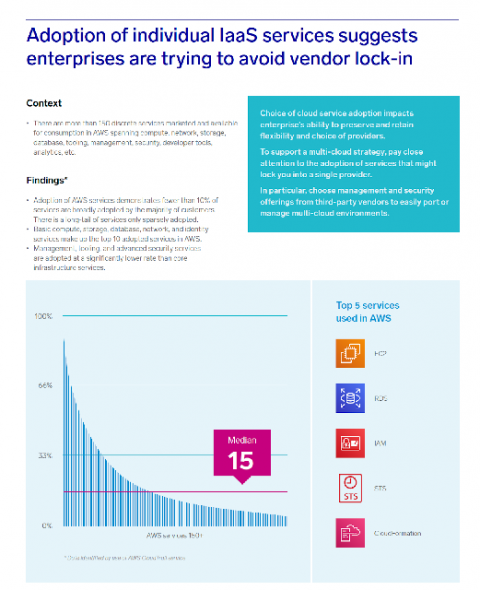
AWS offers more than 150 discrete services, spanning compute, storage, database, network, and identity management to name a few. Earlier this year we published our Continuous Intelligence Report in which we surveyed Sumo Logic customers on how broadly they used the various AWS services. We found that the median number of different services most orgs use was 15.
Java agents are a special type of class which, by using the Java Instrumentation API, can intercept applications running on the JVM, modifying their bytecode. Java agents aren’t a new piece of technology. On the contrary, they’ve existed since Java 5. But even after all of this time, many developers still have misconceptions about this feature—and others don’t even know about it. In this post, we remedy this situation by giving you a quick guide on Java agents.
We’ve already covered why log management is important, but we’ve only briefly touched upon one of the best ways that managing your log files can help you and your enterprise, which is, namely – with troubleshooting.
Monitoring versus observability is a hotly debated topic. It’s been argued that they’re two distinct things — the former just a high-level overview of a problem after the fact, while the latter enables you to be proactive. Observability has also been dismissed as jargon, much how “DevOps” sounds to the seasoned operator.
Today we're announcing BugSplat's new look to our customers via email. We've made some pretty significant updates, and we're excited to walk you through them.
Does your help desk get overwhelmed with tickets when an IT issue occurs because communication with employees is either insufficient or non-existent? Have you considered implementing an IT status page to improve this communication failure, but have found it difficult to justify the expense? Statuscast built its IT Status Page ROI Calculator with you in mind.
Time for another installment in the series where we explain in detail yet another important metric for tech organizations. After covering MTTD and MTTF, today we answer the question, “What is MTBF?” As the post title makes clear, MTBF stands for “Mean time between failures.” The acronym refers—like the others that came before it—to an important DevOps KPI. But what actually is it? What is it good for? How do I implement it?
The “serverless” movement is taking the industry by storm and now, with Datadog, you can start monitoring your serverless applications and functions on AWS Lambda. As soon as you enable the Lambda integration, you’ll start to see your metrics in an out-of-the-box dashboard like the one above. Monitor and alert on AWS Lambda serverless functions in minutes with Datadog.