Mailchimp
Not subscribed to OpsMatters Newsletter


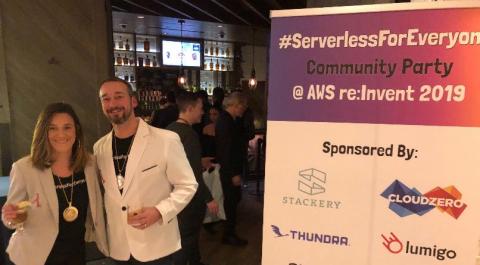
Another day of re:Invent is over and it’s all been amazing and overwhelming. And yes, the medals really do spin. It was a huge honor to be named an AWS Serverless Hero a few weeks ago. As I prepare for more conference talks in the upcoming months, I’m reflecting on what it means to be granted this honor despite having only written my first lines of code earlier this year.
Learn how Quick Base, an award-winning cloud-based application development platform for creating custom solutions to everyday business challenges, employed StatusCast to increase the transparency of their system status and availability.
Acorn RISC Machine (Arm) processors were first released in 1985 to support low-power, low-cost computing. Because of their ability to deliver cost-effective performance, the next big use for Arm-based devices is in the cloud. AWS recently added a range of Arm-based EC2 instance types and is developing additional support (e.g., in Elastic Kubernetes Service). Meanwhile, Arm and Docker are working on tighter integration.
AWS Fargate has steadily gained traction in Amazon Elastic Container Service (ECS) environments because it allows users to run containerized applications without thinking about their underlying infrastructure. Today, AWS announced that support for Amazon Elastic Kubernetes Service (EKS) on AWS Fargate is now generally available, giving Amazon EKS users the option to seamlessly manage their infrastructure with AWS Fargate instead of manually provisioning EC2 worker nodes.
Serverless computing continues to be a growing trend, with AWS Lambda as a main driver of adoption. Today, AWS released Provisioned Concurrency, a new feature that makes AWS Lambda more resilient to cold starts during bursts of network traffic. If you’re running a consumer-facing application, slow page loads and request timeouts can degrade the user experience and lead to significant revenue loss.