Mailchimp
Not subscribed to OpsMatters Newsletter


Evolving DevOps maturity, mounting Mean-Time-to-Recovery (MTTR), and perplexing cloud environments – all these factors are shaping modern observability practices according to approximately 500 observability practitioners. While every organization faces its unique challenges, there are broadly impactful trends that arise.
A quick look at headlines emanating from this year’s sold out KubeCon + CloudNativeCon Europe underlines the fact that Kubernetes security has risen to the fore among practitioners and vendors alike. As is typically the case with our favorite technologies, we’ve reached that point where people are determined to ensure security measures aren’t “tacked on after the fact” as related to the wildly-popular container orchestration system.
At KubeCon Europe, it was announced that Elastic Common Schema (ECS) has been accepted by OpenTelemetry (OTel) as a contribution to the project. The goal is to achieve convergence of ECS and OpenTelemetry’s Semantic Conventions (SemConv) into a single open schema that is maintained by OpenTelemetry. This FAQ details Elastic’s contribution of Elastic Common Schema to OpenTelemetry, how it will help drive the industry to a common schema, and its impact on observability and security.
At Lightstep, we’ve seen many organizations grapple with “cloud-native sticker shock” as they come to understand that these complex systems require sifting through massive amounts of data across architectures and proprietary solutions. In today’s macroeconomic environment, organizations are looking to reduce costs while driving innovation, especially when it comes to cloud-native applications.
IT incidents are events which lead to a disruption or deviation from the regular operating standards of a computer system or network. They can be caused by various factors, including hardware or software failures, human error, or even deliberate external (cybersecurity) attacks. It begins with short delays, or services cutting out - for example, when a website or server is down, or access to data(bases) takes too long.
Metrics, Logs and Traces are often referred to as The Three Pillars of “Observability“. The term observability has been used in control theory to refer to how the state of a system can be inferred from the system’s external outputs. Applied to IT, observability is how the current state of an application can be assessed based on the data it generates. Applications and the IT components they use provide outputs in the form of metrics, events, logs and traces (MELT).
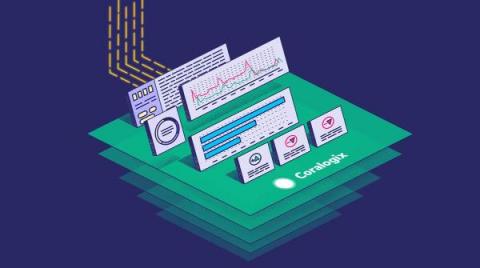
Continuous Integration/Continuous Delivery (CI/CD) has now become the de-facto standard for all engineering teams seeking to keep pace with the demands of the modern economy. At Coralogix, we operate some of the most advanced build and deploy pipelines in the world. We’ve baked that knowledge into our platform with a CI/CD Observability feature called Coralogix Tagging.
As version 4.0.4, we are excited to announce the capability of Cribl’s webhook to write to any destinations and APIs that requires OAuth including Microsoft Sentinel. Cribl has long supported OAuth in many destinations through native integrations but with the enhanced Webhook we can now write to any destination that require OAuth authentication.