Mailchimp
Not subscribed to OpsMatters Newsletter


Grafana Agent v0.33 is here! This new release includes a lot of exciting features, such as a powerful way to configure Grafana Agent with Flow Modules and the ability to monitor Kubernetes pods in your cluster with an Operator Flow component. We also added many more Flow components making the Flow ecosystem bigger!
From a customer’s perspective, a product is quite simple to explain. They buy an item to fulfill a specific need or want. However, what they want may change, and the current state of the product might not stand the test of time. The same product may have many different forms and fill various roles depending on its current position on its product lifecycle. A product manager’s job is to ensure that this product evolves the right way.
April has come and gone, and we’ve got more exciting news to show for our efforts! This month, our teams have been hard at work: Keep reading for more details!
Time series data streams are often noisy and irregular. But it doesn’t matter if the cause of the irregularity is a network error, jittery sensor, or power outage – advanced analytical tools, machine learning, and artificial intelligence models require their data inputs to include data sets with fixed time intervals. This makes the process of filling in all missing rows and values a necessary part of the data cleaning and basic analysis process.
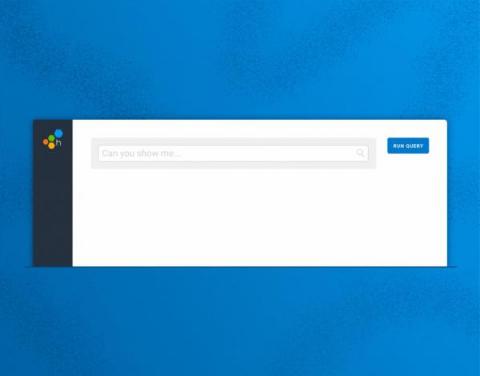
Engineers know best. No machine or tool will ever match the context and capacity that engineers have to make judgment calls about what a system should or shouldn’t do. We built Honeycomb to augment human intuition, not replace it. However, translating that intuition has proven challenging. A common pitfall in many observability tools is mandating use of a query language, which seems to result in a dynamic where only a small percentage of power users in an organization know how to use it.
We’ve all read the headlines about spectacular data breaches and other security incidents, and the impact that they have had on the victim organisations. From LastPass to SolarWinds, “data security” seems to be the phrase on the lips of every CTO these days. And in some ways there’s no place more vulnerable to attack than a big data environment like a data lake.
The PodSecurityPolicy API, initially deprecated in Kubernetes v1.21, was entirely removed in Kubernetes v1.25. Because the API was removed, you cannot create, edit or query PodSecurityPolicy resources in a Kubernetes v1.25 cluster. Also, because its admission controller was removed, your clusters can no longer enforce any PodSecurityPolicy rules that were created in Kubernetes v1.24 and prior.
Many people think cloud migrations are a binary decision: either lift-and-shift or completely modernize applications. However, the reality is that there is a spectrum of transition types available, each offering different levels of value.