Operations | Monitoring | ITSM | DevOps | Cloud

Latest posts

The Goal With Every Release: Stay Laser Focused on Driving Value for Customers

As our customers share their frustrations with the volume and growth of their observability data, we’ve got our eyes set on making it easier to manage. Our Spring 4.1 Launch involved enhancements to the Cribl suite of products — Cribl Stream, Cribl Edge, and Cribl Search — that give users more choice and control over their end-to-end observability architecture.

The Unplanned Show, Episode 3: LLMs and Incident Response

A software engineer, a data scientist, and a product manager walk into a generative AI project… Using technology that didn’t exist a year ago, they identify a customer pain point they might be able to solve, build on teammates’ experience with building AI features, and test how to feed inputs and constrain outputs into something useful. Hear the full conversation here.

The Challenge of Digital Nomads and Work-from-Home Environments

Watch the full clip here. Ivanti’s research into remote work trends found that while 43% of office workers are allowed to work flexibly, 71% say they want to. Why is that 28-point preference gap still with us even after several years of widespread – and widely successful – remote and hybrid work? What barriers are keeping leaders from chipping away at that preference gap, and why should they?

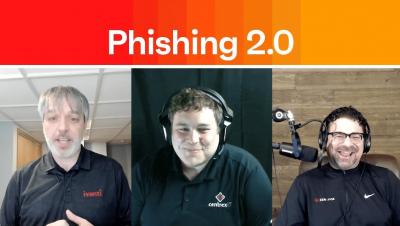
Phishing 2.0: How to Stop Cyberattacks Even Pros Can't Catch

According to Ivanti's 2023 Press Reset cybersecurity report, over 50% of surveyed security professionals said their organizations hadn’t experienced a phishing attack – despite virtually every organization getting phished last year! Today’s phishing campaigns use sophisticated social engineering techniques and the latest AI advances with devastating effectiveness, tricking your most valuable users out of sensitive information, network access and personal credentials.

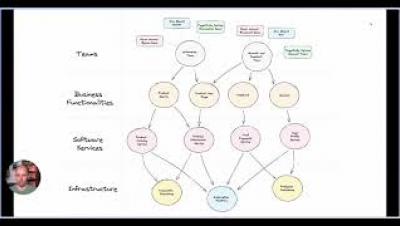
incident.io Catalog hands on lab

The incident.io Catalog is a connected, navigable, map of "things" that exist in your organization. We can use it to describe an organization as a connected graph, and use that graph to drive powerful workflow automations during incidents. In this hands-on training session, we'll work through an example of building a catalog for a mock organization. We'll then use the catalog to solve some real business problems, including automated incident data attribution, and some realistic workflows which outline how it works and what it enables in the context of incident management.

Data Integration: The Techniques, Use Cases, and Benefits You Need to Know

In a world where data is continuously growing, the need for integrated and centralized data is becoming increasingly important. Businesses are becoming more data-intensive, and by 2025, organizations need to leverage the power of their data to make informed decisions and stay competitive. Data integration plays a crucial role in enabling businesses to access, analyze and act on such data, with the data integration market expected to grow at a fast pace of a CAGR of 11.4% in 2027.

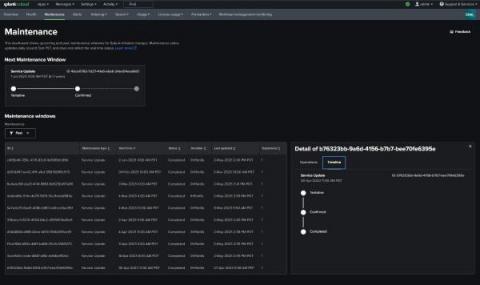
Announcing the General Availability of Cloud Monitoring Console's Maintenance Dashboard

Calling all Splunk Cloud Platform admins! At Splunk, we're dedicated to making your lives easier when it comes to managing various aspects of your Splunk Cloud Platform. One critical aspect that requires your attention is maintenance, which directly impacts the operational efficiency of your deployments. As the capabilities of the Splunk Cloud Platform grow, so do the Splunk-initiated updates like upgrades to keep your deployments up-to-date with the latest features and functionality.

IT Asset Tagging: How to Tag Software and Hardware Assets

When managing assets across your organization, IT asset tagging acts as a starting block. It ensures that everything is properly identified and easily tracked to avoid inaccurate inventory records, unregistered losses, or misusage. The practice provides a systematic approach to label and identify software and hardware assets to easily track relevant information throughout the asset’s whole lifecycle.

NetOps in Action: Fidelity National Information Services, Inc. (FIS)

Fidelity National Information Services, Inc. (FIS) is an American multinational corporation which offers a wide range of financial products and services. FIS is most known for its development of Financial Technology, or FinTech. FIS has a portfolio of products for the financial services sector, including both retail and investment banking. FIS global customers connect to services from FIS’s Little Rock, AR datacenter.

How AIOps Revolutionizes Observability for TechOps Teams

Managing over 1000 services and applications is daunting for any organization’s IT and Tech operations team. With a diverse mix of on-premises legacy systems and modern cloud stacks, the sheer volume of activity can overwhelm even the most skilled ITOps teams. The task is made more difficult by the fact that observability is fragmented. On average, organizations depend on 21 systems that produce metrics, logs, traces, and alerts for various services.