Operations | Monitoring | ITSM | DevOps | Cloud

How to Use the Datadog CLI on Kubernetes | Datadog Tips & Tricks

In this video, you’ll learn how to use the Datadog command line interface (CLI) on Kubernetes to perform key tasks, including checking the status of the agent and viewing custom checks. The Datadog Agent CLI allows you to check the status of the Agents running on the pods in your Kubernetes clusters. It also provides various helpful commands, including starting and stopping the agent, viewing configured custom checks, and sending flares to the Datadog support team to automatically open troubleshooting tickets.
Grafana Loki sneak peek: Generate Ad-hoc metrics from your NGINX Logs

Get a sneak preview of a future version of Grafana Loki that enables you to generate ad-hoc metrics from your log data. This video features a Loki-based web analytics dashboard, which uses the access logs of the popular open-source web server NGINX. Every panel on this dashboard uses ad-hoc metrics created with Loki, well, besides the Log panel obviously. Would this be useful for your use-case? Let us know in the comments.

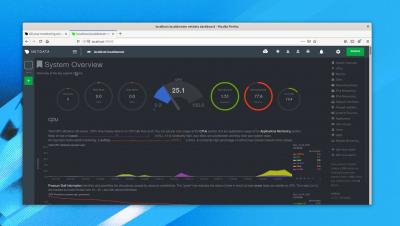
Install Netdata on Linux in two minutes

We've tried really hard to make Netdata's open-source monitoring and troubleshooting Agent as simple and hassle-free as possible. This includes installation, which involves a single command, a few minutes of your time, and zero configuration. Once you've installed Netdata, you'll have access to thousands of metrics on hundreds of interactive charts that update every second, with zero configuration required. It'll even auto-detect your favorite services, like an Nginx web server or MySQL database, and collect metrics from those.

The State of Event-Driven Automation

Talking about competition can be hard. It’s understandable. Product positioning can be touchy subjects especially when those use cases overlap. In the DevOps space, event-driven architectures are certainly not a new concept. Companies like Netflix, LinkedIn, and Facebook have in-house tools built specifically for this type of automation. However, Relay’s mission is make it easy for everyone to build event-driven workflows – not the Netflix-es of the world.

Understand Complex Environments Without Being an Expert Using AppOptics for APM

Over the past two decades, two trends have completely reshaped the IT landscape: cloud computing and microservices. With cloud computing, organizations of all sizes can provision infrastructure and run applications on a global scale within minutes. And with microservices, these organizations can deploy highly scalable distributed workloads just as quickly.

I Can Do That, Dave: Exploring AIOps

The movies are filthy with examples of artificial intelligence. Some, like the first Terminator, are evil. Some, like the Star Wars droids, work for the good guys. And so many of them are flatly iconic—Blade Runner (both of them), 2001: A Space Odyssey, War Games, Westworld (the movie and the HBO series), Matrix[i] … the list keeps going and going. We aren’t at the point yet when we can get R2 to talk the Millennium Falcon—or the data center—and find out what’s wrong.

4 ways to use Catchpoint to drive remote workforce productivity

IT professionals are now adapting to a remote environment and learning to manage a distributed, homebound workforce. From a technical standpoint, the process of setting up a remote workforce is well-known. For this blog post let’s dive into one step of the process, which is arguably the most important, user experience monitoring.