Understand the essential skills, knowledge, and experience needed to hire the best AI developers. Here's a guide on what to ask and what answers to expect.
Delivering digital operations excellence - DevOps, incident management, and keeping organisations running - is a constant challenge. As customer digital expectations rise, so do the complexities of the tech stack and cloud services integrations. But to insist on 100% uptime and rush through incident management without taking learnings into account creates a poor culture that can damage the ability of the DevOps team. This is not how a business creates resilient infrastructure and high-performing teams.
It's my pleasure to announce the release of Avantra 24.2. The second update of Avantra 24, building upon 24.1 which brought performance and customer requested bug fixes, 24.2 brings new innovations and enhancements to our Avantra platform. With over 300 changes in our development management system, Avantra 24.2 feels like a major release to us and we have something new everywhere you look. Let's dive deeper into the new features.
The Kubernetes Monitoring app in Grafana Cloud helps you visualize infrastructure costs across providers, identify unallocated and idle resources, and visualize and optimize Kubernetes resources. In this video, Vijay Tolani shows how to lower costs and improve fleet efficiency with the Kubernetes Monitoring app in Grafana Cloud.
Sick of the lost time outmoded workflows cause your IT team? Automation is the secret weapon you've been waiting for to streamline manual processes, free your IT staff and dramatically improve service quality across your organization. Join our live webinar moderated by Ivanti’s Phil Bowermaster and featuring real-world success stories from SCI's Jesse Miller and NCC Group's James Wooltorton — who’ll explain how you can optimize your workflows and take your ESM strategy to new heights.
Your database is more powerful than you think. Learn how built-in vector capabilities can power your GenAI applications and save you from the hassle of adopting a new database. The heart of Generative AI (GenAI) workloads rely on the ability of computers to categorize and understand the world's data (images, sounds, text) as numerical representations called vectors. This is achieved through a process called "embedding," where a model translates the data into vectors.
Let’s dive into the world of Objective Monitors in the context of Active Directory (AD) servers and explore why monitoring them using DX Unified Infrastructure Management (UIM) is crucial.
At Mezmo, we consider Understand, Optimize, and Respond, the three tenets that help control telemetry data and maximize the value derived from it. We have previously discussed data Understanding and Optimization in depth. This blog discusses the need for responsive pipelines and what it takes to design them.
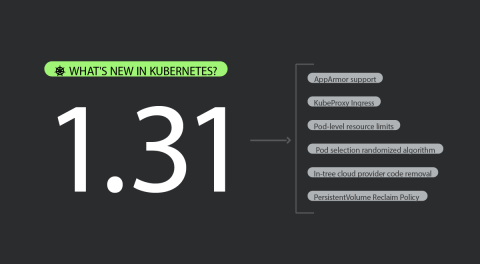
Kubernetes 1.31 brings a plethora of enhancements, including 37 line items tracked as ‘Graduating’ in this release. From these, 11 enhancements are graduating to stable, including the highly anticipated AppArmor support for Kubernetes, which includes the ability to specify an AppArmor profile for a container or pod in the API, and have that profile applied by the container runtime.
We often hear the term "observability" in the context of DevOps and how SREs use telemetry data. Collecting and analyzing this telemetry data is a vital first step to a successful autonomous IT operations strategy. Observability can help you find out about problems in your system you didn’t know you had—and before your users are impacted—by giving you new visibility that your monitoring systems don’t provide. But any observability initiative must also include network observability.