There is a paradox at the heart of serverless. While it’s promoted as a very agile way to develop, a way to push your product as fast as possible to your customers, many development teams find it really difficult to work fast. Why does this happen and can we solve the issue? Let’s start with what makes serverless such a powerful paradigm. Serverless rests on three legs, each of which contributes to the agility that serverless is known for.
Today at PagerDuty Summit 2019, we announced PagerDuty for Customer Service—a powerful new way to connect Customer Service teams to engineering and IT teams. We were also excited to debut two new partner integrations with Zendesk and Salesforce Service Cloud, and we can’t wait to show users how PagerDuty and our customer service ecosystem partners help connect the right teams so they can work together and resolve issues quickly to reduce customer impact.
At PagerDuty, we continually innovate every month (check out our What’s New page for the latest updates). But while we ship product continuously, we also save a plethora of new and improved capabilities to share with our customers at PagerDuty Summit, our annual customer event.
I’ve said this before, but I’m saying it again: observability is not a synonym for monitoring, and there are no three pillars. The pillars are bullshit.
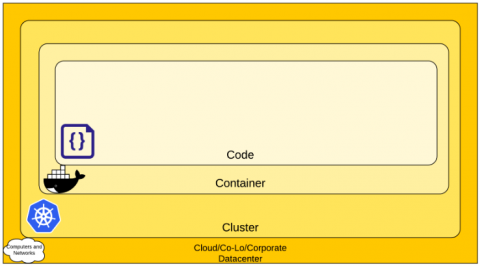
Kubernetes, commonly called K8s, is an open-source container management system developed by Google. Containers and tools like Kubernetes enable automation of many aspects of application deployment, which provides tremendous benefits to businesses. K8s is just as vulnerable to attacks and cybercrime as traditional environments, in both public and private clouds. In this blog post, we’ve compiled everything you need to know to make sure your Kubernetes environment is safe.
Chef and Puppet are two popular tools for configuration management. These type of tools help engineers to maintain a consistent configuration in all servers. For instance, all servers might need to have IIS with a binding to port 443 for HTTPS access and the respective firewall rule for inbound traffic. More importantly, if anyone removes the firewall rule, these type of tools will keep consistency by creating the firewall rule again.
By Des Nnochiri Most enterprises now use two or more cloud service providers, and 35% use up to five monitoring tools to keep tabs on hybrid cloud and multi-cloud environments. Even before organizations began shifting software and IT infrastructure to the cloud, a typical business would use four to ten tools just to monitor and troubleshoot their internal networks, according to analyst and consulting firm Enterprise Management Associates.
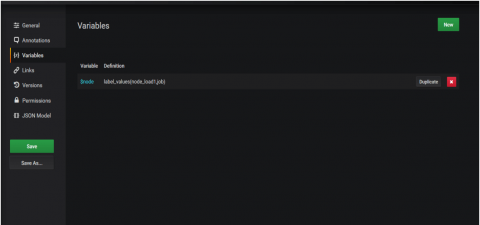
Recently, we ran into a problem where a customer’s dashboard broke to such an extent that it hung on loading. This is a really rare problem and in this case was an instance where the customer had created a variable that referenced itself. Once the dashboard is broken in this way, it is impossible to reach a screen allowing you to remove that variable. This post is not about how it was broken, but about how we resolved the error.
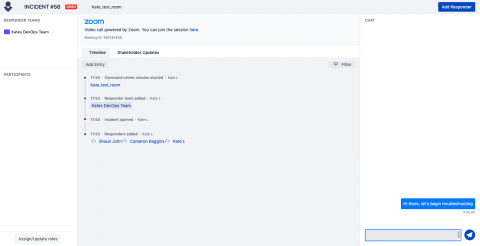
Opsgenie was built by real people who truly understood the pain of on-call, alert fatigue, and collaboration roadblocks. We empower our customers to resolve incidents faster by leveraging the tools they already use. As part of our mission to keep your always-on services up and running, we’ve worked with three key partners to strengthen the integrations we offer. It’s important that during an incident you can use the tools you’re accustomed to.