Operations | Monitoring | ITSM | DevOps | Cloud

The latest News and Information on Monitoring for Websites, Applications, APIs, Infrastructure, and other technologies.

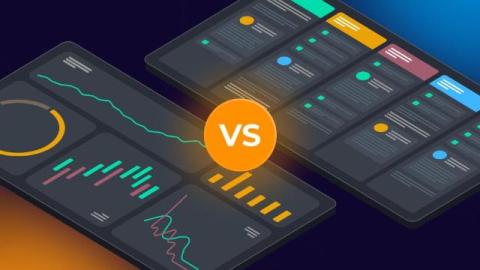
Are dashboards dead? Not quite. They just haven't evolved

In discussions across the tech and data communities in recent years, a provocative idea has been gaining traction: the notion that dashboards are dead. The first time I came across this was in the article by Taylor Brownlow of the same name, "Dashboards are Dead". A worthwhile read. The article suggests that dashboards, as we known them, no longer serve the needs of modern data-driven organizations. Not through their own fault as such, more through misuse or over-asking.

Native Binaries with PHP

There is always a big debate about whether interpreted or compiled languages are more useful. I think it is important to look at the pros and cons. Both language types have their strengths and weaknesses. While interpreted languages are great for maintaining and modifying software, compiled languages usually outperform them in terms of performance and packaging.

10 Reasons to Get a Proxy for Your Home Use

If you're passionate about maintaining privacy in your digital life, understanding the benefits of using a proxy server for home use is crucial. Proxies offer an extra layer of security and anonymity, which can be particularly appealing for those concerned with protecting their online activity. This article outlines ten compelling reasons why integrating a proxy into your home network is a smart move.

What is end-user experience monitoring?

In today’s hyper-connected world, web applications and platforms are the cornerstone of our daily activities. From routine tasks like checking the weather or managing finances to booking a vacation, these digital tools seamlessly integrate into every aspect of our lives. However, when these applications malfunction—whether due to unexpected errors, crashes, or slow loading times—the consequences can be far-reaching.

Why should you care about DNS Observability?

If you look at typical Application interaction with service point it tends to happen in two stages – first we connect to the Service and when we are interfacing through that established connection. In this description though one thing stays invisible – you can’t simply connect to the Service through the hostname – that host name needs to be resolved into an IP address, and if this name resolution process does not work or does not perform, the application suffers.

The Key Challenges with Cloud-Native Infrastructure

Cloud-native infrastructure has completely transformed the way businesses operate today. The adoption of this new practice has made it simple for organizations to deploy and manage their applications. In fact, according to a report by the Cloud Native Computing Foundation (CNCF), more than 6.8 million cloud-native developers are already using this architecture. Microservices, containers, and DevOps techniques are the core principles of cloud-native infrastructure.

16 Most Common Network Protocols

Computer networks have become integral to our modern digital world. From browsing the web to sending emails and transferring files, network connectivity enables countless applications and services. However, this would not be possible without network protocols, which provide a common language for devices to exchange information reliably. This article will explore some of the most common network protocols that drive communication and connectivity in networks and the Internet.

Digital Detoxing - SolarWinds TechPod 087

Have you ever tried to scroll up a piece of paper? Have you described a GIF during an actual conversation? To save you from these embarrassing situations, hosts Chrystal Taylor and Sean Sebring identify some telltale signs that it’s time to Log Off (trumpets blaring) and suggest some new ways to spend your time as you wean from the screen. Touch grass, smell the roses, give your thumbs a much-needed break right after this episode.

Tips, Tricks, and Shortcuts for Navigating StackState

When it comes to using (desktop) software, especially in tech, there's always that icebreaker you can use to determine whether a prospect is a more "visual" or a more "textual" user. It’s definitely not a black-or-white debate, but it's always interesting to see just how differently we’re wired as individuals at a cognitive level. In this blog post, we'll assume you lean towards being a more "visual" type of person.