Operations | Monitoring | ITSM | DevOps | Cloud

The latest News and Information on Monitoring for Websites, Applications, APIs, Infrastructure, and other technologies.

How to Pivot Your Data in Flux: Working with Columnar Data

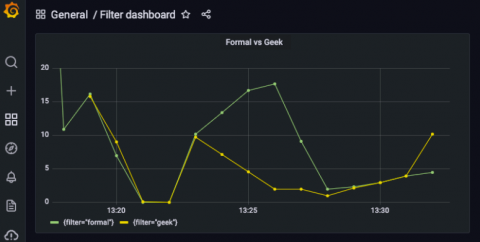
Relational databases are by far the most common type of database, and as software developers it’s safe to say that they are the kind of database most of us got started on, and probably still use on a regular basis. And one thing that they all have in common is the way they structure data. InfluxDB, however, structures data a little bit differently.

Webinar - Beyond Selenium, Synthetic Monitoring for the 2020s

Monitoring the Impossible What if a solution could look for user interface elements based on their appearance and interact with them via mouse and keyboard events, just like a person? Understand the challenges and limitations of Selenium and how you can overcome them with 2 Steps technology in this webinar. The first instalment in the Monitoring the Impossible Webinar series was brought to you by 2 Steps.

Network monitor 101: All about network monitors

With the increase in the number of organizations that have a sizable network infrastructure, the need for a network monitor also increases substantially. With properly established network monitoring protocols in place, organizations can work more efficiently, have more visibility over their network devices, and avoid unexpected downtimes and network issues.

Introduction to Go Custom Metrics with Logz.io RemoteWrite SDK from Logz.io

We recently announced the release of our RemoteWrite SDK to support custom metrics from applications using several different languages – The first SDKs allow shipping of metrics from Golang (Go), Python, Java, Node.js, and.NET. This tutorial will cover the Golang SDK. The SDKs cover not just Logz.io, but can be used by any platform that supports the Prometheus remote write endpoint.

What is Magento Performance Monitoring?

When it comes to creating an online business, Magento is one of the greatest options. Magento is used by 31.4% of the top 100,000 eCommerce stores, according to data. 15 percent are utilizing Magento's community edition, and 5% are using Magento's enterprise edition, which is also known as Adobe Commerce. Magento offers a wealth of features, out-of-the-box functionality, and customization options to help businesses attract and convert more leads.

Understanding the Three Pillars of Observability

Observability and its implementation may look different to different people. But, underneath all the varying definitions is a single, clear concept: Most software that’s run today uses microservices or loosely coupled distributed architecture. While this design makes scaling and managing your system more straightforward, it can make troubleshooting issues more difficult. The three pillars of observability are different methods to track software systems, especially microservices.

How To Monitor Network Traffic

In today’s digital world, almost every business is driven by technology, whether big or small. With the advancement of technology, the associated threats to the security of the IT infrastructure come hand in hand. Therefore, businesses need network traffic analysis tools to keep an eye on their network. Monitoring network traffic continuously gives a business the insight to optimize and manage performance, minimize attack surfaces, intensify security, and better manage its resources.

Network AF, Episode 2: Backbone engineering and interconnection with Nina Bargisen

In episode 2 of Network AF, meet Nina Bargisen. Nina has spent over two decades in network engineering and talks to podcast host Avi Freedman about her history in interconnection and peering. She’s worked for companies like Netflix and TDC (formerly Tele Danmark Communications). Now Nina is Kentik’s director of GTM strategy focused on supporting service providers. Nina joins Avi on the Network AF podcast to discuss: Nina’s entry into networking was non-standard.

The benefits of hybrid cloud for financial institutions

Financial institutions and their service providers have traditionally owned and run their technology infrastructure on their own premises or in their own data centres. However, that’s changing with the advent of powerful public cloud services, such as Amazon Web Services, Google Cloud and Microsoft Azure.