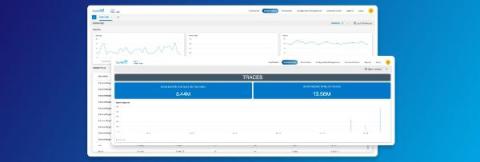
Sumo Logic - Customer Brown Bag - Observability - Open Telemetry - October 24th, 2023
Please join us as Jeff teaches tips for how to get started with Open Telemetry!


The latest News and Information on Monitoring for Websites, Applications, APIs, Infrastructure, and other technologies.
Since its acquisition by Cisco in 2012, Meraki has taken off as one of the most valuable tools for simplifying networking in the cloud era. Organizations using Meraki to install and configure software-defined networking (SDN) and software-defined wide area networking (SD-WAN) devices across their IT estates can attest to the fact.
Logz.io is always growing and evolving based on customer usage and feedback. We add new features and quality of life improvements all the time. Here’s the round up of what we released in 2023 Q3.
Performance tests created with the Grafana k6 browser module use lab data collected from pre-defined environments, devices, and network settings. Lab data allows you to repeatedly reproduce performance results, making it useful for detecting and fixing performance issues early. Lab data, however, doesn’t account for one very important testing component: real user experience.
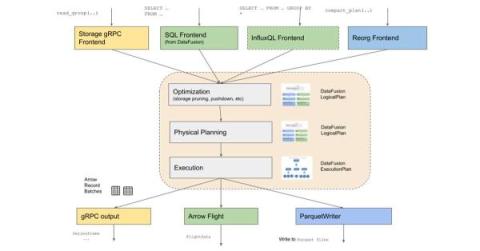
This article coins the term “FDAP stack”, explains why we used it to build InfluxDB 3.0, and argues that it will enable and power a generation of analytics applications in the same way that the LAMP stack enabled and powered a generation of interactive websites (by the way we are hiring!).
Kubernetes or K8s is an open-source production-grade container orchestration system for automating, scaling, and managing containerized applications. A container is a lightweight, standalone, executable ready-to-run software package that contains everything needed to run an application. It includes the runtime, code, libraries, systems tools, and default values for any essential settings.
As distributed, interconnected microservices have replaced monolithic applications, application monitoring has had to evolve to support these modern, complex architectures. Rather than monitoring a single application and code base, organizations need to monitor the performance and network connectivity of multiple services that interact with each other.
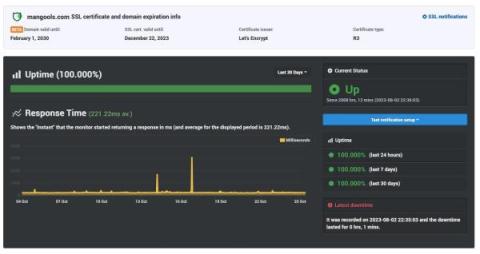
The lifeblood of any online business lies in its accessibility. When your site or application is accessible, your customers are happy, your brand reputation remains intact, and revenues keep flowing. Because of this, understanding and calculating uptime becomes crucial. Let’s face it: any downtime translates to lost revenue.
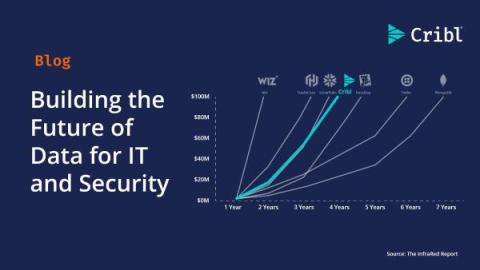
Today, Cribl surpassed $100 million in annual recurring revenue (ARR), becoming one of the fastest companies to ever reach this milestone in under four years––an incredible achievement on our journey to building a generational company. Reaching $100 million in ARR so quickly shows that our unique approach and steadfast focus on IT and Security continues to be validated by the market.