re:Invent 2023 day 1 recap
After the absolute barrage of announcements on day 0, day 1 brought us some mild excitement and one big disappointment…
The latest News and Information on Monitoring for Websites, Applications, APIs, Infrastructure, and other technologies.
After the absolute barrage of announcements on day 0, day 1 brought us some mild excitement and one big disappointment…
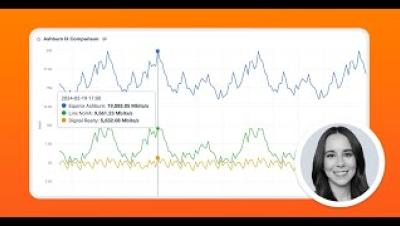
Grafana is a tool that helps users identify and fix performance issues by allowing them to monitor and analyze their database. Grafana is famous for making great graphs and visualizations, with tons of different functionalities. This Grafana tutorial is about one of these functionalities: Annotations. Grafana annotations are for users who want to make notes directly onto the graphs in their dashboards. There are various reasons a user might want to do this.
When the concept of Zero Trust emerged in 2010, it marked a sea change in how IT and network security are handled. The term, invented by Forrester Research analyst John Kindervag, is loosely based on the “never trust, always verify” motto. So why is this a sea change? Before 2010, IT focused on perimeter defenses and the concept of DMZs — areas of the network they deemed safe based on the protection they implemented.
In the ever-evolving world of IT, keeping an eye on application, service and system performance and addressing issues in real-time is crucial both to an organization’s customer experience, as well as its overall success. Two terms and approaches that have gained significant attention in recent years are AIOps and observability. While they both relate to improving IT monitoring and management, they serve distinct roles in enhancing operational efficiency.
At one time, tech advancements were a major drain on small businesses. Housing your software and digital assets in-house once created a financial nightmare many emerging companies couldn't handle. On top of that, threats to security and a complete lack of flexibility made establishing a foothold challenging. That was especially true when going up against established industry heavy hitters.
To monitor and troubleshoot the performance of microservice-based applications, Jaeger and Zipkin are examples of the most commonly used open-source distributed tracing systems. They both supply users with insight into the flow of requests through various components of a system, which can be utilized to find latency bottlenecks, errors, and performance problems in the system.