It’s that time of the year again! The MITRE Engenuity ATT&CK evaluation results are in and generating quite the buzz in the industry. And for good reason. The MITRE Engenuity ATT&CK evaluation focuses on a tool’s ability to prevent and detect cyber attacker behaviors. Now in its fourth round of testing, it has become the de-facto standard for how security solutions perform against different advanced cyberattack scenarios.
Spring makes building a reliable application much easier thanks to its declarative transaction management. It also supports programmatic transaction management, but that’s not as common. In this article, I want to focus on the declarative transaction management angle, since it seems much harder to debug compared to the programmatic approach. This is partially true. We can’t put a breakpoint on a transactional annotation. But I’m getting ahead of myself.
Some months ago we wrote a quick guide on how to use Sentry with Spring Boot and Logback. Since then, we’ve continued working on improving the development experience, added several features for error reporting and, most importantly, implemented the performance feature in Sentry Java SDK with a dedicated integration with Spring MVC. If you haven’t yet used Sentry in a Spring Boot application - nothing to worry about - you will find all the necessary steps below.
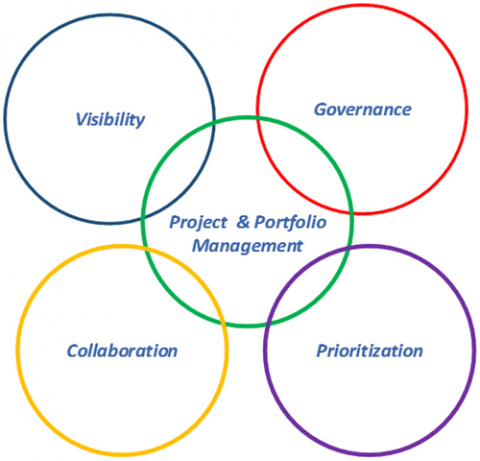
Do you know how to improve project visibility? When you have a clear picture of performance, this enables you to make informed business decisions and move forward in the right direction. After all, knowledge is power. If you can see all the different components of your project workflows, you can quickly identify potential issues and address these with speed. Project visibility is essential to all smooth-running processes.
The terms “big data” have been tossed around so much in the past few years that many people see them as nothing but buzz words. And while it’s true, they are buzz words, they also signify a very large and very real trend that is happening across a huge number of industries right now. As technology continues to progress and evolve, big data plays an even bigger role and is causing sectors and businesses to reimagine processes and systems.
Redis is an in-memory key-value data store that offers fast performance, flexible data structures, and multi-model databases, allowing it to handle a variety of use cases. Redis Enterprise enhances open source Redis with features designed to run distributed applications at scale, such as multi-tenancy, tiered data storage, active-active cluster replication, and support for up to five 9s of availability.