A look at what Arrow is, its advantages and how some companies and projects use it. Over the past few decades, using big data sets required businesses to perform increasingly complex analyses. Advancements in query performance, analytics and data storage are largely a result of greater access to memory. Demand, manufacturing process improvements and technological advances all contributed to cheaper memory.
In Mattermost v9.0, secure, purpose-built collaboration allows your team to focus and thrive. Whether delivered in high-security infrastructure, deployed to the edge, or interconnecting every aspect of your digital landscape, our partner community can help your enterprise leverage the Mattermost secure collaboration hub. Their services include not only streamlining deployment and optimizing for scale but also innovating and extending the platform to put your unique needs first.
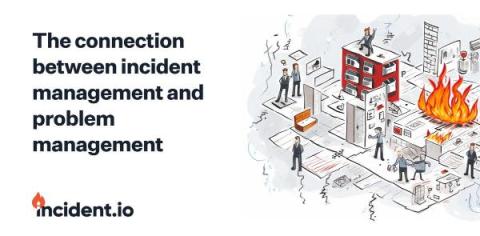
Sometimes, two concepts overlap so much that it’s hard to view them in isolation. Today, incident management and problem management fit this description to a tee. This wasn’t always the case. For a long time, these two ITIL concepts were seen as distinct—with specialized roles overseeing each. Incident management existed in one corner and problem management in the other. Then came the DevOps movement and the lines suddenly became blurred. So where do they stand today?
Incident management is a critical aspect of IT service management (ITSM) that revolves around restoring normal service operations as swiftly as possible after an unplanned interruption or reduction in quality. Also referred to as “incidents,” these interruptions could range from a minor issue like a single user being unable to access a service to a significant problem such as a server crash or network outage affecting many users.