Errors are part of building software. Even if you are one of the fabled 10X engineers, errors are still going to happen. When an error does occur, typically you are going to look at the stack trace to understand the why and who for triaging. But figuring out who to assign an issue to just based on the stack trace can be difficult. How many times do you see a stack trace in a Sentry issue, head to GitHub, and try to figure out who changed the line of code in question? Often would be our guess.
As 2022 draws to a close, I thought it would be a good time to look back at the past 12 months and highlight some of the great new features we’ve seen added in N-central. I got the idea for this blog recently when I was helping a partner and was shocked to find discover how old the version they were running was. Of course, I get that not everyone wants to jump onto the latest release straight away.
Scrum metrics are an essential indicator of your team’s progress. In an agile team, they help you understand the pace and progress of every sprint, ascertain whether you’re on track for timely delivery or not, and more. Although scrum metrics are essential, they are only one facet of the delivery process — sure, they ensure you’re on track, but how do you ensure that there are no roadblocks during development? That’s precisely where observability helps.
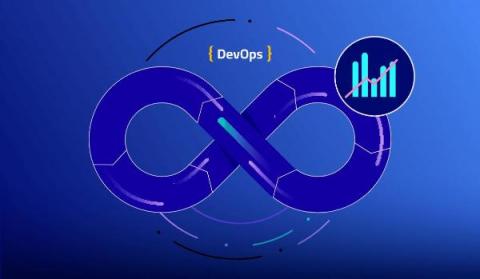
The DevOps pipeline is a crucial part of software development, but it can often get mired in bottlenecks. Most problems are caused by the development and operations teams having different responsibilities are due to inefficiencies in the pipeline design. However, thanks to continuous observability, DevOps now gets a new lease of life since it is possible to tweak the pipeline to suit the developer’s workflow.
For over 16 years, ManageEngine Network Configuration Manager has enabled network admins to manage network device configurations and validate them—all while helping them stay compliant with international standards. Today, we are thrilled to announce that ManageEngine has been named a Challenger in the 2022 GigaOm Radar for Network Validation.
With digital transformations continuing apace and the popularity of cloud-native and microservice-based applications and architectures growing, Gartner sees investments in such technologies and services increasing, predicting that "cloud-native platforms will serve as the foundation for more than 95% of new digital initiatives by 2025 - up from less than 40% in 2021."
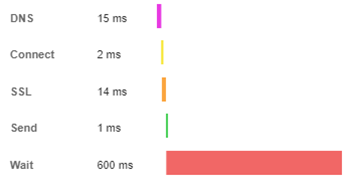
Metrics, metrics everywhere... a gauge here, a counter there... milliseconds, percentages... a list of variables running into pages... what is fast, what is slow...? how on earth is one to know...? Today we have all manner of variables around us, of differing gravity, that each have their own individual purpose in the measurement of web performance. Some of these are atomic or independent metrics, whereas others are aggregated or dependent.
“Some things age better with time; unfortunately, the software is not one of them,” iLink Digital explains in their patch management review. Whenever software malfunctions or becomes outdated, enterprise patch management systems come to the rescue. In this overview, we’ll uncover the challenges, benefits, and case studies for enterprise patch management.
Security automation is an increasingly critical element in optimizing enterprise cybersecurity postures. Today, Torq announced its users are executing more than 1,000,000 daily security automations using our security automation platform – a major milestone that underlines the traction and importance of unifying today’s complex security stacks.