In this bi-weekly micro webinar series, Catchpoint and ITOps Times have partnered to explore six critical topics that are essential for ensuring Internet Resilience for your business. Explore each of the topics in the series: In this fourth segment, we’ll discuss techniques for enhancing Network and API performance by implementing Internet Performance Monitoring. Now, let’s get into the episode!
“By failing to prepare, you are preparing to fail. Preparation prior to a breach is critical to reducing recovery time and costs.” (RSAConference) For 83% of companies, a cyber incident is just a matter of time (IBM). And when it does happen, it will cost the organization millions, coming in at a global average of $4.35 million per breach. The damage isn’t only financial, nor solely related to customer loyalty and brand equity.
Peering evaluations are now so much easier. PeeringDB, the database of networks and the go-to location for interconnection data, is now integrated into Kentik and available to all Kentik customers at no additional cost.
Did you know that 88% of online consumers are less likely to return to a website after a bad user experience? This means that no matter how small, website errors can significantly impact your website's traffic and revenue. As a website owner or manager, it's crucial to identify and fix common errors to ensure your website runs smoothly and provides an exceptional user experience. But where do you start? With so many potential issues that can arise, it can be overwhelming to know what to prioritize.
Azure OpenAI is a service for deploying AI applications on Azure resources. With its easy-to-use REST APIs, you can leverage the service to access OpenAI’s powerful language models, such as ChatGPT, for your applications while taking advantage of the reliability and security of the Azure platform. Datadog already offers an out-of-the-box integration for OpenAI so you can monitor key performance trends, such as API usage patterns, token consumption, and more.
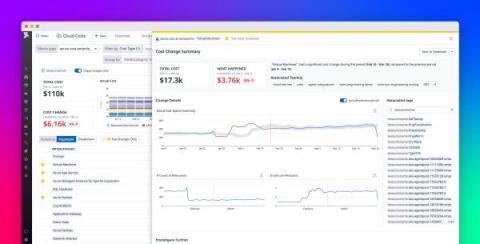
Migrating your on-prem applications to Azure can help you improve scalability, reliability, and security. It can also help reduce costs and free your engineering teams to focus on innovation and performance optimization. But it can be hard to understand Azure costs as they evolve during your migration and to see how they correlate with your resource utilization once you’re up and running in Azure.
Many organizations have faced the complex challenges that come with mainframe monitoring. MIPS-based cost models make native mainframe software expensive, and deploying individual agents to user desktops and devices is difficult to maintain and scale.