At Lumigo, we heavily depend on a set of tests to deploy code changes fast. For every pull request opened, we bootstrap our whole application backend and run a set of async parallel checks mimicking users’ use cases. We call them integration tests. These integration tests are how we ensure: Recently, we changed our old “traditional log traversing” of integration tests into *amazing* OpenTelemetry traces graphs.
Everything you need to know about Prometheus Remote Write mechanism and storing metrics in long term storage such as Levitate.
While more observability vendors are providing tracing ingestion and visualization as part of their core service, only Coralogix, the leading in-stream observability platform, supports a set of data optimization features that drive down cost, maximize insights and create a scalable tracing strategy unlike others.
Comparison between Prometheus and Datadog - two of the most popular monitoring tools in the market today.
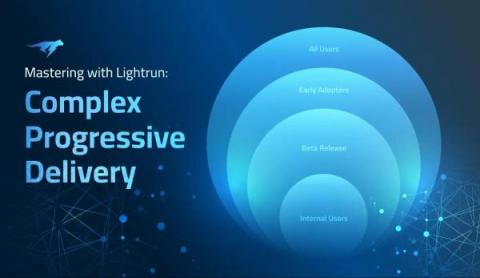
Progressive delivery is a modification of continuous delivery that allows developers to release new features to users in a gradual, controlled fashion. It does this in two ways. Firstly, by using feature flags to turn specific features ‘on’ or ‘off’ in production, based on certain conditions, such as specific subsets of users. This lets developers deploy rapidly to production and perform testing there before turning a feature on.
In this post, we’re going to learn about the Ansible copy module. Before we look at the copy module specifically, let us first remind ourselves what Ansible is. You can install this open-source software on just one Linux machine. Then it can perform a lot of tasks on connected Linux machines without requiring Ansible installation on them. You can do tasks like copying files, fetching files, and a lot of other things all on connected machines, with a single command.