Operations | Monitoring | ITSM | DevOps | Cloud

Lightstep Incident Response: Helping teams reduce downtime

Downtime—especially in customer-facing services—can cost businesses thousands of dollars an hour and incalculable customer trust. No company can afford to pay this price. To reduce downtime, software engineering teams must act quickly and decisively. But that’s easier said than done. With Lightstep® Incident Response, generally available from ServiceNow today, we're unlocking speed, agility, and productivity for your engineers and your software-powered business.

How We Monitor Elasticsearch With Metrics and Logs

As an architect at SolarWinds, it's essential to work with our own monitoring tools as a form of quality control and source for innovation. As one of the largest players in the IT monitoring and management world, we're always thinking about ways to make it seamless for customers to work across our suite of tools. One of those tools I'll focus on today is SolarWinds® Loggly®—our log management and analytics product, which is also a part of our APM integrated experience.

FireHydrant is now free for small teams

We envision a world where all software is reliable, and today we’re making that vision more of a reality for small teams. Available today, our new Free Tier helps smaller teams wrangle their reliability challenges with our enterprise-grade Incident Management, Service Catalog, and communications products. Our new package also has every feature that makes FireHydrant great with generous limitations.

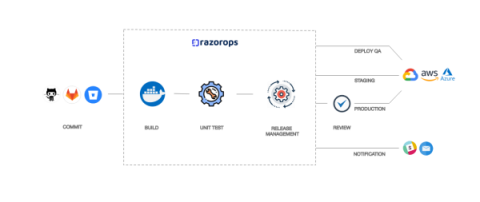
What is CICD Pipeline? Explanation of CICD Pipeline along with Examples.

Continuous Integration(CI) is a software development practice where developers frequently merge the code and the changes in a central repository. The important goals of continuous integration is to find and resolve the bugs more quicker, improve the software quality, and reduce the time taken to validate and release new software updates. Continuous Delivery(CD), which is done on the top of Continuous Integration and includes the practice of automating the entire software release process and builds.

Reel in your activities: announcing cancellable activities and crons

Feature announcement: You can now cancel Upsun activities through the CLI and management console. Last year we released activity scripts, custom scripts that you can upload to your projects to run in response to any project or environment activity. In March we announced parallel activities, a queue that allows two simultaneous processes across your environments. Today we’re announcing another change to your activities—you can now cancel them.

5 Steps to Creating an ITIL Maintenance Plan

It was Einstein who once said “the secret to creativity is knowing how to hide your sources.” The world of IT isn’t exactly known for being a creator’s paradise but navigating obstacles within problem management or incident management may take creative solutions. Regardless, it helps to borrow ideas, or in this case systems. One such popular system in IT service management is ITIL.

How Are Tech Advancements Positively Affecting Companies Market Agility

There's no question that technology has had a profound impact on the way companies do business. With advancements in cloud computing, mobile technology, and big data analytics, businesses can become more agile than ever before. This allows them to react quickly to changes in the market and capitalize on new opportunities. This blog post will explore how these tech advancements are helping companies become more agile and successful in today's competitive landscape.

Deployment Frequency Explained

While metrics have always been fundamental to improvement in the business world, the growing prominence of DevOps in recent years has elevated their importance in the context of software development. To build a continuous improvement culture, you need a set of metrics that allows you to establish a baseline and inform where the improvement opportunities lie. Arguably the most popular of them is DORA metrics. In this post, we will focus on Deployment Frequency, one of four DORA metrics.