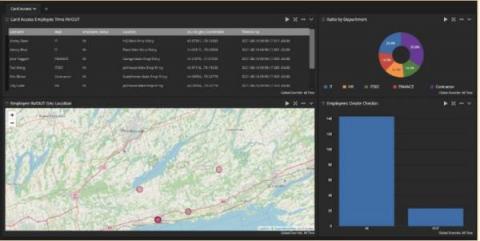
It was just another day in paradise. Well, it was as close to paradise as working in IT can be. Then, your boss read about another data breach and started asking questions about how well you’re managing security. Unfortunately, while you know you’re doing the day-to-day work, your documentation has fallen by the wayside. As much as people are loathed to admit it, this is where compliance can help.
Kubernetes. Nowadays it seems companies in the industry are divided into two pools: those that already use it heavily for their production workloads and those that are migrating their workloads into it. The issue with Kubernetes is that it is not a single system the way Redis RabbitMQ or PostgreSQL are. It is a combination of several control plane components (for example etcd, api server) that run our workloads on the user (data) plane over a fleet of VMs.
IT Operations is experiencing lightning-fast change right now. From the emergence of cloud computing to the explosion of data—not to mention ever-present cyber threats—every day is a new day for IT Ops. At BigPanda, we’re laser-focused on making life easier for IT Ops teams, which means we’re staying on top of all this change to help IT Ops keep up.
For those who aren’t that familiar with it, Electron is an open-source framework that allows developers to build cross-platform desktop applications in JavaScript. Some of the most popular desktop applications like VS Code, Slack, Discord, and Atom, are all built in Electron.
WebSockets have been around for over a decade now, but the real-time web existed long before they came. This preceding ‘real-time’ web was typically slower and hard to achieve. It was attained by hacking available web technologies that were not primarily built for real-time applications. There was no solution with TCP/IP socket-style capabilities in a web environment that could address all concerns associated with operating in a web environment.
We break down the NuGet ecosystem in Cloudsmith's first ever hosted webinar!