Changelog 12th May 2022
Great news! We now support multiple custom domains for prepress applications, including apex/root domains! Want more info? Read more on configuring DNS with Prepress.


Great news! We now support multiple custom domains for prepress applications, including apex/root domains! Want more info? Read more on configuring DNS with Prepress.
Last week, we hosted a webinar on the easiest way to right-size – and safest way to overhaul – your architecture. One of the scenarios we’re seeing come up more and more with prospects and customers is the need to update your architecture, and particularly your security architecture, as new needs and threats arise. As I’m sure you all know, that can be a real hassle, put a strain on your resources, and put your security posture at risk if it isn’t done well.
Dear Miss O11y, How is modern observability using tracing, such as Honeycomb, different from the previous distributed tracing software I'm familiar with, like Dapper, at my company? I haven't really been able to wrap my head around Dapper. Does "advanced" observability mean that it's even more complicated than Dapper is? Auntie Alphabet.
We all had an amazing time at Dell World last week in Las Vegas. And our very own VP of Global Solutions, Raj Patnam, wanted to share a few things he learned while there. Here’s a few of his key takeaways.
One difficult part of taking on a new role, especially a technical one, is learning all the jargon. Listening in on a conversation among specialists in any field you’re not intimately familiar with can be highly confounding. It sounds like they’re speaking English. At least some of the words are English, but you’ve never heard them put together in that particular order before. I heard someone mention SMB and SME? Is that a Small to Medium Business or Small/Mid-sized Enterprise?
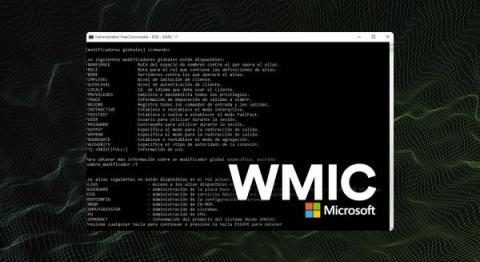
As we already explained on one occasion in this blog, Windows Management Instrumentation, WMI, is a technology owned by the company Microsoft®. But there’s even more! Things have changed and we are going to tell you all about it!
High-quality code is efficient and reliable, runs well without bugs, and meets user needs. It can cope with errors or unusual conditions. It is also easy to understand, maintain, and expand with new features. Additionally, its portability means that it can run on as many machines as reasonably possible. Development teams work with codebases that are constantly changing. They add, delete, and modify existing code to improve speed or implement new features.
Whiskey and Wisdom is a monthly executive-only forum where IT Operations leaders can network independently and discuss high-level AI operations and IT Ops strategies with their industry peers. In our most recent session, the discussion was around justifying AIOps—proving the value the technology brings to the table.
The StatusCake API allows users of the platform to come up with custom ways of interacting and making our tools work for their specific needs. In this blog post I’m going to look at a few recent projects on GitHub that use the StatusCake API to either save you time or do something interesting with your test data.